


Wednesday, September 2, 2026

Army Artillery Brigade Builds Tactical Proficiency

Left
U.S. War Department: News
Army Artillery Brigade Builds Tactical Proficiency
Sept. 2, 2026 |  By Army Capt. Lydia Laga, 75th Field Artillery Brigade

Warfighting mastery is forged through the relentless, daily grind of tough, realistic training, fueled by the dedication of soldiers who refuse to let constraints define their readiness.

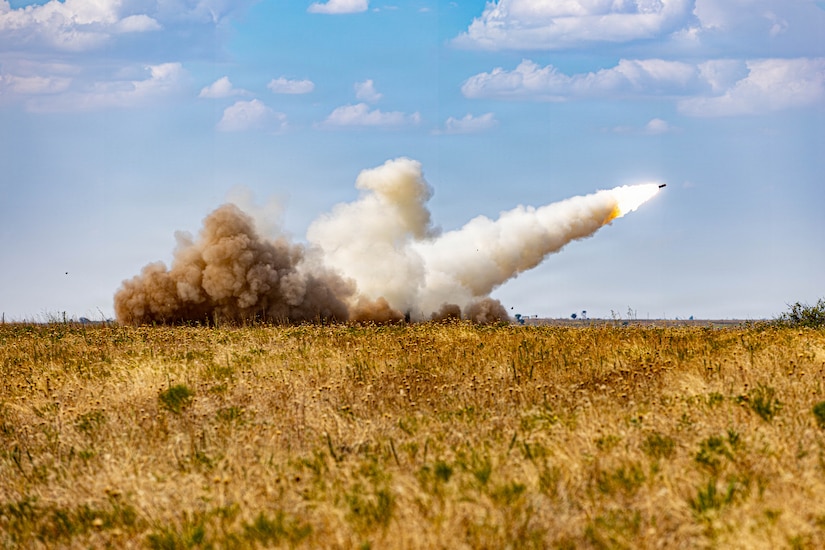
This is the standard of the 75th Field Artillery Brigade, and it was on full display in late August as the 2nd Battalion, 4th Field Artillery Regiment, took to the Fort Sill, Oklahoma, training areas to execute Artillery Table VI section qualifications and validate their Role 1, initial medical support for combat operations capabilities.

In the high-tempo environment of large-scale combat operations, the M270A1 Multiple Launch Rocket System is a devastating instrument of tactical lethality. But the platform's capability is only as good as the crew inside. Rather than treating the qualification as a routine exercise, the battalion used it to build adaptability and grit under pressure, particularly as soldiers navigated real-world manning and maintenance constraints.

For unit leaders, the focus was clear: build tactical proficiency from the ground up by investing in soldiers and empowering junior leaders.

"I feel that my battery did very well on this certification/qualification considering some of our maintenance and manning constraints," said Army Capt. Rachele Smith, Bravo Battery commander. "We have mostly new leaders within our formation and some soldiers stepping up to fill chief and gunner roles, so this was their first time having their feet to the fire."

Smith's approach was unyielding, pushing her platoon leaders to treat every simulated and live-fire iteration with absolute tactical realism.

"Our goal was to keep this training as tactical and realistic to how we'd fight as possible, so I was hard on the platoon leadership to stick to our hit times and key tasks," she explained. "The great part about these section qualifications is that it builds the training foundation for the battery and allows us to progress into our platoon and battery collective training in the upcoming months."

This commitment to incremental growth embodies the III Armored Corps' training guidance, refining lethality and mastering the fundamentals of combat. By letting junior soldiers step up into critical roles, the unit turned potential constraints into a powerful opportunity for leader development.

While the firing batteries refined their lethality downrange, the battalion's Headquarters and Headquarters Battery validated medical readiness, another critical element of survival on the modern battlefield.

Under the cover of darkness Aug. 27, the battalion's medical section established an aid station in the training area, treating simulated blast trauma and severe hemorrhages under unscripted, chaotic conditions.

Like the firing crews, the medical team had to overcome the challenge of a fresh roster to build a cohesive capability.

"Role 1 training is beneficial to our medical section because it allows us to train as we would fight," said Army 1st Lt. Monique Pilcher, battalion field medical assistant and medical exercise training lead. "It builds our ability to rapidly establish, operate and sustain a Role 1 capability while developing proficiency in casualty treatment, triage, evacuation, medical logistics and team coordination."

For Pilcher, success during the nighttime validation came from exhaustive rehearsals and trusting her young medics to carry out their duties.

"Most importantly, it gives our soldiers the opportunity to rehearse their individual responsibilities as part of a cohesive medical team, so when we encounter a real-world casualty or [mass casualty], we can respond quickly, confidently and effectively," she said. "Rehearsals were very important due to having a brand-new team of medics training for the first time."

From the fire direction centers transmitting data-centric missions to the signal specialists securing the tactical networks, and the medical teams operating under limited visibility, the unit demonstrated what cohesive readiness looks like. It is a shared burden carried by every soldier who stepped up to fill a larger role and every leader who mentored them through the process.

The battalion now shifts focus to Artillery Table XII platoon collective qualifications, building on a foundation of hard work and professionalism from its crew members. While this recent qualification focused on individual launcher sections and fire direction centers, the next one elevates the training to a collective qualification.

In this phase, these independent sections must integrate, move, communicate and survive together as cohesive, synchronized platoon-sized elements under tactical command, transforming individual weapon systems into a unified force multiplier. The road to warfighting mastery is long, but as Smith noted, the unit is taking it "day by day to make small incremental changes over time."

Right


ABOUT   NEWS   HELP CENTER   PRESS PRODUCTS
Facebook   X   Instagram   Youtube

Unsubscribe | Contact Us


This email was sent to sajanram1986.channel@blogger.com using Granicus Communications Cloud on behalf of: U.S. Department of War
1400 Defense Pentagon Washington, DC 20301-1400

No comments:

Post a Comment