Thursday, August 13, 2026

Army Corps of Engineers Rehabilitates 1942 Flood Mitigation Machinery

Left
U.S. War Department: News
Army Corps of Engineers Rehabilitates 1942 Flood Mitigation Machinery
Aug. 12, 2026 |  By Andrew Byrne, U.S. Army Corps of Engineers Pittsburgh District

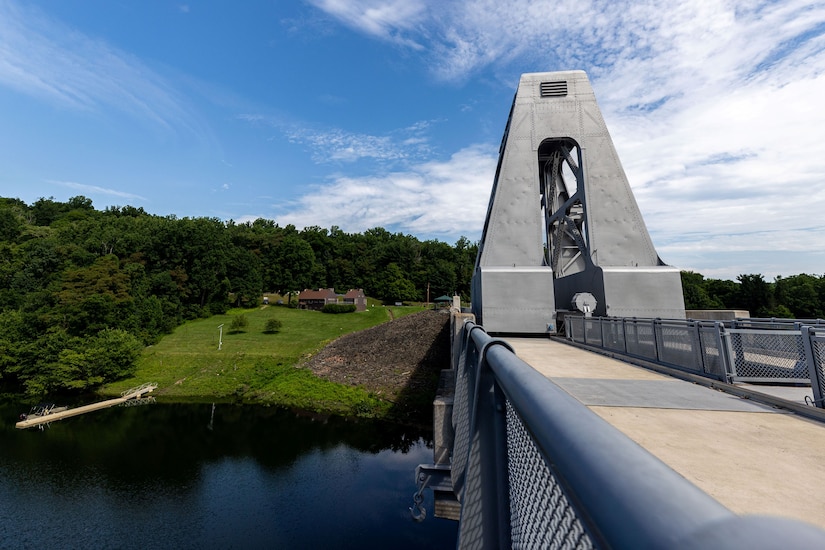
The U.S. Army Corps of Engineers Pittsburgh District is currently rehabilitating two cranes used for the past 84 years to position the steel gates that manage water output at the Loyalhanna Dam in Saltsburg, Pennsylvania.

In 1942, as the United States was redirecting its steel, machinery, labor and federal resources toward World War II, some plans were put on hold, such as extending the Pennsylvania Turnpike. However, constructing the Loyalhanna Dam remained a priority. 
 
The project was already authorized and underway before the U.S. entered the war. As Pittsburgh factories downstream worked around the clock producing steel and other materiel, the dam went into operation as part of the region's growing flood-mitigation system. 
 
The nation was also investing in another piece of wartime infrastructure: pigeons. It's not as ridiculous as eight decades of hindsight makes it sound. During the war, the U.S. Army Signal Corps furnished approximately 54,000 pigeons to the armed services, relying on trained birds to carry messages when radios, telephone wires and other communications were unavailable or unreliable. 
 
Some pigeons became decorated heroes, such as G.I. Joe — the pigeon credited with carrying a message that prevented an Allied bombing and saved troops in Italy. 
 
The pigeons are no longer on the payroll, and soldiers assigned to the U.S. Army Corps of Engineers Pittsburgh District now manage the Loyalhanna Dam.  
 
Throughout the past 84 years, the dam has prevented more than $658 million in flood damage, partly because it uses five colossal steel gates to help manage output during high-water events. Two 64-ton bridge-shaped machines, called gantry cranes, use hoists and wire ropes to position the gates. 
 
The Army Corps of Engineers Pittsburgh District is currently rehabilitating the cranes, which have spent more than eight decades exposed to weather, corrosion and the gradual betrayal of obsolete parts. 
 
The cranes also attracted pigeons, many of which infiltrated the spaces through the machinery-room louvers and established a homestead around moving mechanical equipment.  
 
The contamination complicated access for crews and added an unscheduled layer of work to a project already contending with lead paint, asbestos flooring, aging electrical systems and machinery positioned roughly 65 feet above the dam. 
 
The cranes had become flood-control equipment, historic machinery and an avian HOA under one roof — until the local food chain intervened. 
 
"There was a hawk, and he scared away the pigeons for a while," said Wayne Carney, a civil engineer assigned to the district. "But now the hawk is gone, and the pigeons are back." 
 
However, responsible infrastructure strategy is not based on a single hawk's continued cooperation, so the district modified the rehabilitation contract to include barriers designed to keep pigeons away from the equipment.

It is one part of a much larger effort to extend the service lives of two machines that are older than six constitutional amendments. The gates act as an additional contingency to help the district manage the reservoir during high-water events, making the cranes an important part of the region's flood-control system. 
 
In April, contractors began removing equipment from the operator cab, electrical components, mechanical systems, wire ropes and other interior hardware. 
 
Each crane has roughly 16,000 square feet of painted surface. After more than three decades since the previous paint restoration, much of the coating had corroded, rusted or begun flaking. The contractor removed the lead-based paint, stripped the steel to bare metal and applied a modern epoxy coating designed to resist corrosion. 
 
The coating work is not cosmetic; paint protects the steel beneath it, and neglected corrosion eventually causes section loss, holes and water infiltration. At that point, maintenance work becomes reconstruction work. 
 
"Catching this maintenance opportunity as early as possible and making sure there's no section loss in the steel is a big deal," Carney said. "We're avoiding other maintenance issues that come from letting the coatings decay." 
 
The project also replaces the cranes' aging wire ropes and brakes. As part of the project, electrical systems will receive an equally thorough overhaul. Crews will install new control panels, power distribution equipment, variable-frequency drives, lighting and operator consoles. 
 
The rebuilt cabs will receive steel flooring, insulated walls, new windows and doors, heating, and ventilation. A projecting window and closed-circuit television system will give operators better visibility during gate movements.

"The controls were getting antiquated," Carney said. "New controls were definitely needed to bring them up to today's operational acceptance criteria." 
 
When the rehabilitation is finished, the cranes will retain their original purpose, but with modern controls, renewed mechanical systems, protected steel and considerably fewer pigeons. 
 
Crews expect to complete installation, testing and commissioning for the first crane by the end of 2026, and maintenance on the second crane is expected to begin next year.

Right


ABOUT   NEWS   HELP CENTER   PRESS PRODUCTS
Facebook   X   Instagram   Youtube

Unsubscribe | Contact Us


This email was sent to sajanram1986.channel@blogger.com using Granicus Communications Cloud on behalf of: U.S. Department of War
1400 Defense Pentagon Washington, DC 20301-1400

Utah National Guard Aviation Crews Support Wildfire Response

Left
U.S. War Department: News
Utah National Guard Aviation Crews Support Wildfire Response
Aug. 12, 2026 |  By Army Sgt. 1st Class Tim Beery

The Utah Army National Guard is supporting wildfire response efforts across Utah, putting specialized aviation capabilities to work alongside local and government firefighting agencies as wildfires continue to challenge communities across the state.

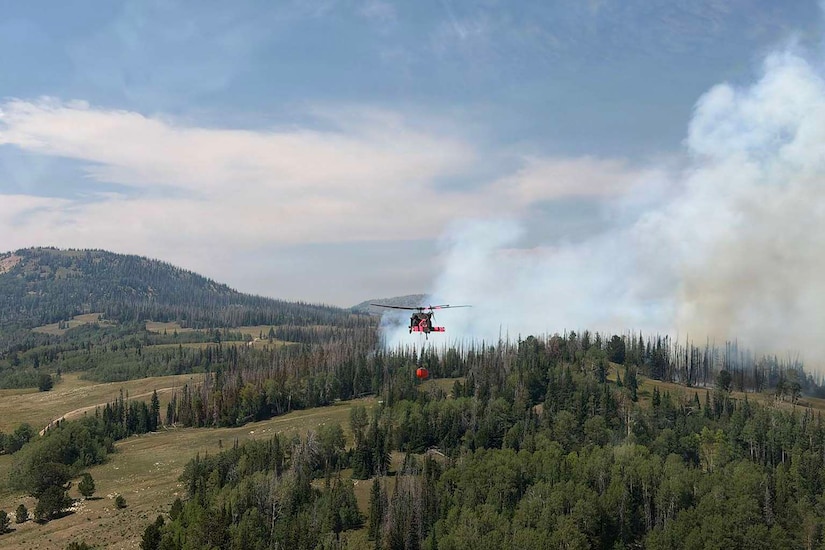
Soldiers assigned to 2nd Battalion, 211th General Support Aviation Battalion are conducting water bucket drops over the Rocky Canyon Fire in Morgan County, Utah, to slow the fire's spread.  

"We have two UH-60 Black Hawks and aircrew members and support personnel who are helping with fire suppression activities on this fire," said Army Lt. Col. Penny McCarthy, battalion commander. 

Guard members began wildfire support Aug. 5, assisting with the Black Canyon Fire in Sanpete County, Utah. Several days later, the mission shifted to the Rocky Canyon Fire. When local authorities request assistance, the Utah National Guard is activated to support emergency response efforts through the state's department of emergency management and the governor's office. 

"We stand ready to support our state when these types of incidents occur," McCarthy said. 

Soldiers quickly transitioned from training to real-world operations. For the pilots and aircrews, that means long days, multiple flights and repeated water bucket drops. Army Chief Warrant Officer 4 Chris Aylstock, a pilot supporting the mission in Morgan County, said crews are working approximately 12-hour shifts, with pilots sometimes spending seven to eight hours in the air. 

"We fly out there, get gas, get the word to launch, get on the fire, do a full fuel cycle, come back, get gas, shove a sandwich down the throat, go back out and do another fuel cycle," Aylstock said.

The demanding schedule requires careful planning and continuity between crews. Pilots are rotated through the mission while maintaining overlap between shifts so crews arriving for duty understand the fire and the operation's current status. 

"We try to have at least five pilots doing some kind of overlap each day," Aylstock said. "That way, we just have some experience going from one day to the next."

It takes an entire unit to keep the aircraft in the fight. Each helicopter undergoes meticulous maintenance to ensure effectiveness. 

"We have our maintainers back at [the base] turning wrenches and working overtime to get these aircraft ready to launch each morning," Aylstock said. "This really is an all-hands-on-deck push to get these crews out the door. Before each day's mission, crews receive updated maps, frequencies and information about the fire before launching from their staging location."  

Each morning, crews fly from West Jordan, Utah, to Morgan County, then conduct an operational briefing with fire managers and receive the information they need to integrate safely into the larger firefighting effort. While on the fire, Utah Army National Guard helicopters use 530-gallon buckets to drop water on areas identified by fire managers. 

Aylstock said the aircraft supports the priorities of the incident commanders with direct attacks on the fire, supporting backburning operations, pretreating vegetation with water and providing structure protection, all while working in conjunction with other aerial assets and ground crews. 

The operation requires constant coordination with other aircraft. Air tankers and helicopters share the same airspace, requiring National Guard crews to adjust their timing and routes throughout the day. 

The distance between the water source, staging area and fire can also affect how many drops a crew can make during a shift. Aylstock said one of his flight days included 48 bucket drops, with crews adjusting their operations as the fire and mission changed. 

The guard members start preparing months before wildfire season begins.  

"Our battalion has firefighting capability. It is something that we practice ... all the way up until our fire season starts on April 1, so that we are prepared to respond to any kind of incident," McCarthy said. "We do a lot of coordination with our partners from the Department of Natural Resources, the United States Forest Service and local agencies to gain education and coordination so that we're best prepared for fires when our firefighting season kicks off," she added.  Aircrews also conduct flight evaluations and training specifically designed to prepare them for firefighting missions.

"A lot of the tasks that we do, and our training flights, [are] very closely aligned with this type of mission, when we're called upon to respond to fires," McCarthy said. 

That preparation is particularly important because wildfire aviation missions carry significant risks and require experienced crews. Aylstock said pilots assigned to serve as fire pilots typically have extensive flight experience, and the unit deliberately rotates experienced pilots through the mission to build depth across the battalion.  

For the crews flying the Rocky Canyon Fire, the long hours and demanding conditions are balanced by the knowledge that their work directly supports communities in their own state. 

"One of the most important things that we do on these fires, of course, is preserving life, preserving property and easing human suffering," McCarthy said. "And it just hits different when it's our neighbors." Some soldiers in the battalion live in or have family members in communities affected by wildfires, making the mission particularly personal. 

For the soldiers flying above the fire, the mission is more than a training requirement. It is an opportunity to put years of preparation and experience to work protecting the communities they call home. 

"It's really important for us; it's a tremendous honor for us to be able to support the firefighting efforts when we're called upon, especially when it's just right in our own backyard," McCarthy said.

Right


ABOUT   NEWS   HELP CENTER   PRESS PRODUCTS
Facebook   X   Instagram   Youtube

Unsubscribe | Contact Us


This email was sent to sajanram1986.channel@blogger.com using Granicus Communications Cloud on behalf of: U.S. Department of War
1400 Defense Pentagon Washington, DC 20301-1400

Naval Academy Integrates Robotics, Autonomous Systems Into Summer Training

Left
U.S. War Department: News
Naval Academy Integrates Robotics, Autonomous Systems Into Summer Training
Aug. 12, 2026 |  By U.S. Naval Academy

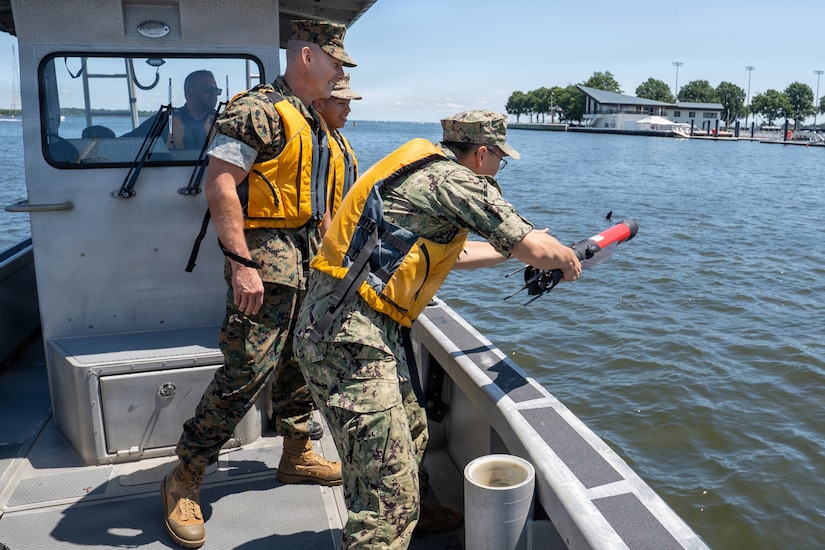
U.S. Naval Academy midshipmen recently completed the inaugural "YP NEXT" training block, deploying robotics and autonomous systems directly from 100-foot yard patrol craft for the first time, marking an important milestone in preparing future naval leaders for an increasingly autonomous maritime battlespace.

"Using our iconic yard patrol craft as 'motherships' for autonomous systems, our remarkable group of midshipmen were the first to execute this innovative concept, integrating autonomous capabilities in the air, on the sea and under the sea," said Marine Corps Lt. Gen. Michael Borgschulte, Naval Academy superintendent. "The future fleet will be crewed, uncrewed and seamlessly integrated, and the future leaders of that fleet are already underway and making way in this critical field."

Held during the third block of summer training in July and August at the school in Annapolis, Maryland, YP NEXT introduced midshipmen to the tactical employment of unmanned and autonomous technologies while reinforcing core competencies in seamanship, navigation, damage control and bridge resource management.

The first robotics and autonomous systems portion of the training block opened with an industry-led field day, exposing midshipmen to advanced uncrewed architectures, while industry partners provided hands-on instruction on the platforms.

Midshipmen applied what they learned during a simulated evolution developed with the Johns Hopkins University Applied Physics Laboratory. Using custom-coded search patterns, midshipmen executed tactical mission profiles to map hydrographic environments, track and identify targets and simulate the neutralization of maritime threats.

"This training block was not just an introduction to technology, but an immersion into the ecosystem," said Navy Cmdr. Donny Peltier, a Naval Academy professor in the weapons, robotics and control engineering department. "We can confidently say no other university offers a program that seamlessly integrates academia, military operations, cutting-edge technology, hands-on experience and industry partnerships like we do."

Under their Drone Dominance Program, the War Department recently directed 80 Neros Archer first-person view, quadcopter drones for use in a training environment at the academy, so that midshipmen can establish a baseline familiarity with low-cost, consumable strike and reconnaissance platforms. 

Industry partners led classroom instruction on the history, capabilities and flight operations of unmanned aerial vehicle attack drones and provided hands-on training. Instructors from the Marine Corps Warfighting Laboratory and the Naval Academy's Adaptive Rapid Engagement Squadron team also taught the midshipmen how first-person view drones can enhance small-unit lethality and provide organic capabilities in combat.

"This is the future of naval warfare in action," Borgschulte said. "Our midshipmen are taking the cutting-edge research developed in our world-class classrooms and laboratories and applying it where it matters most: at sea. They are learning not only how to operate autonomous systems, but how to integrate and employ these technologies in tomorrow's fight."

Following initial ashore and localized evolutions, the midshipmen took to the sea for a Chesapeake Bay and Atlantic Ocean transit that combined rigorous ship handling with real-world exposure to the defense industrial base, academia and operational forces:

  • Baltimore: Midshipmen toured an industry partner maritime defense manufacturing facility, observing how advanced uncrewed surface vessels transition from production lines to operational capabilities.
  • Lewes, Delaware: Midshipmen anchored off the coast to participate in the University of Delaware's Autonomous Systems Bootcamp, collaborating with marine scientists, oceanographers and defense technologists on practical operational tools.
  • Little Creek, Virginia: The training block concluded with the opportunity to work with the naval special warfare community to learn how operators are employing robotics and autonomous systems to defend the homeland and ensure peace through strength.

Rather than displacing fundamental mariner skills, the Naval Academy is committed to ensuring midshipmen understand how autonomous capabilities are designed to augment them. 

This summer training block and YP NEXT mark the opening phase of a comprehensive institutional effort to integrate robotics and autonomous systems concepts across all four years of the midshipman experience. Insights from the initial training block will directly inform future curriculum updates, laboratory research and brigadewide professional training, aligning Naval Academy instruction with Navy and Marine Corps priorities to accelerate adoption of unmanned technology alongside expert human decision-making.

Right


ABOUT   NEWS   HELP CENTER   PRESS PRODUCTS
Facebook   X   Instagram   Youtube

Unsubscribe | Contact Us


This email was sent to sajanram1986.channel@blogger.com using Granicus Communications Cloud on behalf of: U.S. Department of War
1400 Defense Pentagon Washington, DC 20301-1400

DOW Featured Photos

Left
U.S. Department of War: Photos
Joint Boarding
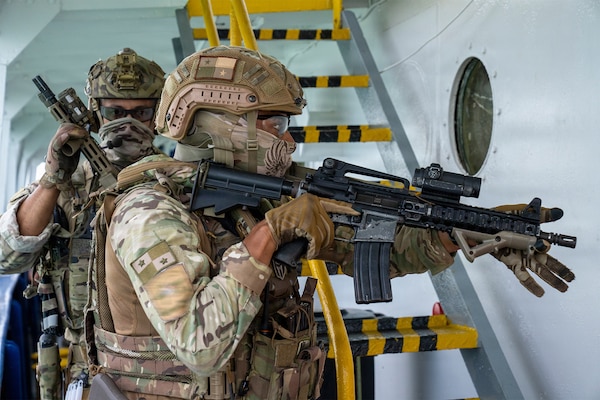
The Coast Guard Maritime Security Response Team West and Panamanian personnel participate in maritim... Photo Details >


Right


ABOUT   NEWS   HELP CENTER   PRESS PRODUCTS
Facebook   X   Instagram   Youtube

Unsubscribe | Contact Us


This email was sent to sajanram1986.channel@blogger.com using Granicus Communications Cloud on behalf of: U.S. Department of War
1400 Defense Pentagon Washington, DC 20301-1400

DOW Featured Photos

Left
U.S. Department of War: Photos
On the Move
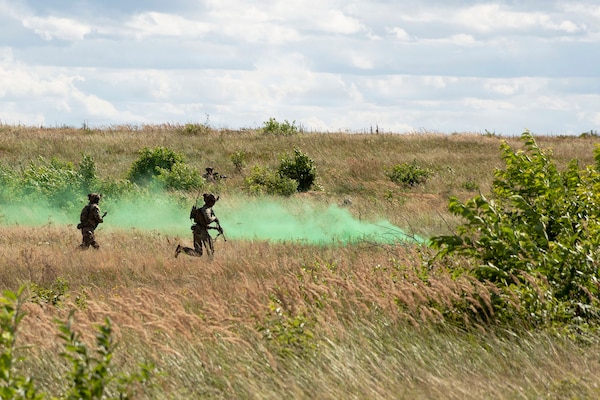
Soldiers prepare for a live-fire exercise at Bemowo Piskie Training Area, Poland, Aug. 11, 2026. Photo Details >
Learning the Ropes
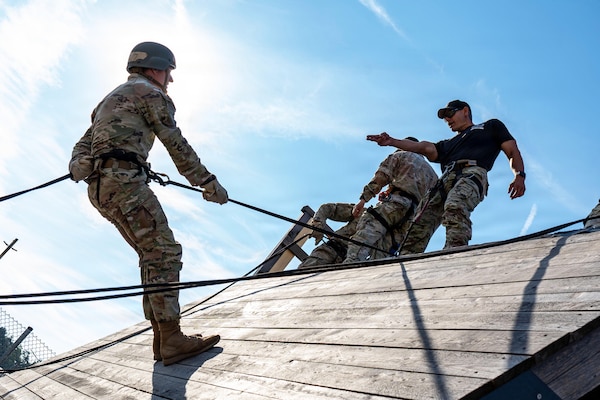
An Army National Guard Warrior Training Battalion (Airborne) instructor teaches a soldier how to rap... Photo Details >
Cannon Crews
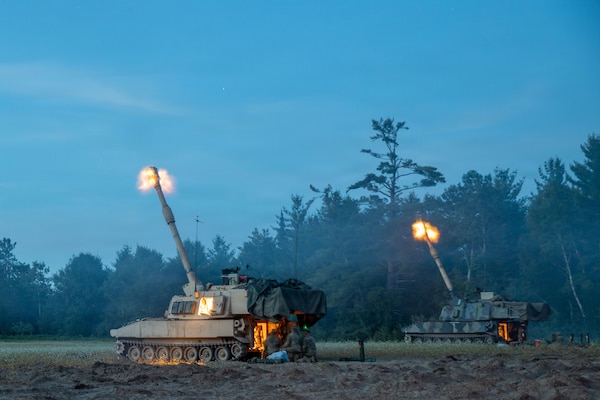
Soldiers assigned to the West Virginia National Guard fire howitzers under limited-light conditions ... Photo Details >
Night Divers
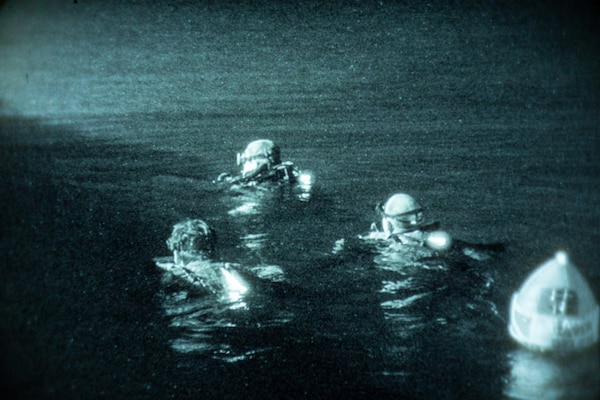
Soldiers assigned to the 5th Special Forces Group conduct nighttime combat dive training during Exer... Photo Details >
Angels in the Air
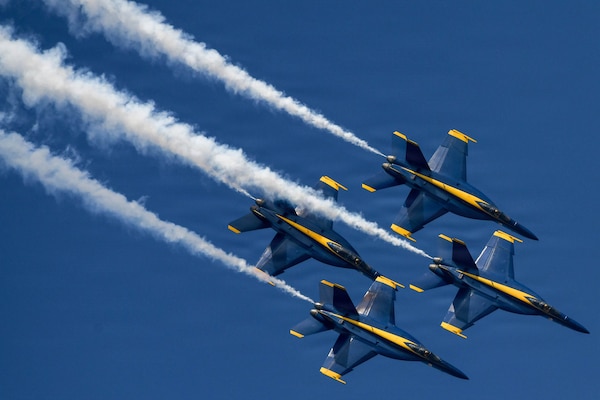
Navy F/A-18 Super Hornet aircraft assigned to the service's flight demonstration squadron, the Blue ... Photo Details >
Sparks Fly
Navy Petty Officer 3rd Class Trevor Cayton uses a grinding tool in the machine shop aboard the aircr... Photo Details >


Right


ABOUT   NEWS   HELP CENTER   PRESS PRODUCTS
Facebook   X   Instagram   Youtube

Unsubscribe | Contact Us


This email was sent to sajanram1986.channel@blogger.com using Granicus Communications Cloud on behalf of: U.S. Department of War
1400 Defense Pentagon Washington, DC 20301-1400

Today in DOW: Aug. 13, 2026

...