Friday, April 3, 2026

U.S., Partner Nations Complete Antisubmarine Warfare Exercise

Left
U.S. War Department: News
U.S., Partner Nations Complete Antisubmarine Warfare Exercise
April 3, 2026 |  By U.S. 7th Fleet Public Affairs

Exercise Sea Dragon 2026 successfully concluded at Andersen Air Force Base, Guam, March 28, marking the completion of 20 days of intensive multinational antisubmarine warfare training. 

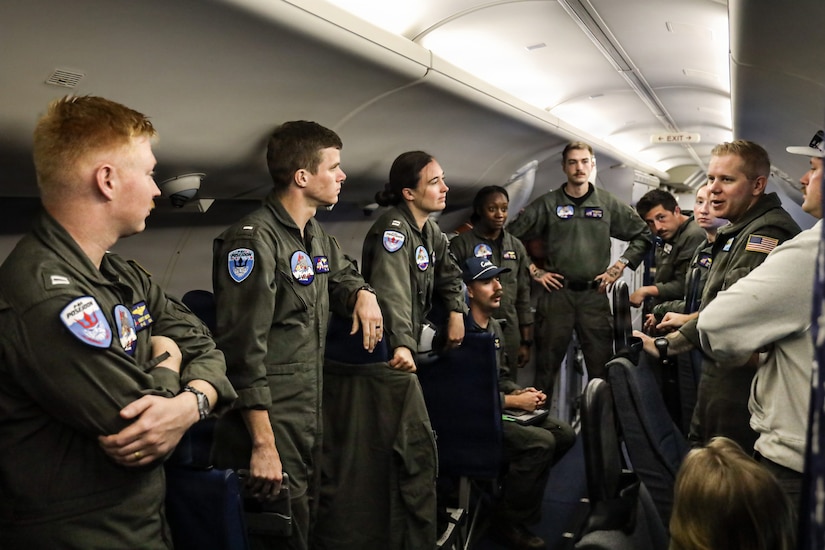
Hosted by Commander, Task Force 72, two Navy P-8A Poseidon aircraft assigned to Patrol and Reconnaissance Squadrons 4 and 45 joined a multilateral force of P-8A aircraft from the Indian Navy, Japan Maritime Self-Defense Force, Royal Australian Air Force and Royal New Zealand Air Force.

This year's exercise continues to enhance the interoperability of shared maritime domain awareness developed during previous iterations. Sea Dragon 2026 improved on participating nations' ability to conduct multinational antisubmarine warfare operations inside a complex and dynamic exercise environment. 

"What we do in Sea Dragon builds more than skill — it establishes team across nations. The shared experience empowers us to fight together more effectively," said Navy Lt. Paolo Aguilar, assigned to Patrol and Reconnaissance Squadron 4. 

Exercises like Sea Dragon highlight the strength of U.S. partnerships and alliances, said Navy Lt. Caitlin Tucker, Patrol and Reconnaissance Squadron 45 pilot.  

"They show that together we're stronger, more capable and ready to deter any aggressor in the Indo-Pacific," Tucker added. 

Sea Dragon 2026 featured a structured training format for tracking drills that included a mobile antisubmarine warfare training target, referred to as the MK-30. The exercise also featured a Navy antisubmarine warfare exercise, in which participants hunted for an active Navy submarine in the area.  

This year, forces operated in the vicinity of Saipan, the capital of the Northern Mariana Islands, to employ recoverable exercise torpedoes and demonstrate the expansion of capabilities trained among the five nations. 

As with previous years, the exercise included a competitive component in which each nation's performance was assessed and graded to earn the Dragon Belt award, testing each nation's antisubmarine warfare tactics and response effectiveness in a realistic scenario. 

Japan's Patrol and Reconnaissance Squadron 3 won the Dragon Belt, held last year by the Royal Australian Air Force. 

Exercises like Sea Dragon, held annually since 2019, demonstrate the Navy's commitment to regional security and strengthening maritime partnerships with allied and partner nations.

Right


ABOUT   NEWS   HELP CENTER   PRESS PRODUCTS
Facebook   X   Instagram   Youtube

Unsubscribe | Contact Us


This email was sent to sajanram1986.channel@blogger.com using GovDelivery Communications Cloud on behalf of: U.S. Department of War
1400 Defense Pentagon Washington, DC 20301-1400

DOW Featured Photos

Left
U.S. Department of War: Photos
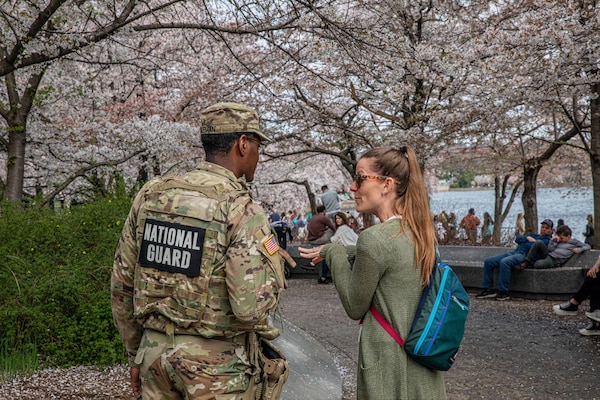
Pink Petal Patrol
Army Spc. Anthony Coleman, assigned to the Joint Task Force District of Columbia, helps a tourist du... Photo Details >


Right


ABOUT   NEWS   HELP CENTER   PRESS PRODUCTS
Facebook   X   Instagram   Youtube

Unsubscribe | Contact Us


This email was sent to sajanram1986.channel@blogger.com using GovDelivery Communications Cloud on behalf of: U.S. Department of War
1400 Defense Pentagon Washington, DC 20301-1400

DOW Featured Photos

Left
U.S. Department of War: Photos
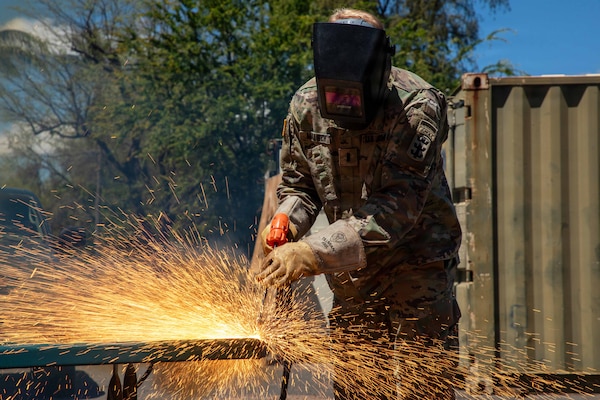
Feeling Sparky
Army 1st Lt. Michael Malsch cuts through metal using an exothermic torch at Schofield Barracks, Hawa... Photo Details >
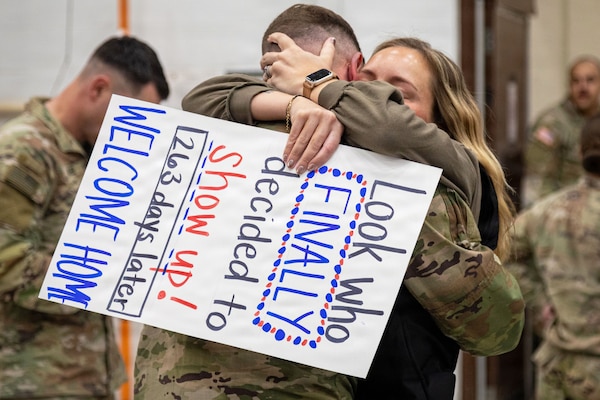
Home Is Where You Are
A loved one embraces a soldier at Fort Riley, Kan., March 28, 2026, following a rotational deploymen... Photo Details >


Right


ABOUT   NEWS   HELP CENTER   PRESS PRODUCTS
Facebook   X   Instagram   Youtube

Unsubscribe | Contact Us


This email was sent to sajanram1986.channel@blogger.com using GovDelivery Communications Cloud on behalf of: U.S. Department of War
1400 Defense Pentagon Washington, DC 20301-1400

DOW Featured Photos

Left
U.S. Department of War: Photos
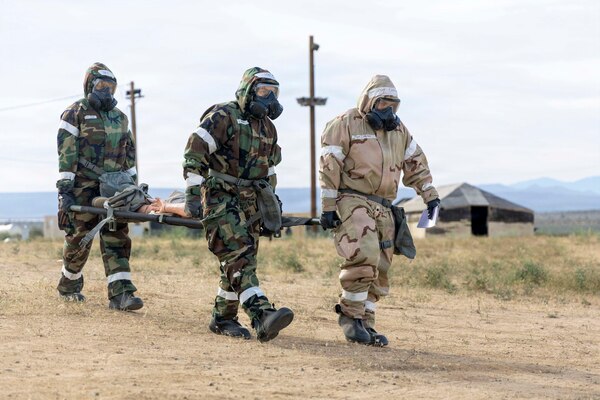
On the Move
Airmen carry a simulated casualty as part of a chemical, biological, radiological and nuclear threat... Photo Details >


Right


ABOUT   NEWS   HELP CENTER   PRESS PRODUCTS
Facebook   X   Instagram   Youtube

Unsubscribe | Contact Us


This email was sent to sajanram1986.channel@blogger.com using GovDelivery Communications Cloud on behalf of: U.S. Department of War
1400 Defense Pentagon Washington, DC 20301-1400

Week in Photos

Left
U.S Department of War: Photo Collections
Week in Photos
Discover the latest on DOW's missions, milestones and people through this curated collection of top photos. View Photos


Right


ABOUT   NEWS   HELP CENTER   PRESS PRODUCTS
Facebook   X   Instagram   Youtube

Unsubscribe | Contact Us


This email was sent to sajanram1986.channel@blogger.com using GovDelivery Communications Cloud on behalf of: U.S. Department of War
1400 Defense Pentagon Washington, DC 20301-1400

American Battle Tactics Help Achieve Victory in Revolutionary War

Left
U.S. Department of War: Feature
American Battle Tactics Help Achieve Victory in Revolutionary War
April 3, 2026 | By David Vergun

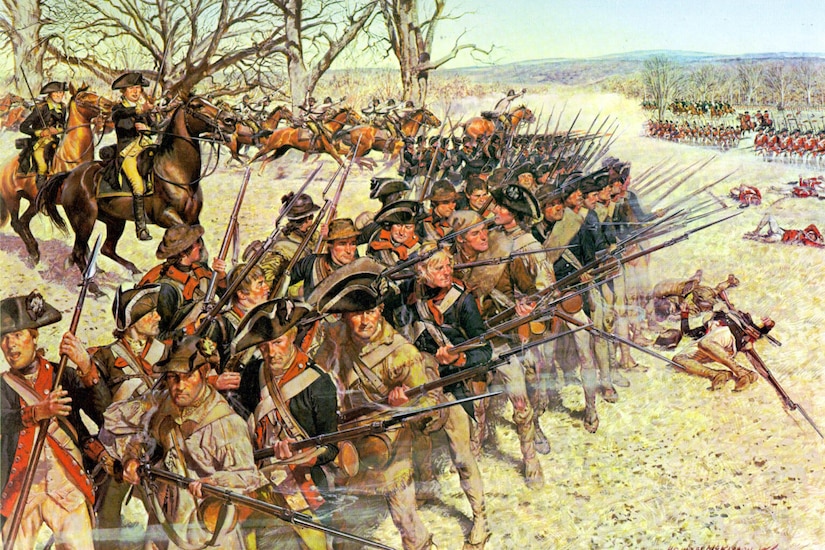
During the Revolutionary War, the Americans often engaged the British through unconventional warfare, also known as the Fabian strategy.

This strategy involves hit-and-run tactics favored by Continental Army Gen. George Washington, as well as other Army and state militia commanders. 

In this approach, instead of initiating frontal assaults in open fields, soldiers hide behind trees, rocks or structures. They then shot into formations of redcoats before quickly withdrawing into the forest. 

These tactics wore the British down through heavy casualties and lower morale — American casualties were minimized. 

The strategy is named after the Roman army Gen. Quintus Fabius Maximus Verrucosus, who used it against Carthage during the Second Punic War, from 218 to 201 B.C.

The American and British soldiers also employed frontal assaults, such as in the Battle of Bunker Hill and the Battle of Long Island. In these pitched battles, soldiers lined up in formations and fired their muskets at each other from about 80 to 100 feet away, getting three or four shots per minute.

As the formations drew closer and with no time to reload their muskets, fighting shifted to bayonets, swords and pikes. 

In addition to these tactics, both sides sent light infantry forward to engage the enemy before the bulk of their forces arrived. They were also used as scouts to determine the enemy's size and location. 

Another key tactic was the siege, which Washington employed at Yorktown, Virginia. The Americans dug trenches, which they used to safely move artillery pieces close to the British, who were surrounded by the Americans on land and by French warships in the Chesapeake Bay.

At sea, tactics aboard warships were different. Ships would pummel each other with cannonballs, hotshot or scattershot, with the goal of sinking the other ship, felling the ship's masts, setting it ablaze and killing sailors.  

Then, as in land combat, close-quarters fighting erupted: as the two ships drew abreast, sailors would jump onto the opposing vessel, killing their enemy with pistols, knives, swords and pikes. 

Meanwhile, reflecting another layer of strategy, Continental Marine sharpshooters took positions on platforms on the mainmast, firing their muskets down at sailors on the other ship. 

Right


ABOUT   NEWS   HELP CENTER   PRESS PRODUCTS
Facebook   X   Instagram   Youtube

Unsubscribe | Contact Us


This email was sent to sajanram1986.channel@blogger.com using GovDelivery Communications Cloud on behalf of: U.S. Department of War
1400 Defense Pentagon Washington, DC 20301-1400

Contracts for Aug. 14, 2026

...