Friday, April 4, 2025

Alert: Gaza: UN rights chief calls for probe into killings of medical workers

Welcome to the United Nations
View in browser
Click 'Download images' to view images
UN News
Global perspective Human stories
Alert 3 April 2025
Gaza: UN rights chief calls for probe into killings of medical workers
[UN News photo]

The recent killings of 15 medical personnel and humanitarian aid workers in Gaza raise further concerns over the commission of war crimes by the Israeli military, the UN High Commissioner for Human Rights told the Security Council on Thursday. 

Read more
UN logo white
facebook twitter soundcloud
COPYRIGHT    |    FAQ    |    FRAUD ALERT    |    PRIVACY NOTICE    |    TERMS OF USE
Unsubscribe    |    Update preferences

Eucom, Africom Leaders Testify on Lethality, Global Deterrence

Left
News
Eucom, Africom Leaders Testify on Lethality, Global Deterrence
April 3, 2025 | By Army Maj. Wes Shinego

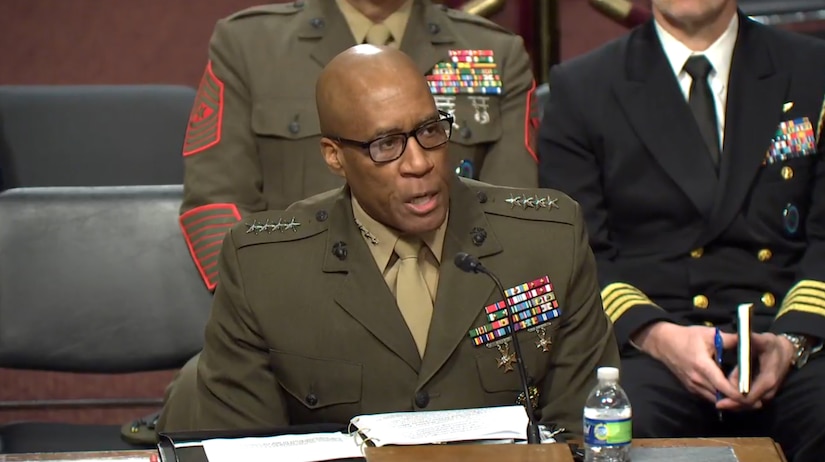
Army Gen. Christopher G. Cavoli, commander of U.S. European Command and Supreme Allied Commander Europe, and Marine Corps Gen. Michael E. Langley, commander of U.S. Africa Command, appeared today before the Senate Armed Services Committee to detail how their commands ensure lethality, warfighting readiness, deterrence and peace through strength.


Their testimonies reflected Defense Secretary Pete Hegseth's focus on building combat-capable forces and modernizing to meet evolving threats while maintaining a strong posture against adversaries like Russia and China. They also addressed critical challenges across Europe and Africa.

Warfighting Insights From Ukraine 

The hearing opened with an examination of the Ukraine conflict, now in its third year, and its lessons for U.S. warfighting.

Cavoli said the military honed its lethality by studying the war's technical and operational dynamics. He noted extensive efforts to adapt tactics, particularly in countering Russian electronic warfare and shifting to smaller, more agile drones at lower echelons, enhancing battlefield flexibility. He underscored the conflict's scale, with Russia losing over 4,000 tanks, rivaling the U.S. Army's total holdings.

"I did not anticipate Ukraine to be able to destroy so much of Russia's warfighting capability," Cavoli said.

He detailed Ukraine's strengths, including its hold on Russian territory in Kursk despite North Korean reinforcements and its success in stalling Russian advances in Donetsk with fortified defenses. This, he suggests, reinforces deterrence by demonstrating the cost of aggression.

Nuclear Deterrence and NATO's Strength

Questions turned to NATO's nuclear deterrence, which is vital to Eucom's mission of maintaining peace through overwhelming strength. Cavoli described his dual roles and detailed a streamlined command process in which he controls nuclear forces in Europe and, if ordered, deploys them under NATO's consensus, ensuring a rapid, lethal response.

"We would want those under the command of a U.S. officer," he said, stressing the importance of American leadership in preserving this deterrent. 

Cavoli's testimony affirmed a deterrence posture that leaves no doubt about NATO's lethal resolve, rooted in over seven decades of success.

Countering Russian and Chinese Aggression 

The generals addressed Russian and Chinese threats beyond Ukraine, focusing on deterrence through lethal presence. Cavoli highlighted Russia's Arctic expansion, with new airfields enabling strikes across the polar cap — the shortest path to U.S. territory — and the Northern Fleet's attempts to penetrate the Greenland-Iceland-United Kingdom gap with submarine-launched cruise missiles threatening the Atlantic.  

Russia's loss of its Syrian naval base in the Mediterranean has diminished its warfighting reach, though Cavoli noted its pursuit of North African alternatives, which Eucom works to counter.

Langley tackled China's growing influence in Africa, pointing to its fortified base in Djibouti and efforts to secure Atlantic sites, which could potentially alter the U.S. defense calculus. He stressed Africom's role in denying China these footholds.

Both generals emphasized the importance of peace through strength — Cavoli through Eucom's naval deterrence, Langley through partnerships that bolster regional stability — ensuring adversaries face a united, lethal front.

Lethality Against Terrorism in Africa 

Langley discussed Africom's operations against terrorism. He described intensified airstrikes on al-Shabab, bolstered by new authorities that enhance lethality.

"We're hitting them hard. I have now the capability to hit them harder," he said, noting their ties with Yemen's Houthis as a lethal escalation.

Langley also warned of broader terrorist networks, referencing the January 2025 New Orleans attack as proof of their reach if unchecked, and highlighted ISIS's growing presence in Somalia and the Sahel region of Africa, with Somalia's networked operations posing a particular challenge. He said Africom's exercises with over 40 African nations strengthen partner alliances and amplify deterrence.

Peace Through Strength and Leadership 

The generals underscored U.S. leadership as essential to deterrence and peace, aligning with goals to leverage alliances for combat effectiveness.

"I see it every day; our allies crave our leadership and are stronger with it, and they're stronger for us," Cavoli said, citing historical examples, such as Ukraine's support in Iraq, to illustrate how U.S. strength inspires allied resolve.

Langley emphasized Africom's role in convening lethal coalitions, with over 40 countries joining exercises to counter threats like China's illicit fishing and enhancing regional warfighting capacity.

When pressed on potential command consolidation, Langley noted terrorism's rise from 2% to 43% of global activity since 2007, arguing for Africom's distinct mission. Cavoli highlighted Africa's growing challenges, reinforcing the need for specialized, lethal commands to maintain peace through strength. 

Right


ABOUT   NEWS   HELP CENTER   PRESS PRODUCTS
Facebook   X   Instagram   Youtube

Unsubscribe | Contact Us


This email was sent to sajanram1986.channel@blogger.com using GovDelivery Communications Cloud on behalf of: U.S. Department of Defense
1400 Defense Pentagon Washington, DC 20301-1400

Thursday, April 3, 2025

French Leaders Learn How U.S. Remembers WWII During Pentagon Visit

Left
News
French Leaders Learn How U.S. Remembers WWII During Pentagon Visit
April 3, 2025 | By C. Todd Lopez

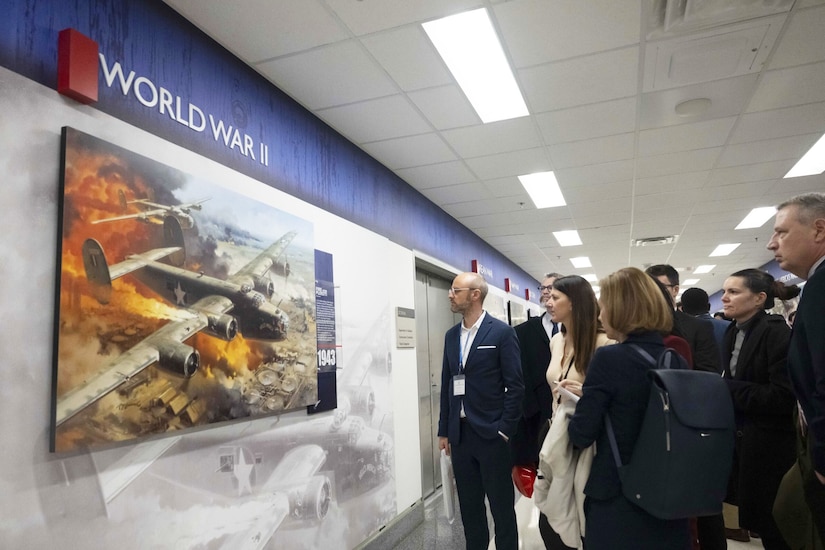
Seven French civilian leaders visited the Pentagon yesterday as part of an educational trip to the United States to learn more about how Americans remember World War II and commemorate veterans who fought in that war.


The visitors were part of the State Department's long-standing International Visitor Leadership Program, which began in 1940 to advance U.S. national security strategy priorities and build long-term relationships between Americans and international leaders in government, business, academia and other fields.

During their three-week iteration of IVLP, participants will visit Washington, New Orleans, Denver, Honolulu and Buffalo, New York, to meet with federal, state and local officials. They will also visit schools and talk with community organizations to cultivate an international community dedicated to innovating World War II history education and preservation.

At the Pentagon, participants met with representatives from the National Cemetery Administration's Office of Engagement and Memorial Affairs, which is part of the Department of Veterans Affairs. They learned how VA cemeteries operate and about their educational outreach programs, such as the Veterans Legacy Program, which allows students and teachers nationwide at the university and K-12 levels to immerse themselves in the rich historical resources within the VA's national cemeteries and VA grant-funded cemeteries.

The French IVLP participants also toured Arlington National Cemetery in Virginia and met with the American Battle Monument Commission to learn about their mission and work preserving American cemeteries in France. Lastly, the group met with the Defense POW/MIA Accounting Agency to learn about the ongoing mission to locate missing service members. As part of the Honolulu portion of their trip, the group will visit the DPAA forensics lab and the USS Arizona Memorial at Pearl Harbor.

Emmanuel Carroz, one of the participants, is the deputy mayor in charge of remembrance and international cooperation for Grenoble, France, one of five cities recognized for its role in France's liberation from Nazi occupation. He is also a teacher and school director at the Academy of Grenoble and an expert in World War II remembrance and commemoration.

Remembering World War II history is important for two reasons, Carroz said.

"The last survivors are going to die, and it's also very important to teach young people they can't imagine, especially now when they talk about the Holocaust, and the Nazis, etc.," he said. "In Europe, now there's a big problem with the increase in the nostalgia of Nazis ideas. So, it's very important to teach again."


In France, Carroz said, he's focused on preparing a commemoration of the 80th anniversary of the liberation of Grenoble, which he said was achieved by resistance fighters and the U.S. Army.

"It's very important to be here today to exchange with American authorities about our common history," he said.

So far on the trip, Carroz said he's been surprised by the difference in the way Americans and the French commemorate World War II and veterans.

"The U.S. government spends a lot of money to preserve these memories," he said. "It's not the same thing in France. you have a lot of organizations who will work with veterans, helping veterans, and about history, and how to work with young people, with students. And in France, it is very different. We don't have all this culture of remembrance. It's very impressive to be here because I see at the heart of your nation is this memory of veterans."

Aissata Seck is the president and founder of the Association for the Memory and History of Senegalese Tirailleurs, which preserves the legacy of colonial troops who fought to defend France during the war.

" is very important for me because I think understanding history helps us better approach contemporary issues and things that are going on today," Seck said. "Of course, these are tragic moments in our history, but it's very important for people today to understand our history."

As the granddaughter of a Senegalese Tirailleur, she believes it's important to establish the facts of their history.

Like Carroz, Seck said she is impressed with how Americans remember World War II and how it differs in France.

"I've really learned a lot since I've been here," she said. "The most important thing that I've learned is that our approaches are quite different, and I've been very impressed about how, in the United States, World War II history seems to be so well anchored into the conception of history as a whole and of American history. It's really impressive to see how the war effort is respected and is seen as important."

After learning how the United States works with students to create digital tools to better remember its World War II veterans, Seck said she'd like to see that happen at home. 

"For the examples that we saw today that involve not only students and the youth but also the use of digital tools, I think those are things that we should put into place in France as well," she said.

Right


ABOUT   NEWS   HELP CENTER   PRESS PRODUCTS
Facebook   X   Instagram   Youtube

Unsubscribe | Contact Us


This email was sent to sajanram1986.channel@blogger.com using GovDelivery Communications Cloud on behalf of: U.S. Department of Defense
1400 Defense Pentagon Washington, DC 20301-1400

Contracts for Aug. 17, 2026

...