Wednesday, December 4, 2024

Acts of Valor Abound on USS Oklahoma During Pearl Harbor Attack

Left
Feature
Acts of Valor Abound on USS Oklahoma During Pearl Harbor Attack
Dec. 3, 2024 | By David Vergun

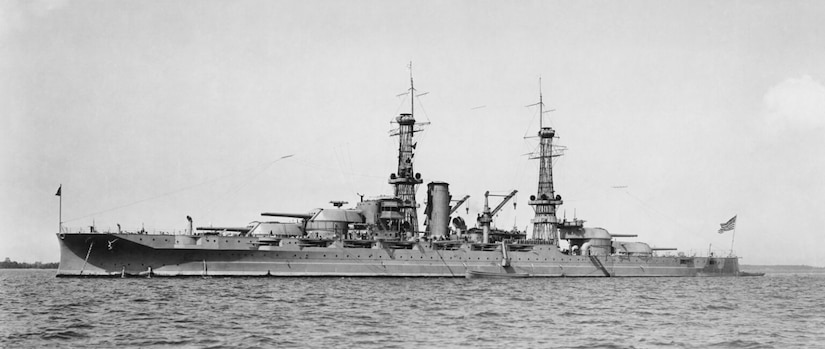
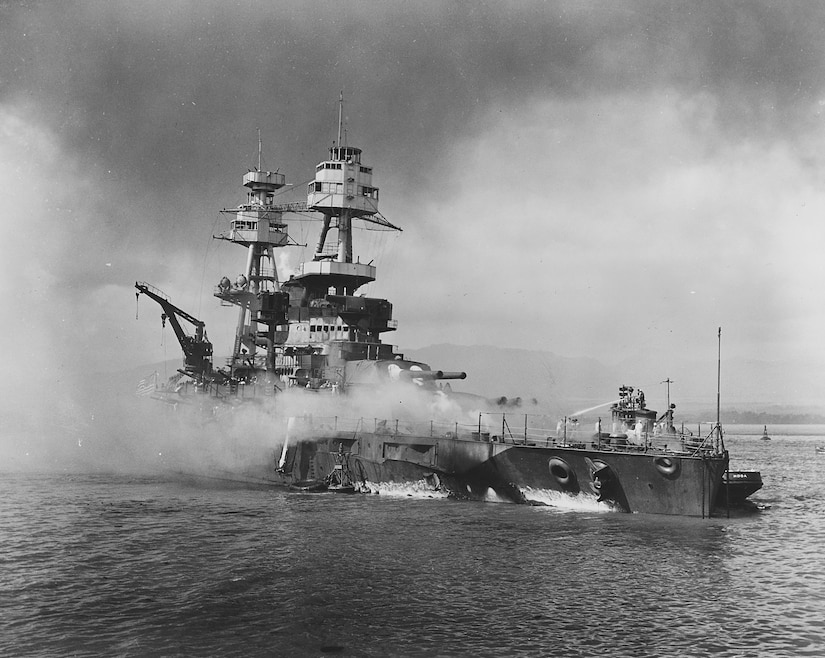
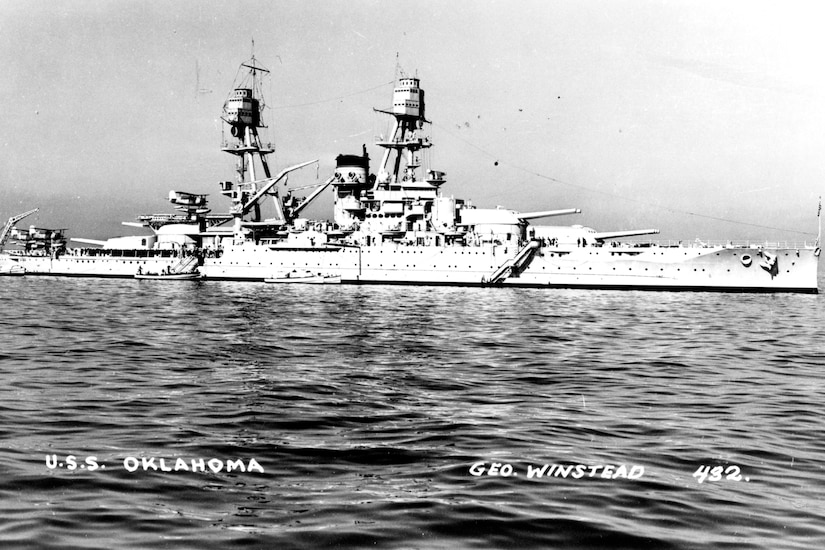
The first Japanese torpedo hit the battleship USS Oklahoma just before 8 a.m., Dec. 7, 1941, in a surprise attack on the U.S. Pacific Fleet at Pearl Harbor, Hawaii. 


1916.
Camden, N.J. 
Protected convoys during World War I and rescued U.S. citizens during the Spanish Civil War.
1944 and scrapped in 1946.
The Virginia-class nuclear powered attack submarine USS Oklahoma, which has been under construction since Aug. 2, 2023, is named in honor of those who served from that state and the World War II battleship. 

Eight more torpedoes soon followed, ripping open the hull of the battleship, causing it to list 40 degrees and capsize just 12 minutes after the first explosion. 

Because the ship turned over so quickly, many of the crew were trapped inside. Survivors banged against the bulkheads in hopes of being rescued. 

Throughout the day, shipyard workers wielding oxyacetylene torches and led by Julio DeCastro, a Hawaiian native, cut holes in the hull in attempts to extract the trapped crew. 

The efforts resulted in 32 being extracted but many dozens more perishing inside the ship's bowels. In all, 429 died. 


Navy Ensign John C. England entered the smoke- and flame-filled ship and rescued three of the trapped crewmen, but he died during his fourth attempt.  

Although his highest medal was only the Purple Heart, he was honored in other ways. In 1943, the destroyer escort USS England was named for him and served for the remainder of the war. Then, in 1962, the guided-missile cruiser USS England was launched in his honor. 

There were also two Medal of Honor recipients. 


After the torpedoes tore through the ship, Navy Ensign Francis C. Flaherty remained in one of the ship's turrets, providing light with a flashlight so that the turret crew could find the way out. When the Oklahoma rolled completely over, he was trapped inside the hull and perished. 

In addition to the Medal of Honor, the destroyer escort USS Flaherty, commissioned in 1943 and used throughout World War II, was named for him. 

Navy Seaman 1st Class James Richard Ward also remained in one of the other ships' turrets with a flashlight, enabling many of the crew to escape. He perished there, as well. 

The Edsall-class destroyer escort USS J. Richard Ward, commissioned in 1943, was used throughout World War II. 

The Defense POW/MIA Accounting Agency laboratory staff succeeded in recent years to identify the remains of all of those who were unaccounted for through advanced forensic methods. 


In all, eight battleships were struck, along with 13 other vessels and nearby airfields. The attack, which launched from six aircraft carriers and came in two waves, resulted in 2,403 killed and 1,178 wounded. 

Although salvaged in 1943, the Oklahoma was too damaged for further service during the war. 


Right


ABOUT   NEWS   HELP CENTER   PRESS PRODUCTS
Facebook   Twitter   Instagram   Youtube

Unsubscribe | Contact Us


This email was sent to sajanram1986.channel@blogger.com using GovDelivery Communications Cloud on behalf of: U.S. Department of Defense
1400 Defense Pentagon Washington, DC 20301-1400

USS Arizona's Crew Displays Valor Amid Carnage at Pearl Harbor

Left
Feature
USS Arizona's Crew Displays Valor Amid Carnage at Pearl Harbor
Dec. 3, 2024 | By David Vergun

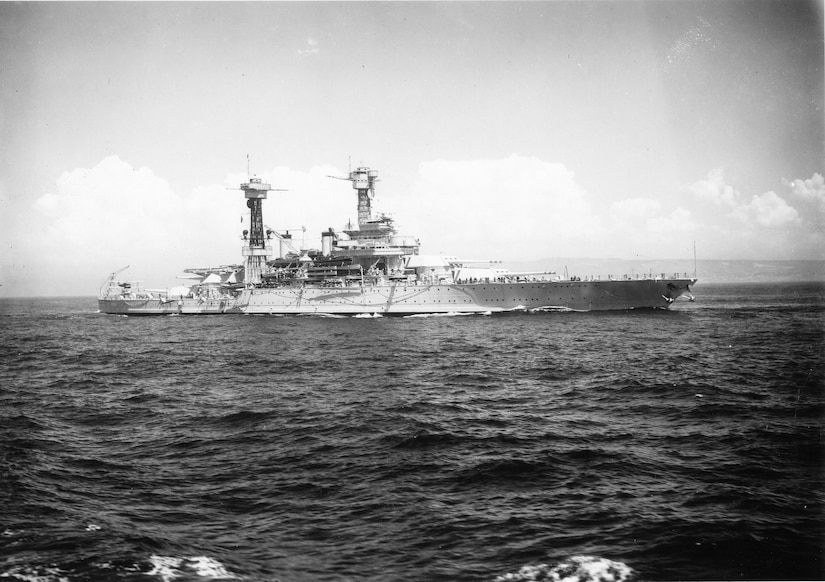
Just after 8 a.m. on Dec. 7, 1941, the battleship USS Arizona, at Pearl Harbor, Hawaii, was attacked by Japanese bombers multiple times. 


1916
Brooklyn Navy Yard, N.Y. 
No World War I battle service. Before the Japanese attack, the ship deployed for peacetime cruises in the Atlantic, Mediterranean and Pacific oceans.
1941 
The Arizona's bell is on display at the University of Arizona. A gun, mast and anchor from the battleship are on display in Phoenix. The Virginia-class submarine USS Arizona was laid down on Dec. 7, 2022, in Groton, Connecticut. It's in the process of being completed. 

At 8:06 a.m. a bomb detonated the ship's magazines, causing catastrophic damage and fires, sinking the ship and killing 1,177 of the 1,512-person crew — about half of all lives lost during the attack on all of the ships and airfields.


Three Medals of Honor were awarded to crew members.  

Navy Lt. Cmdr. Samuel G. Fuqua saw a Japanese airplane fly by, so he ran to the ship's quarterdeck. Immediately, he was knocked unconscious by a massive explosion.

When Fuqua came to, he quickly started directing sailors to fight the fire and rescue the wounded. According to a National WWII Museum's account of the attack, the Arizona's sailors used hand-held, carbon dioxide extinguishers because there was no pressure in the fire hoses. The extinguishers were no match for the growing inferno on the ship, but they knocked down the flames enough to allow some to escape.  

As the enemy continued bombing and strafing the Arizona and other nearby ships, Fuqua directed other sailors to fight the flames so they could get as many wounded men off the ship as possible. According to his Medal of Honor citation, Fuqua "supervised the rescue of these men in such an amazingly calm and cool manner and with such excellent judgment that it inspired everyone who saw him" to carry on despite the pandemonium. 

Fuqua stayed on the quarterdeck and directed the exodus until he was satisfied that all the men who could be saved were off the ship. Only then did he leave the Arizona on the last boatload of survivors.    

Fuqua retired from the Navy in 1953 as a rear admiral. He died in 1987. 

Navy Capt. Franklin Van Valkenburgh's Medal of Honor citation reads in part: "He gallantly fought his ship until the USS Arizona blew up from magazine explosions and a direct bomb hit on the bridge, which resulted in the loss of his life."

The destroyer USS Van Valkenburgh, named in his honor, was commissioned in 1944. 

Navy Rear Adm. Isaac C. Kidd, the highest-ranking officer on battleship row, immediately went to the bridge of the Arizona to direct recovery efforts during the attack, instead of abandoning ship. He was killed when the ship's magazine exploded after the bridge took a direct hit from a bomb.

Unlike most of the other vessels at Pearl Harbor, damage to the Arizona was so extensive that it could not be salvaged. 

While the Arizona suffered the most severe damage of the eight battleships at Pearl Harbor, it's the only one to survive as a monument — albeit on the Pearl Harbor seabed — where it's known as the USS Arizona Memorial. All of the other battleships were scrapped or scuttled after the war. 


The Arizona has been designated a National Historic Landmark administered by the National Park Service. Thousands of people visit the site daily, with about 2 million people annually honoring those lost that day.  


Right


ABOUT   NEWS   HELP CENTER   PRESS PRODUCTS
Facebook   Twitter   Instagram   Youtube

Unsubscribe | Contact Us


This email was sent to sajanram1986.channel@blogger.com using GovDelivery Communications Cloud on behalf of: U.S. Department of Defense
1400 Defense Pentagon Washington, DC 20301-1400

USS California Crew Scrambles to Defend Ship After Pearl Harbor Attack

Left
Feature
USS California Crew Scrambles to Defend Ship After Pearl Harbor Attack
Dec. 3, 2024 | By David Vergun

At 8:05 a.m. on Dec. 7, 1941, two Japanese aerial torpedoes struck the battleship USS California, tearing a 40-foot hole in its hull, during a surprise attack on Pearl Harbor, Hawaii. 


1921
Vallejo, Calif.
Operated in the Atlantic and Pacific oceans in the 1920s and 1930s.
1947
The battleship's bell is on display at California State Capitol Park, Sacramento, Calif. The Virginia-class submarine USS California, commissioned in 2011, is in active service.

The crew immediately sprang into action, suppressing fires, operating antiaircraft guns and rescuing those below deck. 


Four Medals of Honor were awarded to crew members for their acts of valor. 

Navy Ensign Herbert C. Jones rescued a sailor from inside the smoke-filled ship. He then led an anti-aircraft battery, firing on Japanese planes. 

When a mechanical hoist used to load ammunition to the gun battery was damaged, he led a group of men to manually haul rounds, each weighing 50 pounds, up to the gun from the magazine three decks down. 

Jones refused to be evacuated from below deck as he continued to move ammunition; he died in the smoke, fire and explosions that followed. 

The destroyer escort USS Herbert C. Jones was launched in 1943 in his honor. 

Navy Lt. Jackson C. Pharris was in charge of ordnance repair below deck when the first Japanese torpedo struck almost directly under his station. 

Pharris was stunned and severely injured by the concussion, which hurled him to the overhead and back to the deck. Quickly recovering, he set up a hand-supply ammunition train for the antiaircraft guns. 

After another torpedo hit the vessel, Pharris was again temporarily knocked unconscious. When he came to, he continued his efforts and took ammunition above to the gunners. 

He also entered flooded compartments, dragging unconscious shipmates to safety who were gradually being submerged in oil and saving many lives in the process. 

In 1972, the destroyer escort USS Pharris was named in his honor.

Like Pharris, Navy Warrant Officer 1 Thomas J. Reeves, chief radioman, assisted in the ammunition line until he was overcome by smoke and fire and died. 


In 1943, the destroyer escort USS Reeves was named in his honor. 

Navy Petty Officer 1st Class Robert R. Scott refused to leave his post, operating the air compressor below deck, which helped to enable the ship's guns. He died at his post. 

In 1943, the destroyer escort USS Scott was named for him. 

During the attacks, 104 crew members were killed, and the ship sustained heavy damage. 

On Oct. 10, 1942, the California was refloated and left Pearl Harbor for the Puget Sound Navy Yard in Bremerton, Washington, to undergo further repairs and extensive modernization, including a new superstructure and updated gun batteries, improved fire control systems, anti-torpedo hull "bulges," and armor deck plating.  

The battleship subsequently participated in the battles of Saipan, Guam, Tinian, Surigao Strait, Lingayen Gulf and Okinawa.  

The battleship was sold to Bethlehem Shipbuilding Corporation in Pennsylvania for scrap in 1959. 

Right


ABOUT   NEWS   HELP CENTER   PRESS PRODUCTS
Facebook   Twitter   Instagram   Youtube

Unsubscribe | Contact Us


This email was sent to sajanram1986.channel@blogger.com using GovDelivery Communications Cloud on behalf of: U.S. Department of Defense
1400 Defense Pentagon Washington, DC 20301-1400

West Virginia's Skipper Makes Heroic Effort to Save Ship at Pearl Harbor

Left
Feature
West Virginia's Skipper Makes Heroic Effort to Save Ship at Pearl Harbor
Dec. 3, 2024 | By David Vergun

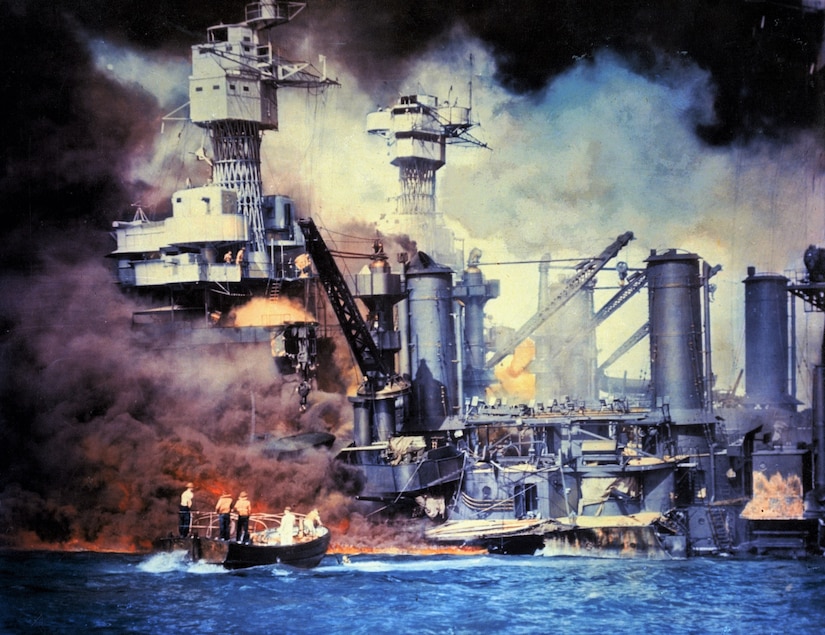
The battleship USS West Virginia was struck by two bombs and at least seven torpedoes that caused extensive flooding on the morning of Dec. 7, 1941, during Japan's surprise attack on the U.S. Pacific Fleet at Pearl Harbor, Hawaii. 


1923 
Newport News, Va.
The West Virginia participated in a number of training exercises in the 1920s and 1930s in the Atlantic and Pacific oceans. 
In 1947, the battleship was decommissioned and assigned to the Pacific Reserve Fleet. It was dismantled in 1959. 
Several parts of the ship have been preserved. An antiaircraft gun is on display in City Park in Parkersburg, West Virginia, and the vessel's wheel and binnacle are at the Hampton Roads Naval Museum in Norfolk, Virginia.  

Oil fires from the adjacent battleship USS Arizona soon spread to the West Virginia, setting it ablaze.  

The ship's commander, Navy Capt. Mervyn S. Bennion, was severely wounded by shrapnel from an explosion on the adjacent battleship USS Tennessee. Still, he continued to direct efforts to save the ship until he died from loss of blood. For his valor, Bennion would earn the Medal of Honor. 

Some West Virginia's crew, including Navy Petty Officer 2nd Class Doris Miller, an African American mess attendant, took gun positions that remained operable; others fought fires and sought to control flooding from the multiple holes in the ship's hull. 

Miller also attempted to move Bennion to a first aid station, but the skipper refused to leave his post. 

For his valor, Miller earned the Navy Cross Medal, which is the second highest medal a service member can earn after the Medal of Honor. 


As the ship took on water, it started listing to the left, but swift counter-flooding measures by the crew kept it from capsizing, and the West Virginia eventually came to rest upright on the shallow harbor floor, which facilitated later salvage efforts.  

As a result of the attack, 106 of the crew perished, along with one crew member from the battleship USS Tennessee who was assisting with firefighting.  

Efforts by the Defense Department to recover the remains resulted in all but 25 to be identified. Analysts with the Defense POW/MIA Accounting Agency are currently working to make further identifications of those disinterred from nearby burial sites on Oahu. 


Besides the West Virginia, seven other battleships were struck, along with 13 other vessels and nearby airfields. The attack, which launched from six aircraft carriers and came in two waves, resulted in 2,403 killed and 1,178 wounded. 

The United States declared war against Japan the next day.  

Salvage efforts for the West Virginia and other ships began almost immediately after the attack on Pearl Harbor. 

On April 30, 1943, the West Virginia left Pearl Harbor for the Puget Sound Navy Yard in Bremerton, Washington, to undergo further repairs and extensive modernization, including a new superstructure, updated gun batteries and armor plating.  


The battleship returned to Pearl Harbor on Sept. 23, 1944, then steamed to the western Pacific Ocean to participate in battles that included Surigao Strait, Leyte and Lingayen Gulf in the Philippines and later supporting the landings on the Japanese islands of Iwo Jima and Okinawa. 

On Aug. 31, 1945, the West Virginia sailed into Tokyo Bay and was present for Japan's formal surrender on Sept. 2, 1945, ending World War II. 

Later that month, the West Virginia transported U.S. occupation troops from Japan to the United States.   

Also, the ship's mast is on the campus of West Virginia University, and its bell is on display at the West Virginia State Museum in Charleston. 

The aircraft carrier USS Doris Miller, scheduled to be laid down in January 2026, is named for the sailor aboard the West Virginia who earned the Navy Cross. Miller was killed in action during the Battle of Makin. 

The ship's name lives on in the Ohio-class, ballistic-missile submarine USS West Virginia, which was commissioned in 1990 and is still in service. 

Right


ABOUT   NEWS   HELP CENTER   PRESS PRODUCTS
Facebook   Twitter   Instagram   Youtube

Unsubscribe | Contact Us


This email was sent to sajanram1986.channel@blogger.com using GovDelivery Communications Cloud on behalf of: U.S. Department of Defense
1400 Defense Pentagon Washington, DC 20301-1400

Ship in Dry Dock Damaged During Pearl Harbor Attack Quickly Refloated

Left
Feature
Ship in Dry Dock Damaged During Pearl Harbor Attack Quickly Refloated
Dec. 3, 2024 | By David Vergun

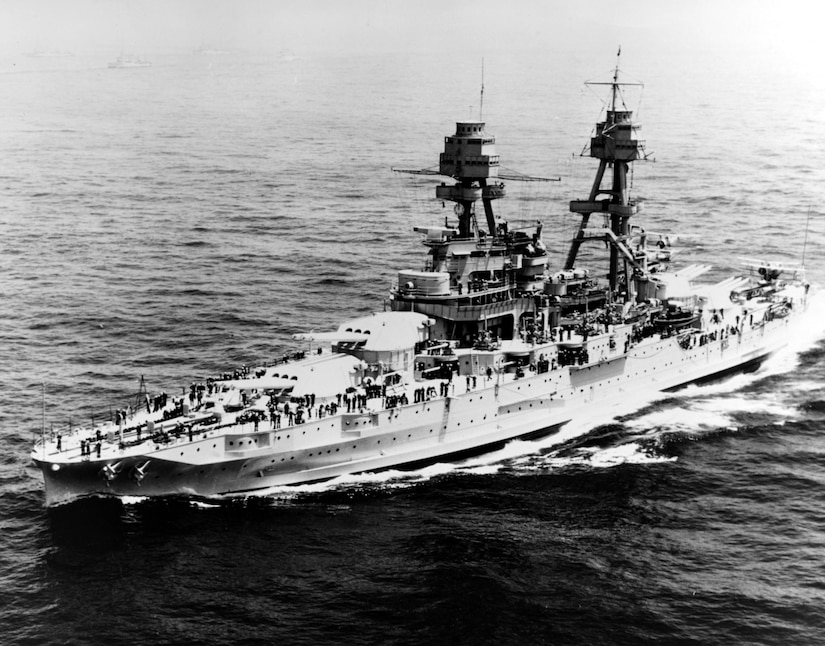
The battleship USS Pennsylvania was in dry dock for maintenance at Pearl Harbor, Hawaii on Dec. 7, 1941, when the Japanese attacked just after 8 a.m. 


1916
Newport News Shipbuilding, Va.
The battleship did not participate in World War I but did serve in the Atlantic and Pacific fleets on routine training exercises leading up to World War II.
1946
The battleship's bell is on display at Pennsylvania State University and two of the ship's 14-inch guns are at the Pennsylvania Military Museum in Boalsburg, Pennsylvania. The Ohio-class ballistic missile submarine USS Pennsylvania was commissioned in 1989 and is still in service.

The ship's crew, who had been on shore, were quickly called back to the ship to man anti-aircraft guns and fight fires.

Multiple Japanese bombers targeted the ship, resulting in damage, fires and the loss of 32 sailors and Marines. 

Following the attacks, repairs were quickly made, and on Dec. 12, 1941, the ship was refloated and steamed to Hunter's Point, San Francisco, California, for repairs that were completed on Jan. 12, 1942. 

World War II battles the Pennsylvania participated in were the Aleutian Islands, Marshalls and Marianas campaigns and operations in the Philippines. 

On Aug. 12, 1945, the battleship was seriously damaged by a Japanese aerial torpedo off the island of Okinawa and was the last major Navy ship to be hit during World War II. 


In 1946, the Pennsylvania was designated as a target ship for the atomic bomb tests at Bikini Atoll. Two atomic explosions failed to sink the ship, which was then towed to Kwajalein, where it was scuttled in 1948. 


Right


ABOUT   NEWS   HELP CENTER   PRESS PRODUCTS
Facebook   Twitter   Instagram   Youtube

Unsubscribe | Contact Us


This email was sent to sajanram1986.channel@blogger.com using GovDelivery Communications Cloud on behalf of: U.S. Department of Defense
1400 Defense Pentagon Washington, DC 20301-1400

USS Nevada Was the Only Battleship to Get Underway During Pearl Harbor Attack

Left
Feature
USS Nevada Was the Only Battleship to Get Underway During Pearl Harbor Attack
Dec. 3, 2024 | By David Vergun

At about 7:30 a.m. on Dec. 7, 1941, several hundred Japanese fighter planes, torpedo and dive bombers began their surprise attack on the U.S. Pacific Fleet at Pearl Harbor, Hawaii.  

Within an hour, the crew of the battleship USS Nevada was struggling to coax the wounded battleship from its mooring.  


1916
Quincy, Mass., 1912
Protected convoys ferrying materiel from the U.S. to Great Britain during World War I.
By the end of World War II, the Nevada was considered too old for further service. It was decommissioned Aug. 29, 1946, and was intentionally sunk off the coast of the Hawaiian island of Oahu by naval gunfire in 1948.
A large model of the Nevada was built for the 1970 film "Tora! Tora! Tora!" 
  
The next day, the United States declared war on Japan. 

Eight battleships were struck, along with 13 other vessels and nearby airfields. The attack, which launched from six aircraft carriers and came in two waves, resulted in 2,403 killed and 1,178 wounded. 

In the opening minutes of the attack, the Nevada was struck by a torpedo and began to take on water. The crew managed to get the ship underway at 8:40 a.m. — the only battleship able to do so that day — despite five subsequent bomb hits causing significant damage and fire. The crew later beached the sinking ship in shallow water so it could be salvaged later. 


In a 2016 interview with DOD News, USS Nevada survivor Geb Galle, who worked in the engine room, said it was a smart decision to keep two boilers online instead of just one so the ship could get underway in a half-hour instead of two hours. 

"I always felt that that quartermaster and that chief engineer had enough foresight and knew how to get things going when things got tough," he said. 

As a result of the action that day, two sailors from the Nevada were awarded Medals of Honor. 


During the height of the strafing and bombing, Navy Chief Edwin J. Hill "led his men of the line-handling details of the USS Nevada to the quays, cast off the lines and swam back to his ship. Later, while on the forecastle, attempting to let go of the anchors, he was blown overboard and killed by the explosion of several bombs," his citation said. 

Despite being knocked unconscious twice from smoke, steam and heat, Navy Lt. Donald K. Ross remained at his post in the dynamo room, where he managed to keep the Nevada steaming away from battleship row, according to his citation. The dynamo room is where the ship's electricity is generated for the propulsion and other systems. 


Of the Nevada's crew of about 1,500, 76 sailors and Marines were killed during the attack or resulting from wounds suffered. Most were recovered and identified in the 1940s, but nine are still unaccounted for. 

The Nevada was salvaged, enabling it to return to combat during World War II. 

After participating in the battle of Attu, Alaska, in May 1943, the battleship was transferred to the U.S. Atlantic Fleet in mid-1943. It participated in the June 6, 1944, D-Day landings in Normandy, France, and in the August and September landings in southern France of that year. 

The Nevada then returned to the Pacific, participating in the 1945 invasions of the islands of Iwo Jima and Okinawa.  


The ship's name lives on in the Ohio-class, ballistic missile submarine USS Nevada, commissioned in 1986 and still in service. 

Right


ABOUT   NEWS   HELP CENTER   PRESS PRODUCTS
Facebook   Twitter   Instagram   Youtube

Unsubscribe | Contact Us


This email was sent to sajanram1986.channel@blogger.com using GovDelivery Communications Cloud on behalf of: U.S. Department of Defense
1400 Defense Pentagon Washington, DC 20301-1400

This Week in DOW: Honoring Heroes, Patrolling Oceans, Uncovering Truth, Out There

View Online This Week in DOW: Honoring Heroes, ...