


Monday, April 20, 2026

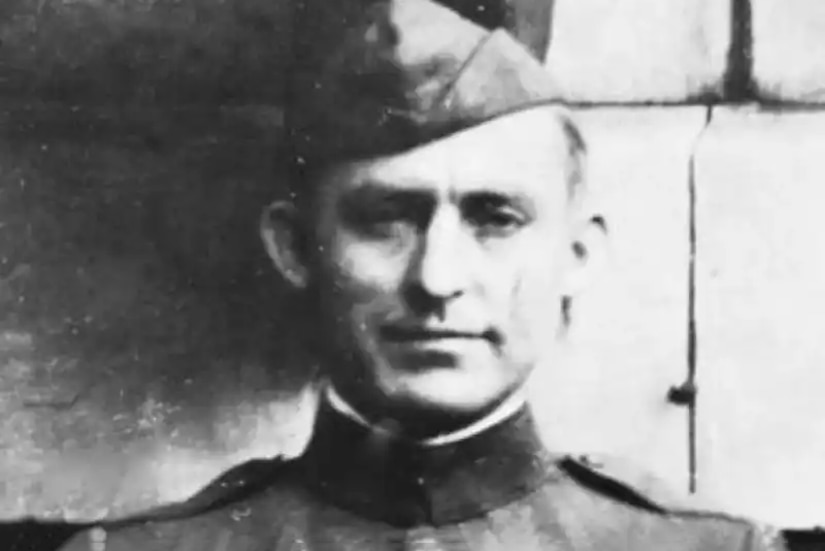
Medal of Honor Monday: Army Sgt. Joseph B. Adkison

Left
U.S. Department of War: Feature
Medal of Honor Monday: Army Sgt. Joseph B. Adkison
April 20, 2026 | By David Vergun

Two consecutive days during World War I changed Army Sgt. Joseph B. Adkison's life forever. His actions during the first led to him receiving the Medal of Honor.

Adkison was born Jan. 4, 1892, in Egypt, Tennessee, to Joseph F. Adkison and Adeline Delashmit. His father died when he was just 7. He grew up with three siblings in Atoka, Tennessee, just north of Memphis.  

He enlisted in the Tennessee Army National Guard in 1917. His unit, Company C, 119th Infantry Regiment, 30th Infantry Division, fought in the second Battle of Lys and the second Battle of the Somme in 1918. 

On Sept. 29, 1918, near Bellicourt, France, Adkison's unit became pinned down by intense German machine-gun fire. 

According to his Medal of Honor citation, Adkison alone rushed across the 50 yards of open ground directly into the face of the hostile machine gun, kicked the gun from the parapet into the enemy trench and captured the three men manning the gun.  

"The gallantry and quick decision of this soldier enabled the platoon to resume its advance," the citation read.


However, Adkison's fortune would soon run out. The following day, Sept. 30, he was struck by enemy artillery fire, suffering severe injuries to his right arm and leg. The wounds ended his military service, and he was medically discharged. 

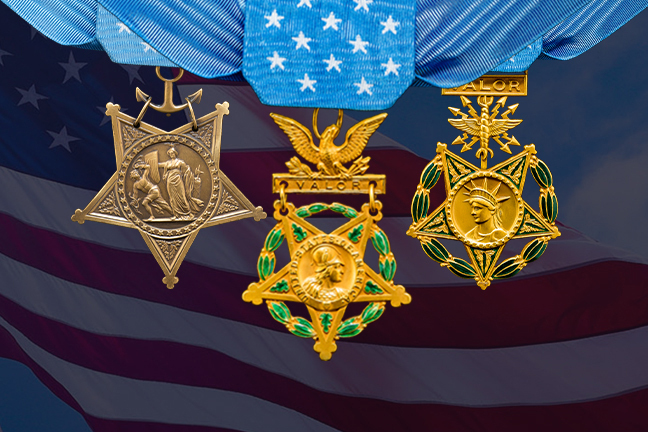
In March 1919, he was invited to the White House to receive the Medal of Honor from President Woodrow Wilson. Adkison declined due to his severe injuries. Instead, an Army officer was sent to the farm he lived on in Tipton County, Tennessee, to make the presentation on behalf of the president. 

Adkison received the medal, surrounded by family and friends, at the Atoka Presbyterian Church. He was the first man from Tennessee to receive the Medal of Honor during the war.

Adkison's injuries affected him for the remainder of his life. He endured repeated hospitalizations and chronic complications, which worsened after he was struck by an automobile in 1937. Despite the public recognition of his heroism, much of his postwar life was spent managing his poor health caused by his wartime injuries. 

Family records indicate Adkison was a very quiet man who shunned publicity and was known affectionately as Bernard, his middle name, by family and friends.  

He died May 23, 1965, in his hometown. His legacy lives on there, as his medal is on display at the Tipton County Museum, and a park in Atoka is named for him. 

This article is part of a weekly series called "Medal of Honor Monday," in which we highlight one of the more than 3,500 Medal of Honor recipients who have received the U.S. military's highest medal for valor. 

Right


ABOUT   NEWS   HELP CENTER   PRESS PRODUCTS
Facebook   X   Instagram   Youtube

Unsubscribe | Contact Us


This email was sent to sajanram1986.channel@blogger.com using GovDelivery Communications Cloud on behalf of: U.S. Department of War
1400 Defense Pentagon Washington, DC 20301-1400

No comments:

Post a Comment