


Thursday, March 19, 2026

Senior Special Warfare Leaders Highlight Community's Capabilities, Define Its Challenges

Left
U.S. War Department: News
Senior Special Warfare Leaders Highlight Community's Capabilities, Define Its Challenges
March 18, 2026 |  By Matthew Olay

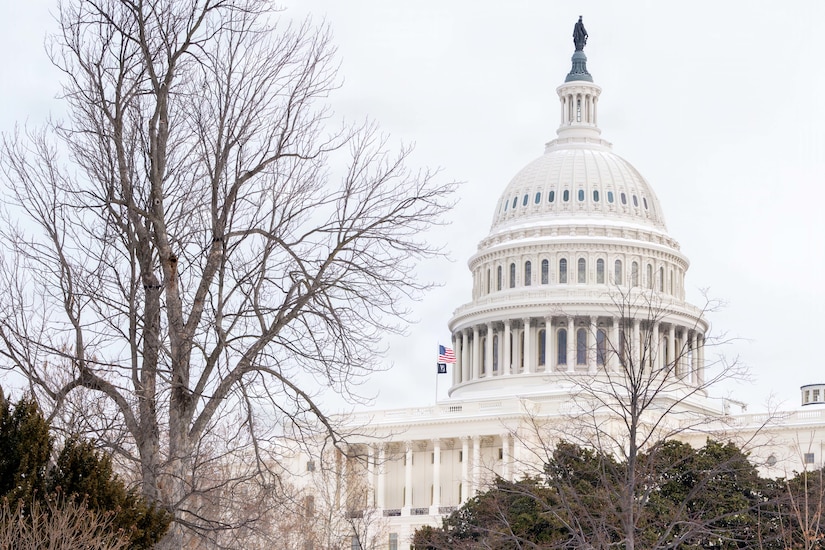
The principal civilian advisor to the U.S. secretary of war for all matters related to special operations forces and the most senior military SOF leader provided testimony at a House Armed Services Committee hearing on Capitol Hill today on the SOF community's capabilities and challenges it faces ahead.

During the hearing, Derrick M. Anderson, assistant secretary of war for special operations and low-intensity conflict, and Navy Adm. Frank M. Bradley​, head of U.S. Special Operations Command, explained how special operations forces are successfully countering U.S. adversaries overseas while comprising just 3% of the joint force and 2% of the War Department's budget.  

"Today's environment rewards forces that can operate persistently and decisively, often below the threshold of armed conflict, generating irregular effects by, through and with our allies and partners in order to produce a whole effect that is much greater than the sum of its parts — your special operations forces provide that capability," Bradley explained during his remarks. 

As an example of this, Anderson pointed out that every major U.S. military operation has a SOF component to it. 

"From the Western Hemisphere, across the Indo-Pacific, to the Middle East, Africa, Europe and beyond, SOF has been decisive in defending the homeland, deterring China and enabling our partners and allies," Anderson said. 

Bradley concurred with that statement, adding that the mission is not accomplished by technology and equipment alone. 

" it is executed by the most decisive advantage that we have: our people," he said. 

Bradley added that the SOF community is strong and getting stronger, empowered by a culture of meritocracy and supported by programs committed to the preservation of SOF personnel and their families.  

During testimony, both leaders explained how building strong partnerships — both between the SOF community and the branches of the joint force and partners and allies around the world — are key to SOF success. 

"When we talk about the military department-to-department relationships, Adm. Bradley and I are 100% working with the other departments not only to give our lessons learned to the Army, the Navy the Air Force, so that their acquisition processes get better, but to learn where can get better," Anderson told committee members. 

Bradley said there are presently 6,500 U.S. SOF operators and enablers deployed in about 80 different countries working to build, maintain and sustain generational partnerships and relationships.


He further explained that such relationships are key to countering influence operations that our adversaries are conducting to prey upon our allies and partners with malign behavior designed to gain unwarned access and leverage over them. 

"Our ability to illuminate that malign behavior, and then to pass it and make our partners aware of it — many times through diplomatic channels, but sometimes directly, mil-to-mil, security service-to-security service — is a critical way to be able to help undermine our adversaries' actions ," Bradley said. 

When asked about the top three challenges Socom currently faces this fiscal year, Bradley said that the ability to project force into increasingly contested environment, where our adversaries pose threats to the U.S., is at the top of the list. 

"Our first priority is always to maintain readiness for the current threats that are out there. Crisis response is that top priority for us being able to respond agilely to wherever might present," Bradley said, adding that demands for SOF crisis response have increased 300% over the last five years. 

The second challenge, he said, is to take advantage of the cyber and virtual domain, which he said are critical maneuver spaces. 

"Another aspect of the rapidly evolving, changing character of warfare is the emergence of abundant, lethal autonomy. And yes, that is a threat that we will have to contend with, but it's also one we can leverage," Bradley said. 

"And finally … our people must continue to be our foundation, ensuring they are trained, ready, supported and educated for the future," he said of the third challenge Socom is most focused on this year. 

Looking ahead, Anderson and Bradley said that SOF's transformation and modernization are key to future success. 

"SOF needs sustained partnership, predictable resourcing and continued modernization," Anderson told the committee, adding that congressional support of the SOF community is greatly appreciated. 

"SOF was purpose built for this era of competition, and we can provide an instant, indispensable asymmetric advantage for the joint force and the nation," Bradley told the committee.  

"And with your continued support, we will meet today's missions while transforming to ensure that we are ready for the challenges of tomorrow," he added.  

Right


ABOUT   NEWS   HELP CENTER   PRESS PRODUCTS
Facebook   X   Instagram   Youtube

Unsubscribe | Contact Us


This email was sent to sajanram1986.channel@blogger.com using GovDelivery Communications Cloud on behalf of: U.S. Department of War
1400 Defense Pentagon Washington, DC 20301-1400

No comments:

Post a Comment

Senior Special Warfare Leaders Highlight Community's Capabilities, Define Its Challenges

View Online Senior Special Warfare Leaders High...