


Friday, March 20, 2026

Department Leader Says Nuclear Triad Must Be Upgraded to Meet Dual Threat

Left
U.S. War Department: News
Department Leader Says Nuclear Triad Must Be Upgraded to Meet Dual Threat
March 19, 2026 |  By C. Todd Lopez

With soon to be two near-peer nuclear-armed competitors to deter, the U.S. must upgrade its nuclear forces, which serve as a backdrop to conventional capabilities that must also be robust, War Department leaders told lawmakers March 17.

"U.S. strategy is at a critical inflection point," said Robert Kadlec, assistant secretary of war for nuclear deterrence, chemical and biological defense policy and programs, while testifying before the House Armed Services Committee's strategic forces subcommittee.

China's strategic nuclear "breakout," Kadlec said — an unprecedented, major increase in bolstering their nuclear capability — means that the U.S. nuclear arsenal must deter both China and Russia.

Compounding that problem, he said, are the budgetary, industrial and programmatic strains of modernizing all three legs of the nuclear triad at once — land, sea and air. An additional factor is that the New Strategic Arms Reduction Treaty with Russia expired in February. That treaty limited the number of strategic warheads for both the U.S. and Russia.

Kadlec told lawmakers the U.S. must plan for conflict or aggression in more than one theater — possibly coordinated by adversaries who hope to test U.S. capabilities or stretch them thin.

"Our force structure posture and nuclear strategy must be robust enough to deter both peers simultaneously, even if we were to be engaged in a major conventional conflict with one," he said.

The U.S., Kadlec said, doesn't have to have the same number of nuclear weapons as both adversaries combined, but it must have a sufficient capability to maintain credible deterrence.

"It means we require a nuclear force sufficient to inflict unacceptable costs on both adversaries under any contingency — ensuring that neither believes that they can exploit a crisis elsewhere for their own gain," he said.

Kadlec said the U.S. nuclear triad must be upgraded to achieve this.

"Our modernization programs are an urgent necessity," he added. "The transition from our legacy systems to a modernized triad occurs during a period of maximum geopolitical risk. There is no room for error."

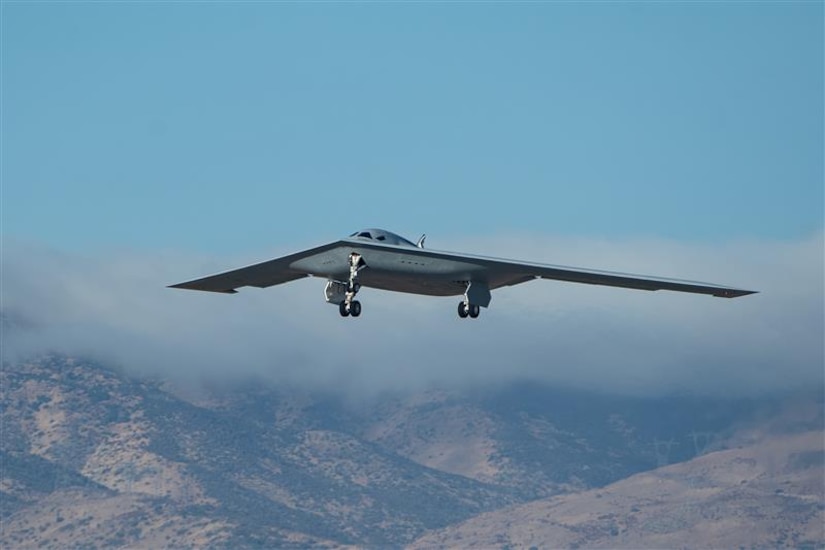
The U.S. must fully fund or accelerate programs like the Sentinel, a land-based intercontinental ballistic missile that will replace the Minuteman III as the ground component of the U.S. nuclear triad, Kadlec said. He also called for funding of the Columbia-class submarine, the B-21 Raider bomber, the long-range standoff cruise missile and the nuclear-armed, sea-launched cruise missile.

"We're entering into a new, more dangerous era," Kadlec said. "The luxury of assuming a single major adversary is gone. The cost of modernizing our nuclear deterrent is significant, but the cost of failing to do so is immeasurably greater. Congress' continued support is essential to ensure we have the deterrent we need to preserve peace, protect our nation and our freedom."

Right


ABOUT   NEWS   HELP CENTER   PRESS PRODUCTS
Facebook   X   Instagram   Youtube

Unsubscribe | Contact Us


This email was sent to sajanram1986.channel@blogger.com using GovDelivery Communications Cloud on behalf of: U.S. Department of War
1400 Defense Pentagon Washington, DC 20301-1400

No comments:

Post a Comment

Contracts for March 19, 2026

View Online FOR RELEASE AT 5 PM ET ...