Wednesday, February 11, 2026

From Backpacks to Bird's-Eye: Drones Are Transforming EOD

Left
U.S. War Department: News
From Backpacks to Bird's-Eye: Drones Are Transforming EOD
Feb. 10, 2026 |  By Alexandra Broughton, Headquarters Air Force, Office of the Director of Civil Engineers

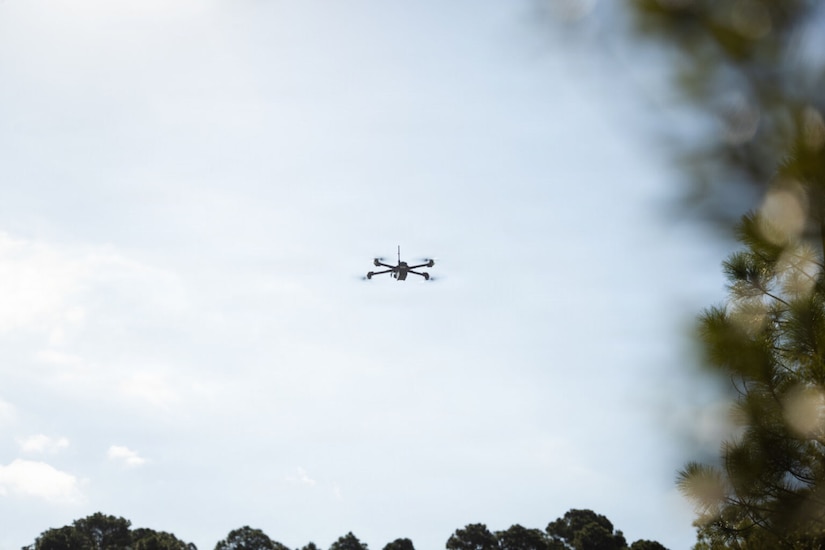
Across a stretch of open terrain at Hurlburt Field, Florida, two airmen assigned to the 1st Special Operations Wing began a race between machines. One guided a ground robot toward a simulated casualty, its treads working across dirt and grass. The other launched a small unmanned aerial system, or drone, which reached the site within seconds.


From above, the drone's camera streamed a clear view of the scene before the robot made it halfway there. It's a new kind of flight reshaping how explosive ordnance disposal airmen execute their mission — and how the Air Force strengthens readiness through innovation.  

Before the adoption of modernized drones, EOD teams relied primarily on heavy robotic platforms to inspect potential explosive threats. The systems still provide valuable standoff capability but require vehicle transport and setup time, limiting their use during operations on foot. In those scenarios, airmen may have to approach hazards themselves. 

Compact and portable drones can be carried in a backpack and launched within minutes. Operated from a safe distance, they stream real-time imagery that helps airmen assess hazards without approaching them. The drones give teams an unmatched view of any environment. They combine optical and thermal cameras for day or night operations with advanced 3D scanning that produces precise digital models in minutes, whether documenting blast sites or mapping entire airfields. 

Drones can be used to establish a visual reference of a runway and to collect updated imagery after an incident. The data helps civil engineers quickly identify changes or damage, supporting timely clearance actions and repair planning to resume air operations.

Built-in artificial intelligence also allows drones to operate with a high degree of autonomy. The system can identify and track targets, hold position, and navigate around obstacles with minimal operator input. These capabilities boost mission tempo and efficiency while augmenting the work of airmen, keeping them out of harm's way and allowing them to focus on critical decision-making.

Drones have not yet replaced every function of traditional robots, but the two technologies currently complement one another on the battlefield.


"The big thing doesn't currently have is manipulation," an EOD airman explained. "I can't pull a battery off something or flip something over , but a robot can."  

Still, drones are increasingly assuming tasks once limited to ground platforms, expanding options for commanders and reinforcing the Air Force's ability to adapt faster than its adversaries. 

Introducing any new technology brings challenges, but EOD airmen at Hurlburt Field have moved quickly to overcome them. Through local innovation projects, the team acquired and tested drones early, giving them a head start in integrating the capability into daily operations.  

"We've had the ability to work through a lot of the growing pains much faster," said an airman assigned to the 1st Special Operations Wing. "Now we're able to disseminate those lessons throughout the career field." 

That progress continues as airmen refine training and certification standards while identifying where drones provide the most operational value.  

"A lot of this is going to fluctuate based on use cases, because we all have a general idea of how we'd want to use this ... but there's still a lot to learn," said another EOD airman.


Wing airmen emphasized that the success of drone integration depends as much on institutional understanding as on technology itself. They said progress requires high-level advocacy to navigate the policies and risk assessments that come with operating in shared airspace, along with trust between ground units employing the systems and aviation communities managing them.  

As one airman explained, the future fight will rely on an enterprise that adapts quickly and learns from those already proving what's possible. 

At Hurlburt Field, EOD airmen are showing how small systems can yield big results. The shift from large ground robots to backpack-sized drones is transforming how they detect, respond and recover — bringing speed, precision and safety to every mission.  

"These are coming. This is the way of the future," said another airman. "If it's not in your shop currently, it probably will be in the very near future. Get ready." 

Right


ABOUT   NEWS   HELP CENTER   PRESS PRODUCTS
Facebook   X   Instagram   Youtube

Unsubscribe | Contact Us


This email was sent to sajanram1986.channel@blogger.com using GovDelivery Communications Cloud on behalf of: U.S. Department of War
1400 Defense Pentagon Washington, DC 20301-1400

DOW Featured Photos

Left
U.S. Department of War: Photos
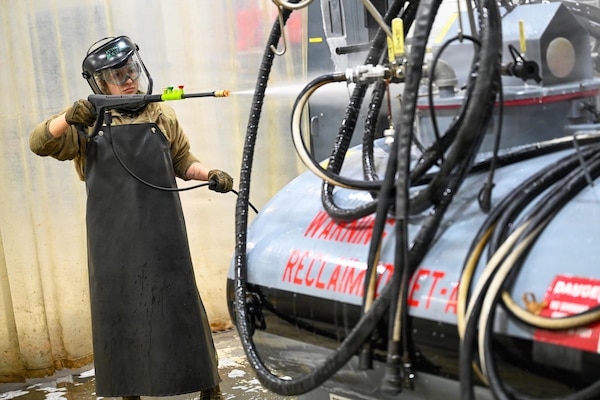
Wash Down
Air Force Airman 1st Class Isabel Laliberte, an aerospace ground equipment technician assigned to th... Photo Details >


Right


ABOUT   NEWS   HELP CENTER   PRESS PRODUCTS
Facebook   X   Instagram   Youtube

Unsubscribe | Contact Us


This email was sent to sajanram1986.channel@blogger.com using GovDelivery Communications Cloud on behalf of: U.S. Department of War
1400 Defense Pentagon Washington, DC 20301-1400

DOW Featured Photos

Left
U.S. Department of War: Photos
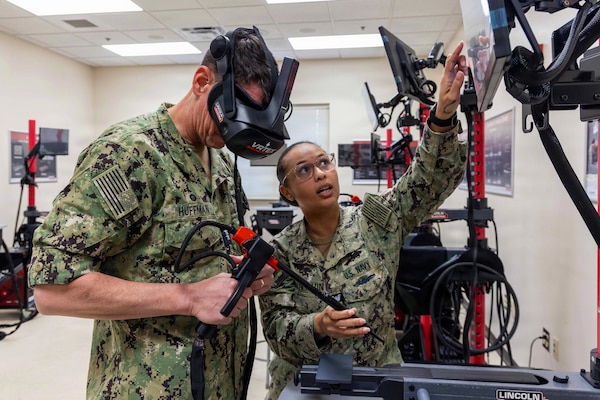
A Taste of Virtual Reality
Navy Petty Officer 1st Class Dominique Brown-Irvin, a steelworker and instructor at the Naval Constr... Photo Details >


Right


ABOUT   NEWS   HELP CENTER   PRESS PRODUCTS
Facebook   X   Instagram   Youtube

Unsubscribe | Contact Us


This email was sent to sajanram1986.channel@blogger.com using GovDelivery Communications Cloud on behalf of: U.S. Department of War
1400 Defense Pentagon Washington, DC 20301-1400

Fact Sheet: C-UAS Policy in the U.S. Homeland

Left
U.S. Department of War: Publications
Fact Sheet: C-UAS Policy in the U.S. Homeland
Feb. 10, 2026
Dec. 8, 2025, the secretary of war signed the Policy Memorandum, "Updated Guidance for Countering Unmanned Aircraft Systems in the Homeland." This memorandum consolidates approximately ten separate outdated memoranda that were inadequate to address the current, complex unmanned aircraft system threat environment.
Right

Press Advisories   Releases   Transcripts

Speeches   Publications   Contracts


ABOUT   NEWS   HELP CENTER   PRESS PRODUCTS
Facebook   X   Instagram   Youtube

Unsubscribe | Contact Us


This email was sent to sajanram1986.channel@blogger.com using GovDelivery Communications Cloud on behalf of: U.S. Department of War
1400 Defense Pentagon Washington, DC 20301-1400

Tuesday, February 10, 2026

DOW Featured Photos

Left
U.S. Department of War: Photos
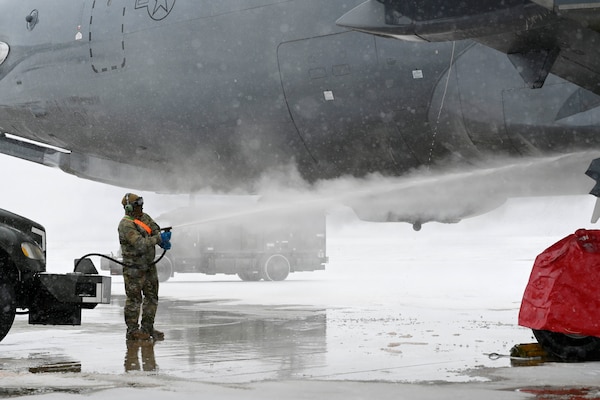
Defrost Duty
An airman assigned to the 157th Air Refueling Wing deices an aircraft during a nuclear operations re... Photo Details >


Right


ABOUT   NEWS   HELP CENTER   PRESS PRODUCTS
Facebook   X   Instagram   Youtube

Unsubscribe | Contact Us


This email was sent to sajanram1986.channel@blogger.com using GovDelivery Communications Cloud on behalf of: U.S. Department of War
1400 Defense Pentagon Washington, DC 20301-1400

DOW Featured Photos

Conducting Colors Navy Petty Officer 3rd Class Cortland Edwa...