Sunday, May 3, 2026

Today in DOW: May 4, 2026

Left
Department of War: Today in DOW
Today in DOW: May 4, 2026
Open Press Events
Secretary of War
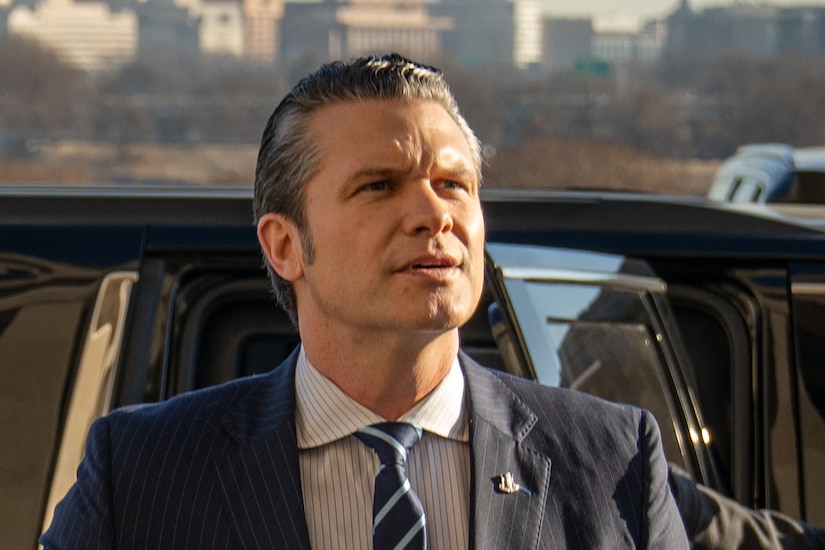
Secretary of War

The secretary has no public or media events on his schedule.   Read More >

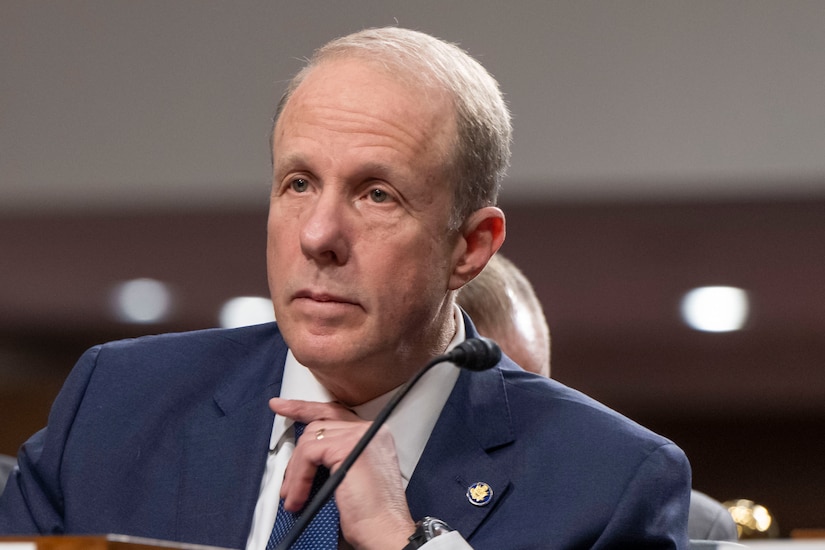
Deputy Secretary of War

The deputy secretary has no public or media events on his schedule.   Read More >

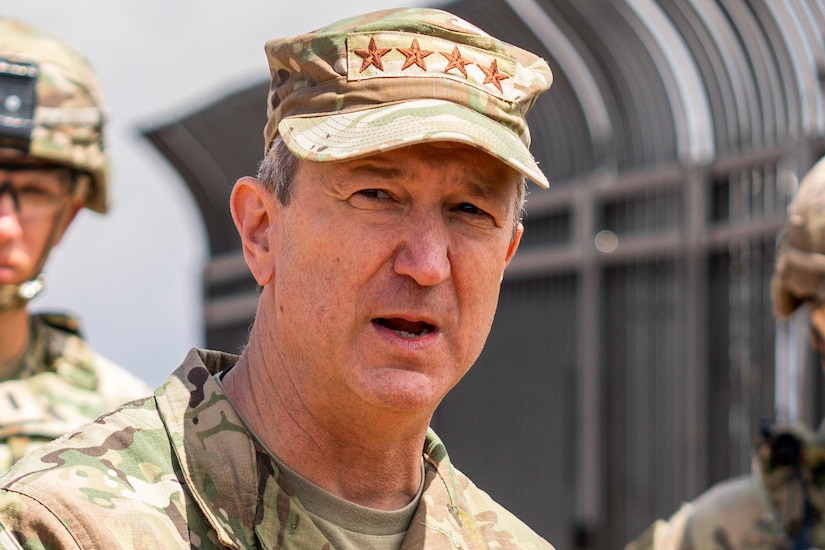
Chairman, Joint Chiefs of Staff

The chairman has no public or media events on his schedule.   Read More >

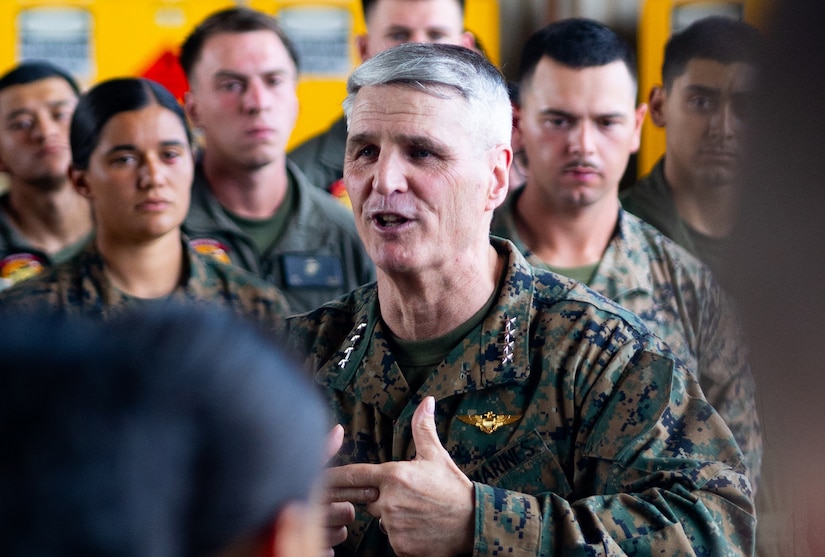
Vice Chairman, Joint Chiefs of Staff

The vice chairman has no public or media events on his schedule.   Read More >

Additional Open Press Events


Contacts

Additions and corrections for Today in DOW are invited and should be directed to the press desk by calling +1 (703) 697-5131 or +1 (703) 697-5132. For additional media information click here.

Public Inquiries

Contact us for more information, if you have questions or for technical support.

Media Questions

News media representatives with questions for the Department of War may reach our press desk by calling +1 (703) 697-5131.

Duty Officer

A public affairs duty officer is available 24 hours a day through +1 (703) 697-5131.

Right

Press Advisories   Releases   Transcripts

Speeches   Publications   Contracts


ABOUT   NEWS   HELP CENTER   PRESS PRODUCTS
Facebook   X   Instagram   Youtube

Unsubscribe | Contact Us


This email was sent to sajanram1986.channel@blogger.com using GovDelivery Communications Cloud on behalf of: U.S. Department of War
1400 Defense Pentagon Washington, DC 20301-1400

King Charles III and Queen Camilla Honor a Shared History of Service and Sacrifice

Left
U.S. War Department: News
King Charles III and Queen Camilla Honor a Shared History of Service and Sacrifice
May 1, 2026 |  By Arlington National Cemetery Courtesy Story

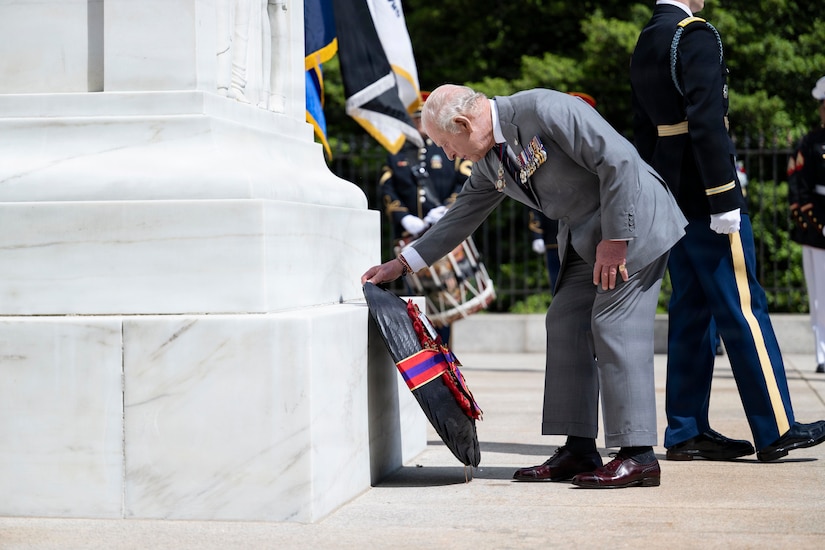
On April 30, King Charles III and Queen Camilla entered Arlington National Cemetery for a full honors wreath-laying ceremony at the Tomb of the Unknown Soldier, marked by a 21-gun salute. The ceremony was on the final day of their state visit, commemorating the 250th anniversary of American independence.  

The king and queen were escorted by Army Maj. Gen. Antoinette Gant, commanding general of Joint Task Force - National Capital Region and U.S. Army Military District of Washington; and Monica Crowley, U.S. ambassador, assistant secretary of state and chief of protocol. They stood at attention as the United States Army Band "Pershing's Own" played "God Save the King" and "The Star-Spangled Banner."  
 
At the tomb, King Charles laid a wreath composed of red poppies, a symbol of remembrance in the British Commonwealth dating back to World War I. The wreath included a note from the king that read, "In everlasting remembrance." The queen then placed a bouquet of red, white and purple flowers next to the wreath.  

The Tomb of the Unknown Soldier itself embodies the two nations' deep and poignant historical connections. Dedicated on Nov. 11, 1921, with the burial of an Unknown Soldier from World War I, the tomb at Arlington was partly inspired by Britain's Tomb of the Unknown Warrior at Westminster Abbey, dedicated exactly one year earlier. All three unknowns, representing American service members who died in World War I, World War II and the Korean War, fought in conflicts in which the United States and Britain were allies.  
 
After the wreath-laying ceremony, Karen Durham-Aguilera, executive director of Army National Military Cemeteries and Office of Army Cemeteries, greeted the royal couple inside the Memorial Amphitheater.  

"Arlington National Cemetery is honored that the king and queen visited these hallowed grounds while commemorating America's 250th birthday," Durham-Aguilera said. "The enduring bond between the United States and the United Kingdom stands as a testament to shared history and sacrifice."  
 
The king and queen's visit to the cemetery concluded at the Canadian Cross of Sacrifice — a memorial at which Elizabeth II and Prince Philip, King Charles' parents, had also paid respect during their 1957 state visit. This memorial honors Americans who volunteered to fight, and ultimately died, with the Canadian Expeditionary Force in World War I, prior to the U.S. entrance into the conflict.  

Like the tomb, the Canadian Cross reflects shared commemorative traditions. Designed by British architect Sir Reginald Blomfield for the Commonwealth War Graves Commission, the Cross of Sacrifice stands as an iconic emblem of World War I at CWGC cemeteries worldwide. Fittingly, the king and queen were accompanied at this memorial by service members from not only the U.S. and the U.K., but also British Commonwealth nations Canada, New Zealand and Australia.  
 
The royals' visit to Arlington National Cemetery — described by the British Embassy as "one of the most symbolically significant acts of remembrance a foreign dignitary can undertake on American soil" — reflected the enduring military, diplomatic and cultural alliance between the United States and the United Kingdom.

Right


ABOUT   NEWS   HELP CENTER   PRESS PRODUCTS
Facebook   X   Instagram   Youtube

Unsubscribe | Contact Us


This email was sent to sajanram1986.channel@blogger.com using GovDelivery Communications Cloud on behalf of: U.S. Department of War
1400 Defense Pentagon Washington, DC 20301-1400

War Department's $1.5 Trillion Budget Proposal Includes Sizable Nuclear Triad Investments

Left
U.S. War Department: News
War Department's $1.5 Trillion Budget Proposal Includes Sizable Nuclear Triad Investments
April 30, 2026 |  By C. Todd Lopez

The War Department aims to modernize the U.S. nuclear triad — including air, land and sea weapons — and the fiscal year 2027 budget proposal includes ample investment to make that happen, said Secretary of War Pete Hegseth during testimony on Capitol Hill today. 

"[This budget] invests in it — $71 billion in our nuclear triad and [nuclear command, control and communications], understanding that if you get that wrong, you get everything else wrong," Hegseth told senators during the Senate Armed Services Committee hearing.  

The secretary pointed to Iran's pursuit of nuclear weapons as an example of why the U.S. has a nuclear deterrent and why it must maintain that strategic deterrent capability. 

"Imagine what the situation in the region would look like if Iran also wielded a nuclear weapon — and the limits it would put on our capabilities in those situations," Hegseth said. "Our adversaries have to deal with that dilemma because of the strength of our nuclear triad — so that $71 billion investment, the [direct reporting program managers] that have been put over top of it to move those systems left ... it's just been a priority since we came into the building, and we're funding it accordingly." 

Within President Donald J. Trump's FY27 budget request, $71.4 billion is allocated to modernizing all three legs of the U.S. nuclear capability. 

In the air domain, there's $6.1 billion for the B-21 Raider, a dual-capable penetrating strike stealth bomber, that can deliver both conventional and nuclear munitions. The Raider was first unveiled in 2023 and is planned as a central component of the nuclear triad's air leg. A top priority for the department, the Air Force plans to procure a minimum of 100 B-21 aircraft.  

The FY27 budget also includes $4.6 billion for the Sentinel/Ground Based Strategic Deterrent, intended to modernize and replace the Minuteman III intercontinental ballistic missile weapons system with 400 operationally deployed missiles and 450 silos across the U.S. The Sentinel program includes infrastructure projects, such as hardened silos and other facilities, across five states.  

Around $1.5 billion is included for the Long Range Stand-Off Weapon, a replacement for the bomber-delivered AGM-86B Air Launched Cruise Missile. 

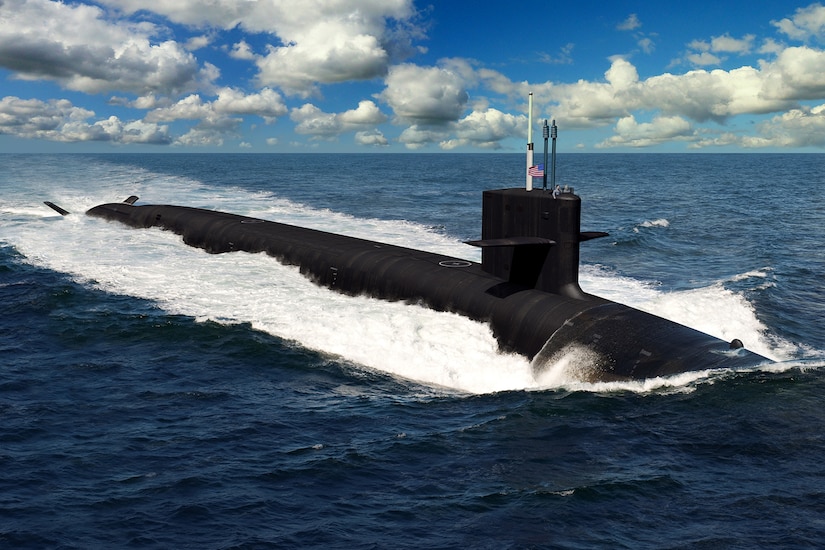
And for the sea-based leg of the triad, there is $16.2 billion for the Columbia-class ballistic missile submarine. The Columbia-class is currently in production and will replace the existing Ohio-class vessels. The president's budget includes the procurement of the fourth submarine in this class and additional funding for the continued development of the third submarine in the class, the USS Groton. There is also funding here for research, development, test and evaluation, as well as for investment in the industrial base that builds the Columbia-class submarine.   

Enhancements to the industrial base are not limited to just those private sector companies that build submarines. Hegseth said the War Department is very interested in strengthening the entire industrial base, because the ability of America's private sector to quickly provide the most advanced weapons, munitions and other material to the department is critical to national security.  

"A nation's ability to build, to innovate and to support critical needs of its warfighters at speed and at scale is the foundation upon which its deterrence and survival rests," Hegseth told lawmakers. 

For years, the secretary said, the defense industrial base had been neglected. But that has changed.  

"Under the leadership of President Trump, our builder-in-chief, we are reversing this systemic decay and putting our defense industrial base back on a wartime footing," he said.

Right


ABOUT   NEWS   HELP CENTER   PRESS PRODUCTS
Facebook   X   Instagram   Youtube

Unsubscribe | Contact Us


This email was sent to sajanram1986.channel@blogger.com using GovDelivery Communications Cloud on behalf of: U.S. Department of War
1400 Defense Pentagon Washington, DC 20301-1400

Nevada Guard's Civil Support Team Trains for Radiological, Explosive Threats

Left
U.S. War Department: News
Nevada Guard's Civil Support Team Trains for Radiological, Explosive Threats
April 30, 2026 |  By Army Sgt. Adrianne Lopez, 17th Sustainment Brigade Public Affairs Section

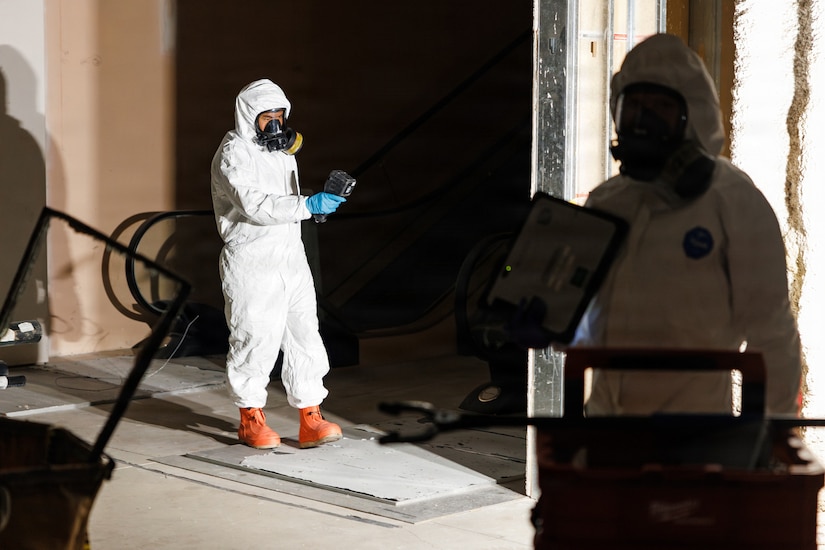
The Nevada National Guard's 92nd Civil Support Team conducted its annual "Beta Burn" exercise at the Ormsby House in Carson City, Nevada, April 23, training alongside local and federal partners to respond to simulated radiological and explosive threats.

Beta Burn focuses on preparing agencies to detect and respond to radiological hazards, with this exercise emphasizing homemade explosive threats and coordinated response.

Exercises like this directly prepare the team for real-world operations. Earlier this year, the team supported a multiagency response to a suspected biological laboratory at a Las Vegas residence, assisting in the collection of more than 1,000 samples and providing decontamination capabilities for first responders.

The exercise brought together multiple local organizations and the FBI to strengthen coordination, test response procedures and enhance interoperability during a simulated weapon of mass destruction incident.

Army Maj. Lawrence Alves, the unit's medical officer, served as the incident commander for the exercise, overseeing operations across participating agencies and synchronizing efforts within the incident command system.

Alves said the role provided the opportunity to build relationships with participating agencies.

"It's always fun playing incident commander," Alves said. "You get to talk to all of these different agencies, get to know them on a much more personal basis, and build good relationships with people."

During the scenario, soldiers entered a simulated "hot zone," identified radiological hazards and mitigated threats while relaying real-time information back to command elements. Unit survey team chiefs operated in the hazard area to detect radiological sources and provide situational awareness through specialized equipment that transmitted live imagery to teams outside the zone.

Alves explained the purpose behind the training and its role in preparing for complex emergencies.

"These multiagency exercises ensure our partners know who we are, understand our capabilities and know they can depend on us when there is a threat to the public," he said.

The unit conducts multiple exercises throughout the year, each focused on different weapons of mass destruction threats, including chemical, biological and radiological hazards. These events ensure the unit remains ready to support civil authorities and respond rapidly to incidents that threaten public safety.

The Ormsby House, a large, vacant hotel in Carson City, provided an ideal training environment due to its size and layout. The facility offers extensive indoor space, a large parking area for emergency vehicles and room to establish decontamination lines, allowing units to replicate complex response operations in a controlled setting.

Through exercises like Beta Burn, the 92nd Civil Support Team strengthens unified response, improves coordination across agencies and ensures a rapid, effective response to hazardous threats in Nevada communities. The team also supports local agencies during major public events.

Right


ABOUT   NEWS   HELP CENTER   PRESS PRODUCTS
Facebook   X   Instagram   Youtube

Unsubscribe | Contact Us


This email was sent to sajanram1986.channel@blogger.com using GovDelivery Communications Cloud on behalf of: U.S. Department of War
1400 Defense Pentagon Washington, DC 20301-1400

DOW Featured Photos

Left
U.S. Department of War: Photos
To the Rescue
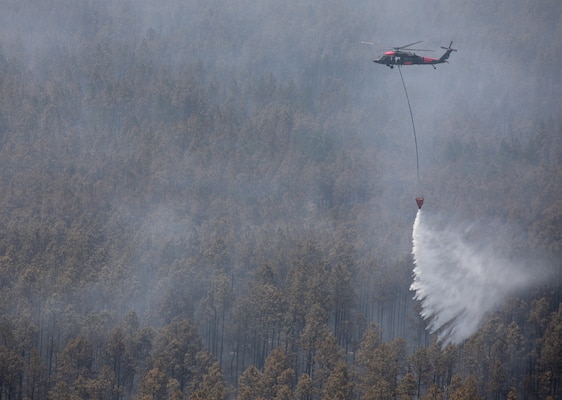
A Georgia Army National Guard UH-60 Black Hawk helicopter dumps water with a bucket during wildfire ... Photo Details >
Got the Blues
The USS Boxer transits the Surigao Strait, April 26, 2026. Photo Details >
The Standard
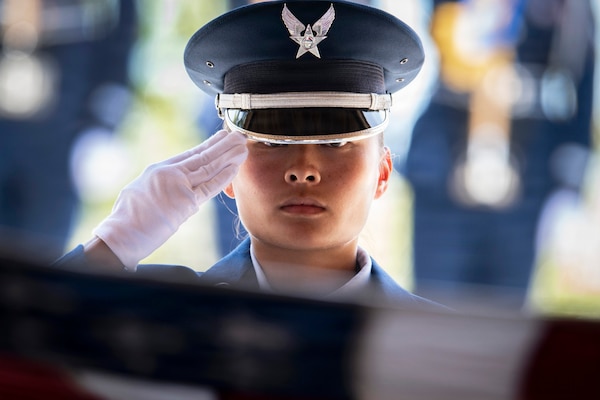
Air Force Senior Airman Anna Konig salutes during an Honor Guard graduation ceremony at Eglin Air Fo... Photo Details >


Right


ABOUT   NEWS   HELP CENTER   PRESS PRODUCTS
Facebook   X   Instagram   Youtube

Unsubscribe | Contact Us


This email was sent to sajanram1986.channel@blogger.com using GovDelivery Communications Cloud on behalf of: U.S. Department of War
1400 Defense Pentagon Washington, DC 20301-1400