Thursday, January 1, 2026

Alert: Results expected 5 January after landmark elections in Central African Republic

Welcome to the United Nations
View in browser
Click 'Download images' to view images
UN News
Global perspective Human stories
Alert 31 December 2025
Results expected 5 January after landmark elections in Central African Republic
[UN News photo]

Voting proceeded largely as planned in the Central African Republic's first-ever combined presidential, legislative, regional and municipal elections, and ballot counting is now complete, the UN peacekeeping mission (MINUSCA) said on Wednesday, with results expected to be announced on 5 January.

Read more
UN logo white
facebook twitter soundcloud
COPYRIGHT    |    FAQ    |    FRAUD ALERT    |    PRIVACY NOTICE    |    TERMS OF USE
Unsubscribe    |    Update preferences

America's Military - Celebrating Independence

Left
U.S. Department of War: Spotlight
America's Military - Celebrating Independence
Dec. 31, 2025 | By War.gov
This year the United States celebrates its 250th birthday. At the War Department, we recognize and celebrate freedom throughout the year.
Right


ABOUT   NEWS   HELP CENTER   PRESS PRODUCTS
Facebook   X   Instagram   Youtube

Unsubscribe | Contact Us


This email was sent to sajanram1986.channel@blogger.com using GovDelivery Communications Cloud on behalf of: U.S. Department of War
1400 Defense Pentagon Washington, DC 20301-1400

Army Surgery Resident Develops Groundbreaking Life Support System, Named to Forbes '30 Under 30 Healthcare 2026' List

Left
U.S. War Department: News
Army Surgery Resident Develops Groundbreaking Life Support System, Named to Forbes '30 Under 30 Healthcare 2026' List
Dec. 31, 2025 |  By Hugh Fleming, Tripler Army Medical Center

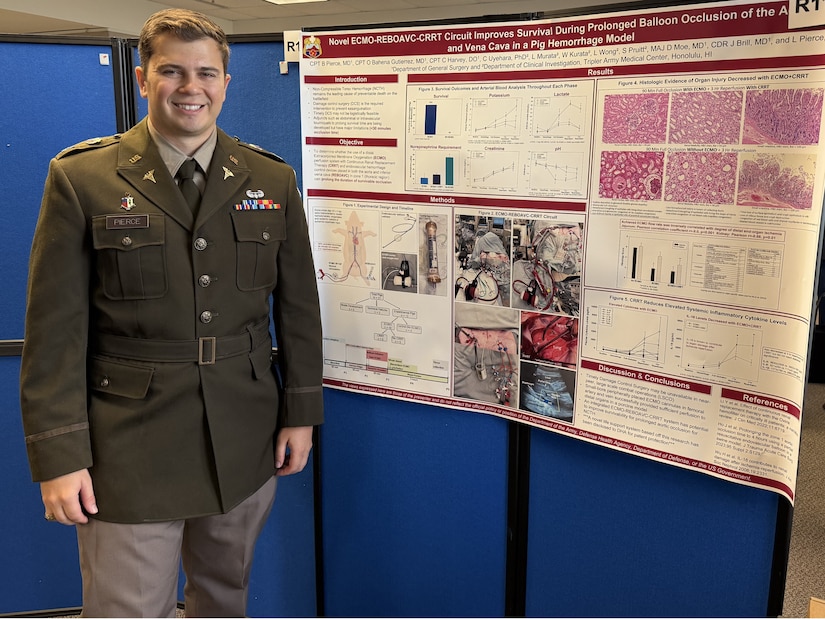
In the ever-evolving landscape of health care, few stories resonate with the promise of innovation and dedication quite like that of Army Capt. Bradley Pierce.  

Pierce is a general surgery resident at Tripler Army Medical Center in Honolulu who was recently recognized on the Forbes "30 Under 30 Healthcare 2026" list for his groundbreaking development of a life support system to enhance patient survival rates following traumatic abdominal hemorrhage. This pioneering system holds significant potential for application in emergency rooms and rural treatment facilities, demonstrating how military medicine can lead the way in health care innovation. 

A Journey Rooted in Service and Science  

His upbringing profoundly influenced Pierce's journey into health care. Growing up with an Army physician father and a scientist mother, he was immersed in the world of medicine and science from an early age. 

"Health care always felt familiar," Pierce said. 

His father's career showcased the human side of medicine, emphasizing its mission-driven nature, while his mother's scientific background instilled in him a passion for analytical thinking and problem-solving. This unique blend of experiences naturally steered Pierce toward military medicine, a field that combines clinical care with service in challenging environments. 

A pivotal moment that solidified his path occurred during high school when he shadowed physicians and surgeons. Witnessing the intricate balance of technical skill and calm decision-making in high-stakes situations illuminated the profound impact of medicine. 

"Those experiences clarified that I wanted a career where I could think critically, work with my hands and directly improve outcomes for people in vulnerable moments," Pierce explained. 

Mentorship and Inspiration  

Throughout his career, Pierce has been fortunate to have mentors who have guided him. One of his most significant role models is Dr. Thomas Fogarty, a pioneering figure in medical innovation known for inventing the Fogarty balloon catheter. Pierce admires Fogarty's courage to innovate, despite skepticism, and his ability to transform concepts into practical solutions that enhance patient care. 

"Learning from him has been inspirational on how to persevere through uncertainty," Pierce said.

Achievements and Future Aspirations  

Among Pierce's proudest accomplishments is the completion of initial preclinical testing for a novel heart-lung-kidney life support system designed to treat internal bleeding, a project now submitted for patent protection. 

"This milestone reflects over a decade of deliberate preparation," said Pierce, crediting the support of his colleagues and the Department of Clinical Investigations at Tripler for their collaborative efforts that led to this breakthrough. 

Pierce measures the impact of his work by its potential to improve patient outcomes, particularly in high-stakes situations where timely intervention is critical. He emphasizes that success is not solely determined by traditional metrics, but by the meaningful differences made in patients' lives. 

"The ultimate measure of success is lives improved or saved once they reach patients," Pierce said. 

The Army upholds a robust regulatory framework that ensures exceptional standards of operations and accountability, exceeding those generally established in civilian sectors, such as the Health Insurance Portability and Accountability Act for patient privacy and the Occupational Safety and Health Administration for workplace safety. Furthermore, the Army adheres to War Department guidelines and Army-specific regulations that emphasize readiness and preventive medicine. 

The Future of Health Care: Challenges and Innovations  

As Pierce looks to the future, he identifies pressing challenges in health care, including the growing mismatch between demand and capacity. 

"Patient populations are increasing in size and complexity, while health care systems are being asked to do more with fewer resources," Pierce said. 

Addressing these challenges will require innovative solutions that enhance care delivery without adding complexity. 

Pierce believes that technology will play a crucial role in shaping the future of health care. He envisions a landscape where thoughtfully designed technologies can extend clinicians' capabilities, automate routine tasks and facilitate complex care outside traditional hospital settings. 

"The future will be defined by how well we integrate digital intelligence with practical, deployable medical devices that can act when patients need care the most," Pierce said. 

Advice for Aspiring Health Care Leaders  

Pierce advises aspiring young professionals who want to make a difference in health care to seek out strong mentors and focus on areas in need of improvement. He underscores the importance of staying close to clinical realities and challenging assumptions. 

"Progress in health care is often incremental, but sustained curiosity, humility and persistence can lead to changes that truly improve how care is delivered," he said. 

As he continues his surgical residency and works on advancing his current projects, Pierce remains committed to building solutions that address real clinical needs. 

"My primary goal is to complete surgical residency and ensure that each project remains grounded in practical, scalable and clinically relevant solutions," he said. 

A Legacy of Innovation and Teamwork  

Pierce's journey exemplifies the intersection of military service and health care innovation. His commitment to improving patient outcomes through technology, alongside a deep appreciation for mentorship and collaboration, positions him as a leader in the field. 

As he envisions his work evolving over the next five years, Pierce is determined to bridge the gap between innovative ideas and real-world impact, ensuring that the future of health care is not only innovative but also accessible and effective for all patients. 

Right


ABOUT   NEWS   HELP CENTER   PRESS PRODUCTS
Facebook   X   Instagram   Youtube

Unsubscribe | Contact Us


This email was sent to sajanram1986.channel@blogger.com using GovDelivery Communications Cloud on behalf of: U.S. Department of War
1400 Defense Pentagon Washington, DC 20301-1400