Tuesday, December 16, 2025

Alert: Ex-UN chief Ban warns Security Council risks irrelevance without reform

Welcome to the United Nations
View in browser
Click 'Download images' to view images
UN News
Global perspective Human stories
Alert 15 December 2025
Ex-UN chief Ban warns Security Council risks irrelevance without reform
[UN News photo]

Gathered around the Security Council's iconic horseshoe table, ambassadors were challenged on Monday to look backwards – when, despite deep rivalry and distrust, the body chose leaders capable of steering the world away from catastrophe towards active cooperation.

Read more
UN logo white
facebook twitter soundcloud
COPYRIGHT    |    FAQ    |    FRAUD ALERT    |    PRIVACY NOTICE    |    TERMS OF USE
Unsubscribe    |    Update preferences

Monday, December 15, 2025

High-Tech Helpers: NORAD Volunteers Track Santa's Journey

Left
U.S. Department of War: Feature
High-Tech Helpers: NORAD Volunteers Track Santa's Journey
Dec. 15, 2025 | By Katie Lange

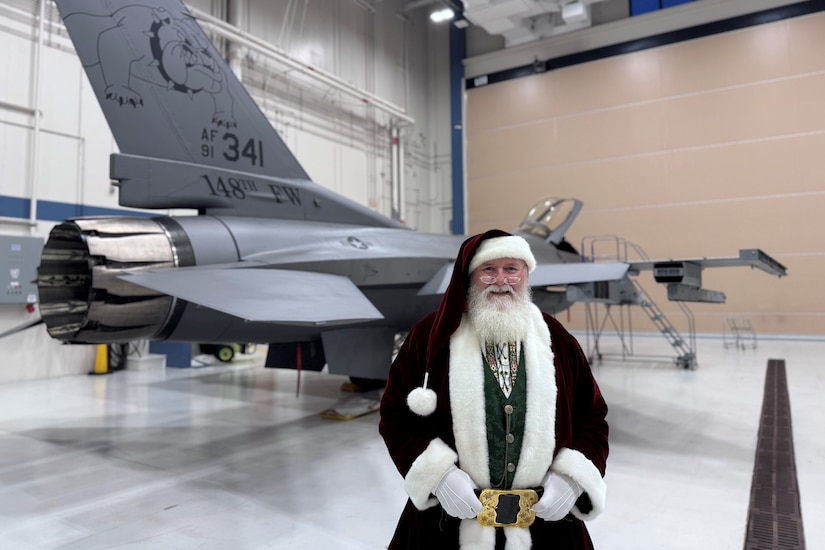
Each December, millions of families around the world follow along as Santa Claus makes his Yuletide trek around the globe, but the holiday tradition wouldn't be possible without the North American Aerospace Defense Command's Santa Tracker.  

The Santa-tracking enterprise has grown into a massive volunteer operation that started by accident decades ago. 


Kids across the U.S. have grown accustomed to following Santa's journey by tracking his flight path online or by making an old-fashioned phone call to NORAD to find out where his next stop is. They're also able to play games and watch videos of his progress through the mobile "NORAD Tracks Santa" app.  

All of this is possible, of course, thanks to hard-working personnel at NORAD. They start the task of tracking Santa each November, when NORADSanta.org starts getting inquiries from families. About 50 national and local contributors help set up the website, apps and phone lines, while about 1,000 uniformed personnel, War Department civilians, their families and supporters volunteer their time on Christmas Eve to answer questions on St. Nick's whereabouts.

High-Tech Tools Required 

NORAD protects the skies over North America all year long, so it makes sense that the command is especially equipped for this mission.    


NORAD's powerful radar system, called the North Warning System, has 49 installations across Alaska and northern Canada. As soon as that radar system picks up on Santa departing from the North Pole, NORAD tracks him using infrared sensors from globally integrated satellites that normally allow NORAD to see heat from launched rockets or missiles. As Santa flies through the skies, satellites track his position by detecting Rudolph's nose, which gives off an infrared signature similar to that of a missile. 

NORAD also uses U.S. Air Force F-15, F-16, F-22 and Canadian Air Force CF-18 fighter jets to track Santa. On Christmas Eve, fighter pilots rendezvous with Santa off the coast of Newfoundland to welcome him to the continent. They then safely escort him through North American airspace until he's ready to return to the North Pole.  


The operation has become a well-oiled machine over the years, but it wasn't always. In fact, the whole thing began as a fluke.  

An Accident Becomes Tradition 

In 1955, the folks at the previously named Continental Air Defense Command Operations Center in Colorado were working a typical night shift when Air Force Col. Harry Shoup received a phone call from a child in Colorado Springs. Using directions he found in a local newspaper ad, the boy tried to call Santa directly. However, the number in the ad was printed incorrectly, so instead, he called CADCOC.  

Shoup could have been a scrooge about the whole thing, but he wasn't. He entertained the boy's call as well as the rest of the calls that came through because of the misprinted number. Throughout the night, Shoup and his operators answered the calls, and thus began a new tradition. 


The role of tracking Ole St. Nick was handed to NORAD when the command was formed in 1958, and it's been getting more popular and more technologically savvy ever since. Aside from calling in to talk, kids can now use social media and a mobile app to follow Santa. Artificial intelligence services help track him, and the website NORADSanta.org offers a countdown clock, games and videos available in several languages. 

New in 2025, people can call into the operations center directly through a free calling option on the website, allowing millions more families overseas to call NORAD for updates on Santa's journey.   

The tracking of Santa is a holiday tradition around the world. On Christmas Eve in 2024, NORADSanta.org received approximately 32 million views from around the globe, while call center volunteers answered about 380,000 calls. The @noradsanta Facebook page currently has 1.9 million followers, more than 207,500 follow along at @noradsanta on X and about 29,500 people follow @NoradTracksSanta_Official on Instagram.  

The call center opens at 6 a.m. EST Dec. 24. Kids can call 877-Hi-NORAD (877-446-6723) to find out Santa's location, or use the above website, mobile app or social media. But officials warned that Santa only comes if children are asleep, so make sure they get into bed early, so he doesn't miss your house. 

Happy tracking, everyone!  

Right


ABOUT   NEWS   HELP CENTER   PRESS PRODUCTS
Facebook   X   Instagram   Youtube

Unsubscribe | Contact Us


This email was sent to sajanram1986.channel@blogger.com using GovDelivery Communications Cloud on behalf of: U.S. Department of War
1400 Defense Pentagon Washington, DC 20301-1400

Medal of Honor Monday: Army Pfc. Dirk Vlug

Left
U.S. Department of War: Feature
Medal of Honor Monday: Army Pfc. Dirk Vlug
Dec. 15, 2025 | By Katie Lange

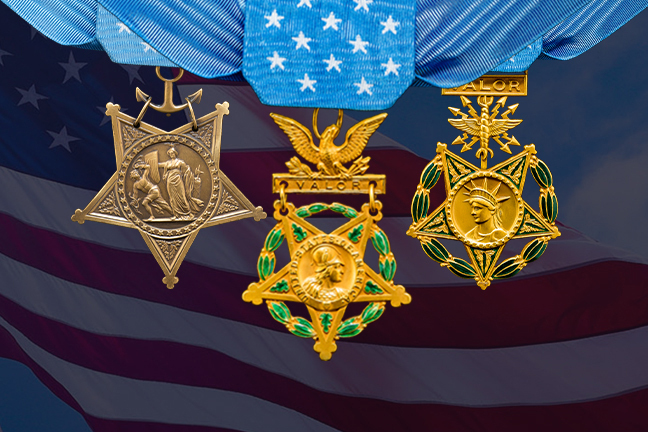
During World War II, Army Pfc. Dirk John Cornelius Vlug singlehandedly went up against five enemy tanks during the liberation of the Philippines, and miraculously, he won. The modest Midwesterner's brazen actions allowed his company to further its goal, and they made him the recipient of the nation's highest honor for valor.


Vlug was born Aug. 20, 1916, in Maple Lake, Minnesota, to Dutch immigrants Isaac and Mina Vlug. He had four sisters and a brother.

When Vlug was 6, the family moved to Grand Rapids, Michigan, so his father could pursue better work opportunities. According to a 1987 Grand Rapids Press newspaper article, when the Great Depression hit, Vlug dropped out of high school and began working to help support the family.

By April 1941, Vlug was drafted into the Army as a cannoneer assigned to the 1st Battalion, 126th Infantry Regiment, 32nd Infantry Division. After the attacks on Pearl Harbor, the division was one of the first Army units sent to the Pacific theater in April 1942. The 32nd Infantry Division went on to spend more days in combat than any other division.


Vlug took part in several island-hopping campaigns across the Pacific. By autumn 1944, the 32nd Infantry had landed on Leyte Island in the Philippines as part of the campaign to liberate it from Japanese forces that had pushed the Allies out two years prior.

On Dec. 15, 1944, Vlug's Headquarters Company was defending an American roadblock near the village of Limon when they saw a group of enemy tanks moving toward them. Almost immediately, Vlug left the safety of his covered position and moved alone toward the tanks, despite the intense enemy machine gun and 37 mm fire directed his way. Armed with a rocket launcher and six rounds of ammunition, he took aim and fired, destroying the first tank and killing all its occupants with a single round.

As the crew of the second tank jumped off their vehicle to attack on foot, Vlug killed one of them with his pistol. The other attackers then ran back to their tank; however, once they were inside, Vlug proceeded to destroy it with a second rocket launcher round.


When three more enemy tanks moved up the road, Vlug flanked the first and took it out before pushing through a hail of enemy fire to destroy the second. He then used his last round of ammunition on the final tank, causing it to crash down a steep embankment.

Without any assistance, Vlug had destroyed five hostile tanks and killed numerous enemy soldiers. That heroism helped his company hold the blockade and later push forward toward liberation.

After being discharged from the Army in June 1945, Vlug returned to Grand Rapids and worked for the Department of Veterans Affairs for a short time before taking a job at a manufacturing plant where his brother also worked. He was on the job when he learned that he was to receive the Medal of Honor. It was an honor he remained modest about his whole life.

"I was no different than any other soldier. I saw a chance and took it," Vlug said of his actions during a Grand Rapids Press interview in 1980. "I guess, though, you have to be a keyed-up sort of guy to do what I did. You can't just sit back and let things happen."


On June 7, 1946, Vlug received the nation's highest honor for valor from President Harry S. Truman during a White House ceremony that also honored three other soldiers and one Marine.

Later that year, Vlug married Angie Sikkema, whom he'd initially been introduced to during the war via mail and later met in person after returning to the States, newspapers reported. The couple went on to have three daughters.

Vlug continued his military service by serving for two years in the National Guard, rising to the rank of master sergeant. He took a job as a mail carrier in 1950 and held that position for 26 years before retiring.

In his later years, Vlug enjoyed golfing, bowling and building birdhouses, and he remained active among veterans' groups. According to his family and friends, his life was characterized by humility, and he rarely talked about his exploits during the war.


In 1992, Vlug received Michigan's highest military honor, the Distinguished Service Medal. Two years later, the 78-year-old was one of two Medal of Honor recipients invited to attend the 50th commemoration of the liberation of the Philippines. Vlug and his wife made the trek to the island nation, his first time setting foot there since the war.   

Vlug died on June 25, 1996, at the age of 79. He is buried at Greenwood Cemetery in Grand Rapids.

His home state has not forgotten his heroics. In 1999, a section of the Veterans Memorial Parkway in Grand Rapids was renamed Dirk Vlug Way. His Medal of Honor is also on permanent display at the Michigan Heroes Museum in Frankenmuth, Michigan.  

This article is part of a weekly series called "Medal of Honor Monday," in which we highlight one of the more than 3,500 Medal of Honor recipients who have received the U.S. military's highest medal for valor. 

Right


ABOUT   NEWS   HELP CENTER   PRESS PRODUCTS
Facebook   X   Instagram   Youtube

Unsubscribe | Contact Us


This email was sent to sajanram1986.channel@blogger.com using GovDelivery Communications Cloud on behalf of: U.S. Department of War
1400 Defense Pentagon Washington, DC 20301-1400

Innovation Lab Turns Ideas Into Warfighter Solutions in Days, Not Months

Left
U.S. War Department: News
Innovation Lab Turns Ideas Into Warfighter Solutions in Days, Not Months
Dec. 15, 2025 |  By Ryan Figueroa, Naval Air Warfare Center Weapons Division

Contractors quoted Naval Air Warfare Center Weapons Division mechanical engineer Vincent Malpaya $2,500 per unit to manufacture a switch matrix for rocket testing, and he needed 10 of them.


Instead of waiting months and paying tens of thousands of dollars, he built the part himself in the warfare center's Innovation Lab at Naval Air Weapons Station China Lake, California, for 20 cents per unit. The savings helped keep the project on track and supported the fleet's test schedule.

For Malpaya and many others, solving problems fast is part of the job. The lab gives them the tools and space to do it. 

"I'm working on this gimbal," Malpaya said during a recent visit, shaping his design on a computer screen. 

Stories like his highlight how the lab strengthens readiness across the command. Employees can design, build and test ideas sooner, which helps deliver capability to the warfighter faster. 

The warfare center operates two innovation labs, one at China Lake, and one at Naval Air Station Point Mugu, California. Both sites offer the same equipment and training, and employees can use either location. Shared access reduces wait times and helps teams working across both installations keep projects moving without delay. 

Fast Solutions for Real Problems 

For some projects, speed is the only way to meet the mission. 

In an approach called rapid prototyping, the Innovation Lab uses 3D printers, laser cutters and computer numerical control machines to help teams build prototypes in days instead of months. 

"We're just trying to cut down a lot of lead time," said Kevin Hughes, the Innovation Lab manager at Point Mugu.

Drew Hines, an engineer working with range support aircraft, faced that challenge firsthand. 

His team needed to mount new equipment on a KC-130 Hercules refueling aircraft to support a scheduled test event in Australia, but the technical documentation was incomplete. Some dimensions were missing. Others were wrong. 

Sending a flawed design to an outside machine shop would have cost thousands of dollars and weeks of time. Instead, Hines and his coworker, Sam Newcomer, used the lab to 3D scan the equipment, design a mounting plate and cut a prototype from plywood. When the patterns did not line up, they made corrections for pennies. 

"The flexibility to make something new, adjust it, test it, find a mistake, fix it and still support the mission is what justifies having this place," Hines said. 

Building Skills That Support the Mission 

From saving thousands of dollars on test equipment to solving problems on tight schedules, the Innovation Lab helps the warfare center deliver capabilities at the speed of relevance. 

For Malpaya, the lab has already made a measurable impact. He can now print a gimbal mount for a weapons system he is supporting. 

Hughes said the lab represents what he values most about working in defense. 

"I'm doing something for the service, for the warfighter," Hughes said, adding that faster solutions mean test events stay on track and capability reaches the fleet sooner. 

Right


ABOUT   NEWS   HELP CENTER   PRESS PRODUCTS
Facebook   X   Instagram   Youtube

Unsubscribe | Contact Us


This email was sent to sajanram1986.channel@blogger.com using GovDelivery Communications Cloud on behalf of: U.S. Department of War
1400 Defense Pentagon Washington, DC 20301-1400

DOW Featured Photos

...