Wednesday, December 10, 2025

Alert: UN seeks $1 billion for ‘first-responder fund’ in emergencies

Welcome to the United Nations
View in browser
Click 'Download images' to view images
UN News
Global perspective Human stories
Alert 9 December 2025
UN seeks $1 billion for 'first-responder fund' in emergencies
[UN News photo]

Countries rallied at UN Headquarters on Tuesday to shore up a key humanitarian fund that provides timely assistance for millions worldwide when conflict and climate-related disasters strike. 

Read more
UN logo white
facebook twitter soundcloud
COPYRIGHT    |    FAQ    |    FRAUD ALERT    |    PRIVACY NOTICE    |    TERMS OF USE
Unsubscribe    |    Update preferences

Tuesday, December 9, 2025

From Quadcopters to Micro-UAS: The Aircraft Used at DOW's Drone School

Left
U.S. Department of War: Feature
From Quadcopters to Micro-UAS: The Aircraft Used at DOW's Drone School
Dec. 9, 2025 | By Katie Lange

The increasing prevalence of drones on the modern battlefield means it's crucial for our service members to be familiar with the various systems they might encounter, which is why at the Joint Counter-Small Unmanned Aircraft Systems University at Fort Sill, Oklahoma, students learn the ins and outs of about two dozen of these aircraft.  

The JCU is the War Department's only joint training center aimed at countering the growing number of aerial threats U.S. troops face across the world.  It teaches service members of every branch how to operate drone equipment, plan counter-small UAS strategies and train others to defend installations.   

During the courses, students get to know 24 types of commercial off-the-shelf small UAS that they may see downrange, from "blue air" drones that are considered friendly to "red air" drones that are used by our adversaries.  

The types of aircraft the JCU trains students on range from commercial quadcopters to tiny micro-UAS and custom-built foam drones that can mimic real threats. Here are the highlights of a few of them:   

The Black Hornet:  

The Black Hornet is the smallest drone currently used by the JCU. Developed under Special Operations Command, this tiny, covert drone does close intelligence, surveillance and reconnaissance — it can even be used inside buildings for hostage rescues. It includes an enhanced thermal camera and is small enough for service members to carry on their utility belts.  

R80D SkyRaider:  

Developed exclusively for DOW and other federal agencies, the R80D SkyRaider is a vertical takeoff and landing quadcopter that's agile and can carry and deliver multiple payloads up to 7.7 pounds. It has one of the fastest, most powerful embedded artificial intelligence computing devices available for small UAS. It can also thrive in GPS- or communications-denied environments.  

WingtraOne Gen II:  

The WingtraOne Gen II is one of the fastest mapping and surveillance small UAS on the planet. This fixed-wing drone has multiple cameras and a light detection and ranging — LiDAR — option, which can create precise 3D models of objects and environments. It can go about 36 mph and works well in high winds.  

IF 1200:  

Weighing between 21 and 55 pounds, the IF 1200 electric hexacopter is the most aggressive small UAS the school has, and it's mostly used for detection, said JCU Air Boss Jacob Cameron. The IF 1200 can adapt to any requirement set and can be used with LiDAR, radiation detection sensors, electro-optical/infrared sensors and delivery capabilities. It can travel up to 70 mph, carry up to 35 pounds and stay in the air for up to 45 minutes. 

"That drone can do flips," Cameron said. "You think it'd be slow and clunky, but that is probably the fastest hexacopter drone that we have, and it's the most capable."  

Alta X:  

The IF1200's larger counterpart, the Alta X, is the school's largest quadcopter, even though it's significantly quieter than the JCU's other drones. The all-electric Alta X is also mostly used for detection and can carry up to 40 pounds. It flies best when it's got a heavy payload. The Alta X can fold down to half its size in 20 seconds and can accommodate many sensors and third-party payloads, such as EO/IR, mapping and LiDAR. 

TSM-800:  

Produced by the Army Threat Systems Management Office, this drone is designed for threat simulation and is capable of swarming up to 150 systems from a single ground control station. Each drone can carry a payload of 8 pounds. Three bomblets can be carried per drone. It is Wi-Fi compatible or can be used on a private LTE tower, Cameron said.  

Super Decathlon: 

The "Super D" is a larger aircraft that has a gas engine and can be used for autopilot and manual missions. It's primarily used for detection and identification in the JCU's operator's course, as well as for loitering munition demonstrations for the planner's course. 

If an enemy tries to electronically jam it while it's on autopilot, the Super D can still fly through that area without being affected, Cameron said. It's completely autonomous, can carry large payloads over long distances, and can fly up to 70 miles. Cameron said it's great for student practice because its size makes it easier to find on radar signatures.  

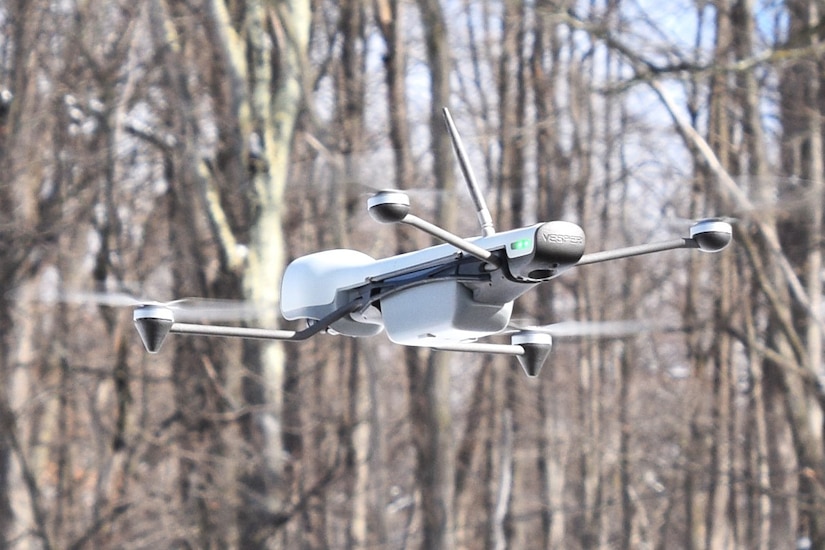
Vesper:  

The small Vesper quadcopter provides intelligence, surveillance and reconnaissance. At 2.2 pounds, it's light and easily portable. It has an EO/IR camera and can top out at 45 mph for about 50 minutes of flight time. It has low-light capabilities, extended endurance and stealth capabilities.  

Opterra:  

The lightweight Opterra has multiple camera mounting stations and is predominantly used as a target drone. 

"The Opterra is outstanding for being shot at because it's foam, and bullets will pass straight through it unless you hit specific small components on it, like the engine itself," explained Army Maj. Dennis "Chip" Stanford, JCU's executive officer. "It can be shot a lot." 

The JCU also teaches students on the CarbonCub, Skywalker X8, Vector-Scorpion, Osprey, IF 800 and the JTAC24, a JCU-designed and 3D printed target drone, as well as a few others.  

Right


ABOUT   NEWS   HELP CENTER   PRESS PRODUCTS
Facebook   X   Instagram   Youtube

Unsubscribe | Contact Us


This email was sent to sajanram1986.channel@blogger.com using GovDelivery Communications Cloud on behalf of: U.S. Department of War
1400 Defense Pentagon Washington, DC 20301-1400

U.S. Army Europe, Africa Launches First Drone Warfighter Competition

Left
U.S. War Department: News
U.S. Army Europe, Africa Launches First Drone Warfighter Competition
Dec. 9, 2025 |  By Lacey Justinger, 7th Army Training Command

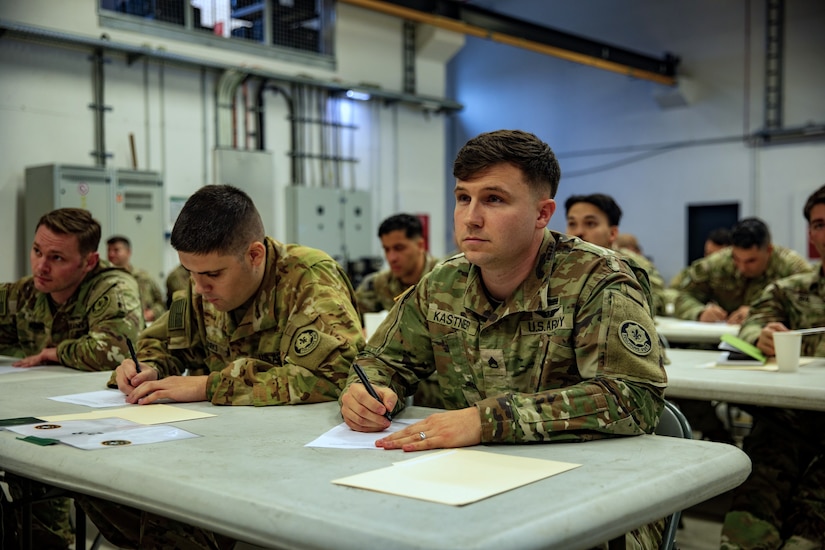
Ten teams are competing in the inaugural U.S. Army Europe and Africa Best Drone Warfighter Competition at the 7th Army Training Command's Grafenwoehr Training Area, Germany, Dec. 8-10.

The multinational competition is designed to test and showcase unmanned aerial system operator capabilities, and serve as a visible culmination of experimentation, readiness and transformational warfighting initiatives to ensure participating U.S., allied and partner soldiers are trained, tested and ready to deploy modern UAS capabilities in complex operational environments. 

"It's pretty exceptional that although we're competing, we're friends, we're partners, we're allies," said Army Brig. Gen. Terry Tillis, 7ATC commander, during the opening ceremony. 

"There's a larger picture," Tillis added. "It's not just about flying UAS. It's about utilizing the UAS as integrated enablers to achieve desired effects. It's about UAS facilitating the combined arms maneuvers of our ground forces into a position of advantage so they can seize and hold terrain." 

Army units permanently stationed in Europe and competing in the drone warfighter competition include the 1st Battalion, 4th Infantry Regiment, Joint Multinational Readiness Center, 7ATC; 173rd Infantry Brigade Combat Team, U.S. Army Southern European Task Force, Africa; 2nd Cavalry Regiment, V Corps; and 5th Battalion, 4th Air Defense Artillery, 52nd Air Defense Artillery Brigade, 10th Army Air and Missile Defense Command.

Other units rotationally deployed to the European theater under V Corps who are also competing include the 1st Armored Brigade Combat Team, 1st Infantry Division; 3rd Brigade Combat Team, 1st Cavalry Division; and 3rd Combat Aviation Brigade, 3rd Infantry Division. 

International teams from Italy and Spain are also competing. Each team has two to six soldiers, including a short-range reconnaissance drone team and a first-person view drone team. 

Teams are scored over three days of graded activities, including a written UAS knowledge exam and two training scenarios conducted on a variety of soldier skills within a time limit. 

One area focuses on their tactical abilities to carry out an aerial reconnaissance and a strike mission using a variety of small UAS platforms against an enemy force in an urban environment, including establishing camouflage and security. 

The second one tests aerial land navigation, accuracy and maneuverability of a first-person view drone through an obstacle course to clear and secure a trench, as well as team cohesion on decision-making during a call-for-fire mission. 

Teams are using a variety of issued and self-built drones. 

The top U.S. Army team will be announced at the end of the competition and go on to compete in the U.S. Army's Best Drone Warfighter Competition in 2026. 

Right


ABOUT   NEWS   HELP CENTER   PRESS PRODUCTS
Facebook   X   Instagram   Youtube

Unsubscribe | Contact Us


This email was sent to sajanram1986.channel@blogger.com using GovDelivery Communications Cloud on behalf of: U.S. Department of War
1400 Defense Pentagon Washington, DC 20301-1400

DOW Featured Photos

Left
U.S. Department of War: Photos
Push It to the Limit
Air Force Senior Airman David Orellana lifts weights at Hangar 5 at Joint Base Elmendorf-Richardson,... Photo Details >
Clear Comms, Clear Mission
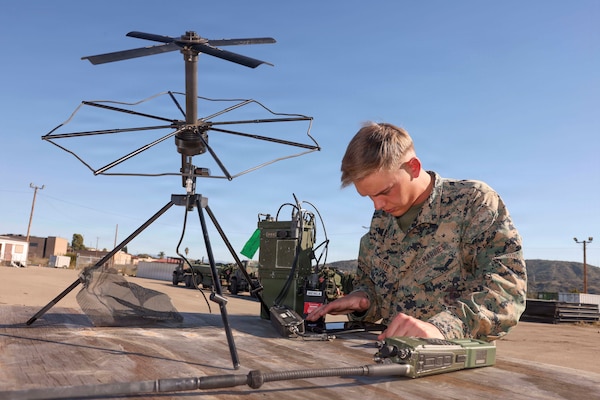
Marine Corps Lance Cpl. Hayden Vitte performs a communications check with the AN/PRC-117F Falcon II ... Photo Details >
Hiding in Plain Sight
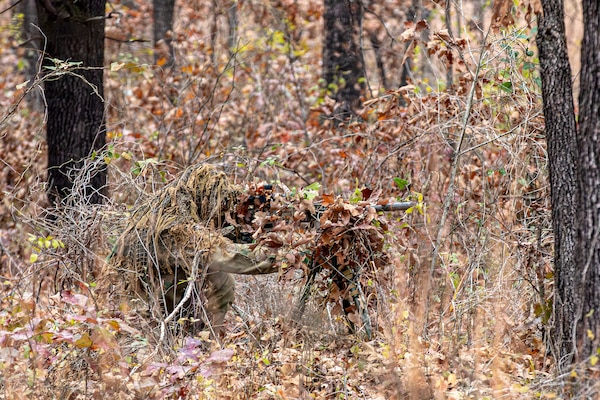
A competitor participates in the stalk event at the 55th Winston P. Wilson and 35th Armed Forces Ski... Photo Details >
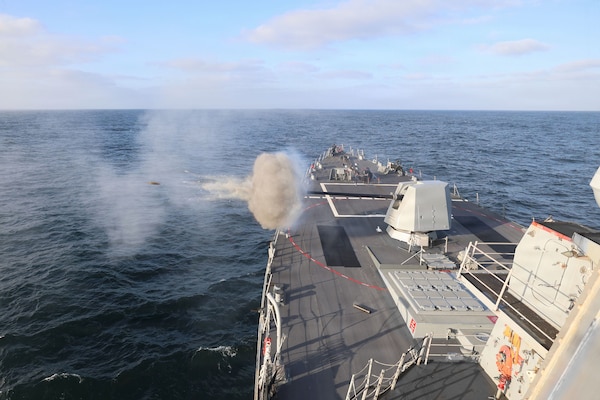
Locked and Loaded
The USS Paul Ignatius fires the MK 45 5-inch gun during a naval surface fire support exercise in the... Photo Details >


Right


ABOUT   NEWS   HELP CENTER   PRESS PRODUCTS
Facebook   X   Instagram   Youtube

Unsubscribe | Contact Us


This email was sent to sajanram1986.channel@blogger.com using GovDelivery Communications Cloud on behalf of: U.S. Department of War
1400 Defense Pentagon Washington, DC 20301-1400

DOW Featured Photos

Left
U.S. Department of War: Photos
Season's Greetings & Melodies
A soldier from the U.S. Army "Old Guard" Fife and Drum Corps brings the holiday spirit to Washington... Photo Details >
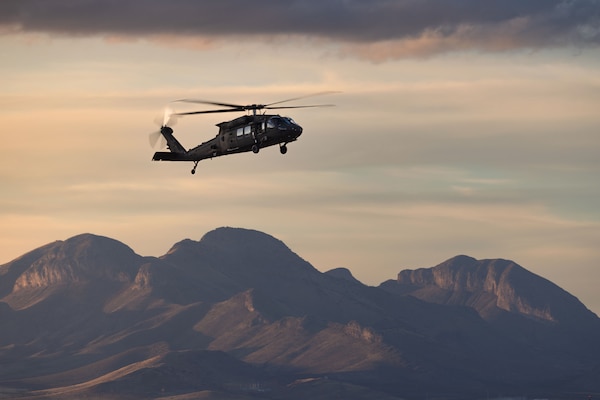
Through the Haze
Army Chief Warrant Officer 2 Frank Blahut and Warrant Officer Carter Winters, assigned to Joint Task... Photo Details >


Right


ABOUT   NEWS   HELP CENTER   PRESS PRODUCTS
Facebook   X   Instagram   Youtube

Unsubscribe | Contact Us


This email was sent to sajanram1986.channel@blogger.com using GovDelivery Communications Cloud on behalf of: U.S. Department of War
1400 Defense Pentagon Washington, DC 20301-1400