Wednesday, September 3, 2025

Alert: Daily malnutrition deaths continue as Israeli forces push further into Gaza City

Welcome to the United Nations
View in browser
Click 'Download images' to view images
UN News
Global perspective Human stories
Alert 2 September 2025
Daily malnutrition deaths continue as Israeli forces push further into Gaza City
[UN News photo]

Conditions in Gaza are worsening for Palestinians trapped amid spiralling hunger as Israel continues to block aid deliveries amid escalate attacks, according to the latest updates on Tuesday from UN agencies on the ground.

Read more
UN logo white
facebook twitter soundcloud
COPYRIGHT    |    FAQ    |    FRAUD ALERT    |    PRIVACY NOTICE    |    TERMS OF USE
Unsubscribe    |    Update preferences

DOD Featured Photos

Left
Photos
Iridescent Skies
The USS Gerald R. Ford, the world's largest aircraft carrier, operates in the Norwegian Sea above th... Photo Details >
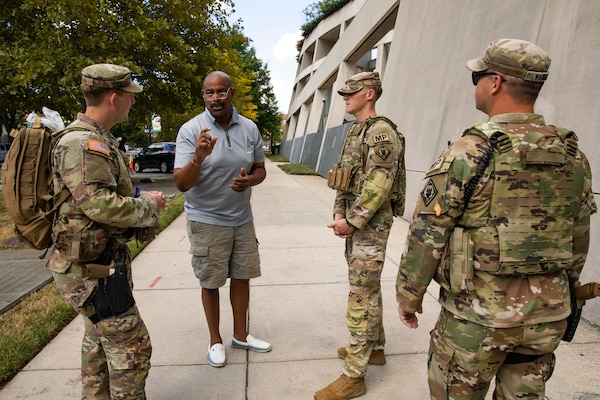
Sidewalk Chat
Mississippi National Guard soldiers interact with the public while patrolling the NoMa–Gallaudet U M... Photo Details >
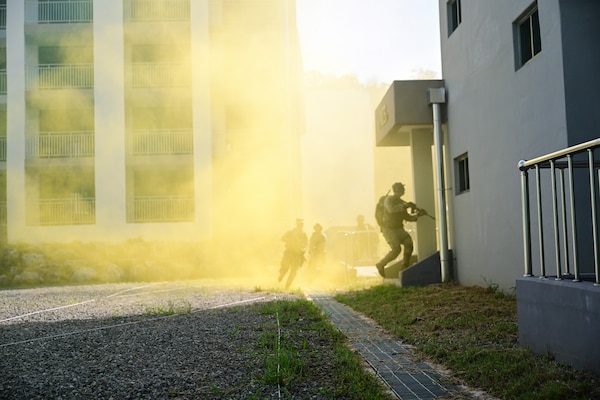
Let's Move
A squad moves into position as U.S. and South Korean soldiers conduct urban terrain training in Sout... Photo Details >


Right


ABOUT   NEWS   HELP CENTER   PRESS PRODUCTS
Facebook   X   Instagram   Youtube

Unsubscribe | Contact Us


This email was sent to sajanram1986.channel@blogger.com using GovDelivery Communications Cloud on behalf of: U.S. Department of Defense
1400 Defense Pentagon Washington, DC 20301-1400

From Capstone to Combat Readiness: Depth-Perception System Enhances EOD Robotics

Left
News
From Capstone to Combat Readiness: Depth-Perception System Enhances EOD Robotics
Sept. 2, 2025 | By Alexandra Broughton, Headquarters Air Force, Office of the Director of Civil Engineers

What started as a school project has developed into a promising innovation for explosive ordnance disposal operations across the Defense Department.

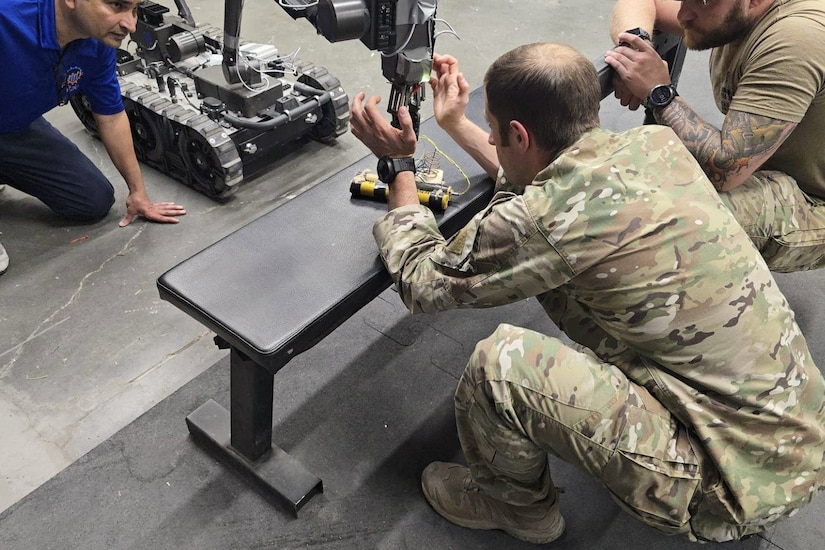
While completing his degree in electronics engineering technology at the University of Arkansas Grantham, former Air Force Master Sgt. Daniel Trombone was challenged to solve a real-world problem within just two months. Despite limited time and resources, he turned the assignment into a functional prototype, marking the beginning of the EOD robot depth-perception system. 
 
"I was doing my senior year capstone and decided to survey my unit," Trombone recalled. "I said, 'Hey, are there any capability gaps you think can be fixed within this short timeline I have?' I ended up getting a lot of good ideas."
 
The feedback from his team highlighted a familiar challenge: difficulty gauging depth when operating EOD robots using a flat, two-dimensional video feed. Without stereoscopic vision, technicians rely on limited visual cues and often develop improvised methods, like watching shadows or attaching zip ties to grippers, to estimate distance.  

Trombone set out to design a solution that would place a fixed visual reference in the camera view, giving operators a clearer sense of proximity without the need for extra sensors or complex processing.

The first prototype of the EOD robot depth-perception system was built with hobby-grade components and personal funds.  

"I spent my nights in the garage, working at my bench, just trying to get the thing put together," Trombone said. "Eventually, I got it functioning."
 
Once operational, he mounted it to a robot using improvised materials like C-clamps and tape, aligning the components carefully with the camera's field of view. Despite its imperfect appearance, the system succeeded at helping operators better judge distance and handle tasks with greater precision. As development progressed, Trombone partnered with Air Force Tech. Sgt. Matt Ruben to further refine the design. 
 
"He's been my counterpart on this project the whole time," Trombone said. "He's great at CAD design, 3D printing and building things out, and he helped create the housing and all the brackets that supported the initial prototype." 
 
After submitting the project and earning high marks, Trombone and Ruben saw potential beyond the academic setting. But the prototype, though effective, lacked scalability.  

"We knew we were onto something interesting," Trombone said, "but we didn't have a precise product. ... We still needed help from an engineering team."

Seeking a path forward, they discovered the AFWERX Refinery, an Air Force innovation accelerator, and applied. AFWERX Refinery provides airmen and guardian innovators with entrepreneurial knowledge, connections to relevant stakeholders and resources within the Defense Department. 
 
Through the program, Trombone and Ruben gained critical support, including development time, funding for travel and research, and access to key experts. One of the most valuable partners was the Wright Brothers Institute, which helped guide the next phase by coordinating industry outreach, identifying capability gaps and securing a manufacturing partner. That search ultimately led to a defense-trusted engineering and analytics firm to lead manufacturing prep with Trombone and Ruben and deploy the advanced robotics sensor. 
 
Also recognizing the value of the concept, the Air Force Lifecycle Management Center pursued intellectual property protection, filing a patent application in June 2023. 
 
"If it's approved, that's a bonus, but our goal has always been mission impact," Trombone said. 

Designed to be low cost and easy to implement, the system is poised to be adopted across EOD units in the Air Force and joint partners. The team aims to keep the unit price low enough for teams to procure the system within existing budgets. 
 
"If this reduces the need for technicians to approach in person and allows for faster, safer robotic operations, then we've achieved our mission," Trombone said. 
 
Reflecting on the project's evolution, he emphasized the importance of collaboration and institutional support. 
 
"We wouldn't be where we are today without a strong group of stakeholders," Trombone said. "Dozens of people have contributed, some throughout, others at key moments, but it's definitely not a one- or two-person show. It takes a whole team to get something like this off the ground."

To other airmen pursuing innovation, he stressed the value of patience, adaptability and a willingness to learn. Turning a good idea into an operational solution often means managing both the technical development and the process behind it. Understanding how to navigate project timelines, stakeholder engagement and the realities of scaling a concept can be just as important as the idea itself.

Right


ABOUT   NEWS   HELP CENTER   PRESS PRODUCTS
Facebook   X   Instagram   Youtube

Unsubscribe | Contact Us


This email was sent to sajanram1986.channel@blogger.com using GovDelivery Communications Cloud on behalf of: U.S. Department of Defense
1400 Defense Pentagon Washington, DC 20301-1400

Tuesday, September 2, 2025

Face of Defense: Sailor Unlocks Full Potential, Trains Future Generations

Left
Feature
Face of Defense: Sailor Unlocks Full Potential, Trains Future Generations
Sept. 2, 2025 | By Austen McClain, Naval Education and Training Command

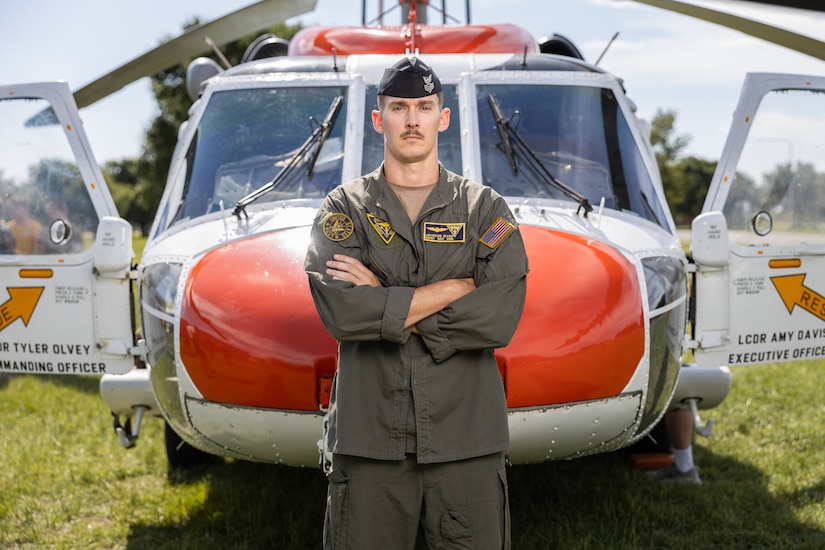
Some join the Navy for the benefits. Others join to see the world. For Navy Petty Officer 1st Class Jackson Ward, it was about the chance to unlock his full potential and be part of something greater. 

"I joined the Navy because I felt stuck," Ward said. "College was not working out, and my job in sales was not fulfilling. What drew me to the Navy was the chance to get uncomfortable, to test myself and to find out what I was really made of." 

Ward enlisted in 2016 on an aviation rescue swimmer contract and began an intense pipeline of training under Naval Education and Training Command. From boot camp to the Aviation Rescue Swimmer School at Naval Air Station Pensacola, Florida, he was immersed in a program that demanded not just physical grit but mental resilience and technical precision.  

"The instructors did not just teach us how to survive. They taught us how to think, how to make decisions under pressure and how to be accountable," Ward said. "Those lessons with me long after training ended."  

From Training Grounds to Operational Success  

After graduating from the NETC pipeline, Ward was assigned to Helicopter Sea Combat Squadron 2 for fleet replacement training, then to Helicopter Sea Combat Squadron 22, an expeditionary helicopter squadron. There, he put his training to the test in real-world operations ranging from NATO exercises with U.S. 6th Fleet to interdiction deployments with 2nd Fleet. 

One mission stands out to him. During a counternarcotics deployment in the Caribbean Sea, Ward's crew was tasked with locating a vessel suspected of smuggling narcotics from South America toward Puerto Rico. After hours of coordinated search with other assets, including a Coast Guard AC-130 aircraft, they identified the suspected boat — but were forced to return for fuel. By the time they relaunched, the aircraft had lost radar contact.  

That is when training kicked in. "I noticed something in the water, a faint wake," Ward recalled. "We moved in closer and used forward-looking infrared to get a positive ID without tipping them off."  

The team confirmed the vessel had contraband on board. When it ignored verbal warnings and warning shots, a Coast Guard precision marksman disabled the engines with a .50-caliber rifle. The boarding team seized both the crew and the cargo.  

"Everything we did that night — teamwork, communication, staying calm under pressure — it was straight out of the training pipeline," Ward said. "It was not a rescue, but the mindset was the same: solve the problem and bring people home safe." 

Training the Next Generation 

Today, Ward serves as a high-risk training instructor and leading petty officer at Aviation Rescue Swimmer School, part of Naval Aviation Schools Command. 

His mission is to shape the next generation. 

"For most students, the hardest part is not physical; it is mental," Ward said. "We are teaching them how to believe in themselves. If they show up with the right attitude and the drive, we will get them to the finish line." 

He does not believe in breaking people down just for the sake of it. Instead, his approach is about building them up with accountability, structure and mentorship. 

"Be where you are supposed to be, when you are supposed to be there," Ward said. "Show up ready to learn. Be humble. That is how you succeed here and in life." 

Building Warfighters and Protectors 

Ward is one of countless individuals shaped by NETC training, but his story makes one thing clear: world-class training leads to real-world results. From the first day of rescue swimmer school to joint operations with the Coast Guard, he has seen how high standards and hard instruction translate directly to fleet impact. 

"The Navy taught me how to lead and how to hold myself accountable," Ward said. "And that started in training." 

Whether recovering personnel or tracking down smugglers in the Caribbean, Ward's work shows how NETC plays a critical role in building a ready, capable force that keeps the homeland secure. 

NETC recruits and trains those who serve the nation, taking them from "street-to-fleet" by transforming civilians into highly skilled, operational and combat-ready warfighters while providing the tools and opportunities for continuous learning and development.

Right


ABOUT   NEWS   HELP CENTER   PRESS PRODUCTS
Facebook   X   Instagram   Youtube

Unsubscribe | Contact Us


This email was sent to sajanram1986.channel@blogger.com using GovDelivery Communications Cloud on behalf of: U.S. Department of Defense
1400 Defense Pentagon Washington, DC 20301-1400

DOW Featured Photos

On the Move Soldiers assigned to the 1st Infantry Brigade Co...