Monday, December 16, 2024

Medal of Honor Monday: Army Col. Charles P. Murray Jr.

Left
Feature
Medal of Honor Monday: Army Col. Charles P. Murray Jr.
Dec. 16, 2024 | By Katie Lange

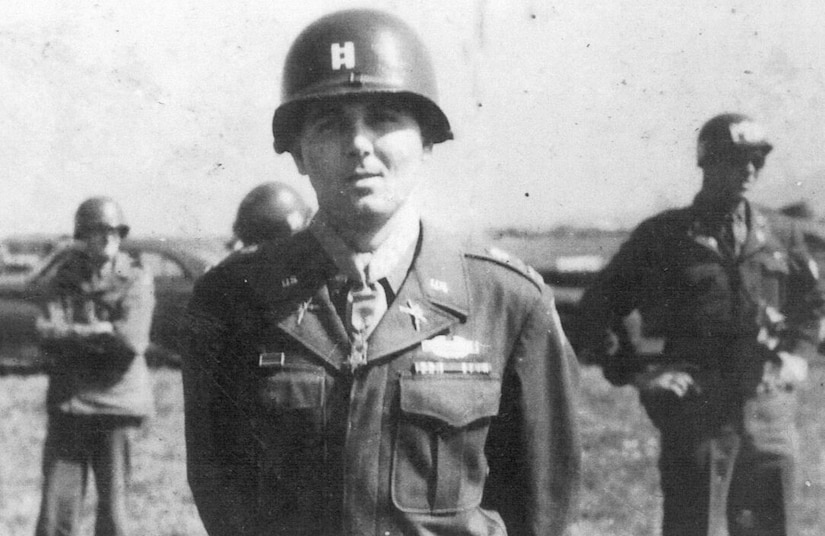
Army Col. Charles Patrick Murray Jr. spent three decades serving his country, but his most notable contribution came toward the beginning of his career. During the waning days of World War II in Europe, Murray took out dozens of enemy soldiers while trying to establish a position for his platoon along a French valley. He received the Medal of Honor for his fearless actions and leadership.

Murray was born Sept. 26, 1921, in Baltimore, Maryland, to Charles and Florence Murray. He had two younger brothers, William and Donald, and he went by the nickname Chuck.

When Murray was still a baby, his parents moved to Wilmington, North Carolina. He was a member of the Boy Scouts as a child and achieved the prestigious rank of Eagle Scout in 1934.

After Murray graduated from Wilmington's New Hanover High School in 1938, he spent three years studying at the University of North Carolina before being drafted into the Army in September 1942. After a few months of training, he was sent to officer candidate school and was commissioned as a second lieutenant in 1943.

In August 1944, Murray was deployed to England to join the 3rd Infantry Division's 1st Battalion, 30th Infantry Regiment. A few weeks after D-Day, the division landed in France and started their push east.

By December, Murray's unit, Company C, had been tasked with securing a hill in Kaysersberg, France. During several days of fighting, the company was able to secure the hill, but several company officers were killed, allowing Murray to move up in the ranks to become company commander.

On Dec. 16, 1944, then-1st Lt. Murray accompanied one of his three platoons on a special mission into enemy territory to keep the Germans from getting in and out of a valley near the hill. In order to do so, they had to descend into the valley along a narrow trail.

During their descent, Murray saw about 200 Germans who were pouring deadly mortar, bazooka and machine gun fire into an American battalion on the crest of a ridge. The men on the ridge couldn't see the enemy, which was hiding in a position on a sunken road, but Murray could see the enemy's flank. He didn't want to risk the lives of his small platoon against such a large force, so instead of engaging, he told his platoon to take cover.

Murray then crawled ahead of his troops to a small vantage point where he could see the enemy before radioing for artillery to bombard them, he said in a Library of Congress Veterans History Project interview. However, his coordinates were a bit off, and the artillery missed. When he went to adjust the range, his radio went dead.

Needing to adjust his options, Murray went back to where his platoon was waiting and grabbed some grenades and a launcher. He returned to where he could see the enemy and fired. The first few shots disclosed his position, so enemy troops aimed all their fire at him as he continued pummeling them with grenades until he ran out of ammunition.

Murray then went back to his platoon's makeshift outpost, this time grabbing an automatic rifle and ammunition. He once more moved to his exposed position, firing burst after burst at the enemy. One account of the fight said that Murray fired about 2,000 rounds, with the help of two other soldiers who continued to toss him ammunition. He was also able to take out a truck that he later learned was carrying three German mortars.

Murray's effort killed 20 enemy soldiers and wounded several others. When a U.S. mortar was brought in to help, he directed that fire, leading to about 50 more enemy casualties. The bombardment led to chaos in the enemy's ranks, and they began to withdraw via a creek.

Calling on his platoon to follow, Murray raced down the small trail into the valley so he could take control of a bridge there and construct a roadblock. Along the way, Murray captured 10 Germans in foxholes. An eleventh pretended to surrender, but threw a grenade when Murray looked away for a second. Murray and several others were injured in the blast.

Instead of allowing his troops to fire on that enemy soldier, Murray took the man hostage. Bleeding profusely by then, Murray kept moving forward until he'd found the right spot for his men to set up the roadblock. Finally, he turned command of the company over to this executive officer before walking back up the steep hill to an aid station. His single-handed attack stopped the enemy in its tracks and enabled his unit to take the valley despite formidable odds.

Murray was hospitalized until after Christmas, when he grew anxious to get back to his troops.

"I found that the wounded troops recovering were being sent to units up north to replace soldiers that had been wounded or captured in the Bulge area," he told the VHP. "I didn't want to go to some unit up north. I wanted to go back to my division."

So, Murray found a uniform that fit him and hitched a ride on an ambulance to where the 3rd ID was based. He then caught a ride on a ration truck to the 30th Infantry's aid station before walking toward the hill where he'd last left his men.

"I was a little concerned because there were Germans in the area and I had no pistol," Murray said. After a while, a Jeep came by and gave him a ride to the battalion command post. He then made his way back to his company's position, which they held until replacements took over on New Year's Day 1945.

Murray continued to command Company C for the rest of the war. They became the first Allied unit to enter Munich on April 30, 1945, and continued to push on into Salzburg, Austria, on May 5, two days before fighting ended in Europe.

Murray said he'd learned that February that he had been recommended for the Medal of Honor, but he didn't think it was going to happen because he was never sent to the rear of his division, which was tradition for Medal of Honor nominees during the war to keep them safe. The young lieutenant said he didn't know the award was actually going to happen until his wife, Anne, sent him a newspaper clipping that mentioned the medal in June.

During a ceremony at the Salzburg airport on July 5, 1945, Murray received the nation's highest honor for valor from Army Lt. Gen. Geoffrey Keyes, II Corps' commanding general.

When Murray returned home after the war, he took some time to finishing his studies at UNC, earning a bachelor's degree in June of 1946. That September, he returned to active duty. At some point, he also received a master's degree in international affairs from George Washington University. He and his wife went on to have three children, Charles III, Brian and Cynthia.

Murray made a career out of the Army, serving in various command posts over the following decades, including during the Vietnam War — a war in which both of his sons also served. He retired as a colonel in 1973 after 30 years of service.

His family settled down in Columbia, South Carolina, where Murray then worked for a decade as a senior planner for the state's Corrections Department. He was known as a humble man who, in his later years, worked tirelessly to promote veterans' issues and educate students about service to their country.

Murray died peacefully at his home on Aug. 12, 2011, after suffering from congestive heart failure, his family said. He was weeks away from his 90th birthday. The retired colonel is buried in Arlington National Cemetery.

In Murray's honor, two schools were named for him — a middle school in Wilmington and an elementary school at Fort Stewart, Georgia.  

This article is part of a weekly series called "Medal of Honor Monday" in which we highlight one of the more than 3,500 Medal of Honor recipients who have received the U.S. military's highest medal for valor.

Right


ABOUT   NEWS   HELP CENTER   PRESS PRODUCTS
Facebook   Twitter   Instagram   Youtube

Unsubscribe | Contact Us


This email was sent to sajanram1986.channel@blogger.com using GovDelivery Communications Cloud on behalf of: U.S. Department of Defense
1400 Defense Pentagon Washington, DC 20301-1400

Alert: UN envoy calls for increased aid for Syria in Damascus visit

Welcome to the United Nations
View in browser
Click 'Download images' to view images
UN News
Global perspective Human stories
Alert 15 December 2024
UN envoy calls for increased aid for Syria in Damascus visit
[UN News photo]

Increased humanitarian aid is needed in Syria amid "immense" changes that offer hope to a nation emerging from a 13-year-long war, the top UN envoy for the country said after his arrival in the capital, Damascus, on Sunday.

Read more
UN logo white
facebook twitter soundcloud
COPYRIGHT    |    FAQ    |    FRAUD ALERT    |    PRIVACY NOTICE    |    TERMS OF USE
Unsubscribe    |    Update preferences

Sunday, December 15, 2024

Joint Staff Addresses Drones Over New Jersey Military Installations

Left
News
Joint Staff Addresses Drones Over New Jersey Military Installations
Dec. 14, 2024 | By C. Todd Lopez

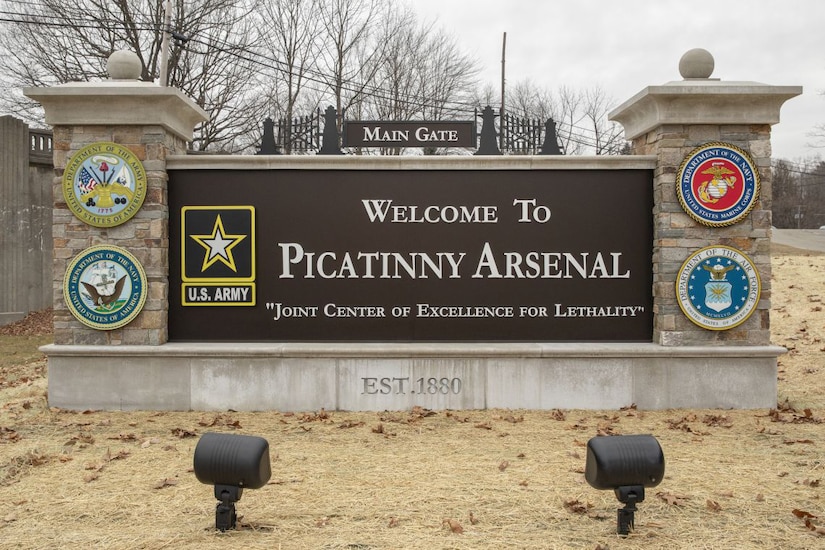
In recent weeks, a number of drones have been sighted over New Jersey, prompting concern and thousands of telephone calls to report them. Some of those drones have even been sighted over Picatinny Arsenal and Naval Weapons Station Earle, both in New Jersey. 

During an on-background telephone call today, officials from the Federal Bureau of Investigation, Department of Homeland Security, Federal Aviation Administration and the Joint Staff provided comment and answered questions from reporters about the drone sightings. 

A spokesperson from the Joint Staff acknowledged that there had been sightings of drones over two military installations in New Jersey, but said such sightings are typical. 

"We have had confirmed sightings at Picatinny Arsenal and Naval Weapons Station Earle," the spokesperson said. "This is not a new issue for us. We've had to deal with drone incursions over our bases for quite a time now. It's something that we routinely respond to in each and every case when reporting is cited." 

The spokesperson said military installations have means to detect and respond to such drones, and that security personnel are trained to identify, categorize and employ those tools to keep drones from flying unauthorized over U.S. military bases. 

Right now, the FBI, DHS, FAA and DOD have been unable to determine who is responsible for flying the drones, and there's no indication that there are adversary nations involved.

"To date, we have no intelligence or observations that would indicate that they were aligned with a foreign actor or that they had malicious intent," the spokesperson said. "But ... we don't know. We have not been able to locate or identify the operators or the points of origin." 

The spokesperson said that the military has "limited authorities" when it comes to conducting investigations off of military installations in the United States, and is also prohibited from conducting intelligence, surveillance and reconnaissance operations in the United States which might be used to determine the origins of who might be flying the drones. But the spokesperson also said those military installations have good relations with local law enforcement, who can conduct investigations off the installation. 

"We have to coordinate with law enforcement to try to do that, which we are doing," the spokesperson said. "And we do that on a routine basis at nearly all of our locations. We have good relationships and excellent coordination, and we respond quickly to try to identify them." 

The spokesperson also said the department is frustrated with the appearance of the drones. 

"The main point is to deter the activity using some of our electronic means that can respond to most of these small commercial systems and deny them access to the airspace over our bases," the spokesperson said. "We don't know what the activity is. We don't know ... if it is criminal. But I will tell you that it is irresponsible. Here on the military side, we are just as frustrated with the irresponsible nature of this activity."

Right


ABOUT   NEWS   HELP CENTER   PRESS PRODUCTS
Facebook   Twitter   Instagram   Youtube

Unsubscribe | Contact Us


This email was sent to sajanram1986.channel@blogger.com using GovDelivery Communications Cloud on behalf of: U.S. Department of Defense
1400 Defense Pentagon Washington, DC 20301-1400

FY 2027 Defense Budget

...