Thursday, December 12, 2024

Department of Defense Awards Funding for Five Small, Non-Traditional Businesses to Speed Technologies Into Production

Left
Release
View Online
IMMEDIATE RELEASE
Department of Defense Awards Funding for Five Small, Non-Traditional Businesses to Speed Technologies Into Production
Dec. 11, 2024

The Office of the Under Secretary of Defense for Research and Engineering (OUSD(R&E)) selected five small, non-traditional businesses to receive funding that allows them to move mature warfighting technologies into production.

The awards are part of a pilot program called "Accelerate the Procurement and Fielding of Innovative Technologies" (APFIT) and are the first selected for FY 2025.

"With the backing of APFIT, these companies have an opportunity to push their innovations over the finish line," said Under Secretary of Defense for Research and Engineering Heidi Shyu. "We look forward to supporting additional projects important to warfighters as more funding is appropriated."

The five initial FY 2025 projects include:

  • Advanced Tactical Flotation Systems, U.S. Special Operations Command
  • Athena - Counter Unmanned Aerial System (C-UAS) Fused Air Picture, U.S. Air Force
  • Coral Drift, U.S. Army
  • Small Unmanned Aircraft Defense (SUADS), U.S. Air Force
  • Software-defined Tactical Optical Modem for Performance and Ruggedization (STOMPeR), U.S. Marine Corps

Each selected project will receive at least $10 million in funding.

APFIT is part of OUSD(R&E)'s multi-pronged approach to moving technology out of the development cycle faster to ensure warfighters have what they need to combat current and emerging threats.

As a pilot program first funded in FY 2022 with a $100-million appropriation, APFIT prioritizes small and non-traditional businesses without adequate resources to bridge the gap between development and production. The following year in FY23, the program received $150 million and in FY2024, funding doubled to $300 million. As a competitive, merit-based program, APFIT targets production line maturation, low-rate initial productions, or augments existing program procurement funding to increase production quantities. The APFIT program has now helped 46 companies across the United States grow, creating jobs and increasing production capability for the future.

About USD(R&E)

The Under Secretary of Defense for Research and Engineering USD(R&E) is the Chief Technology Officer of the Department of Defense. The USD(R&E) champions research, science, technology, engineering, and innovation to maintain the United States military's technological advantage. Learn more at www.cto.mil, follow us on Twitter @DoDCTO, or visit us on LinkedIn at https://www.linkedin.com/company/ousdre

Right

Press Advisories   Releases   Transcripts

Speeches   Publications   Contracts


ABOUT   NEWS   HELP CENTER   PRESS PRODUCTS
Facebook   Twitter   Instagram   Youtube

Unsubscribe | Contact Us


This email was sent to sajanram1986.channel@blogger.com using GovDelivery Communications Cloud on behalf of: U.S. Department of Defense
1400 Defense Pentagon Washington, DC 20301-1400

Dr. Radha Plumb, Chief Digital and Artificial Intelligence Officer, Holds an Off-Camera, On-the-Record Press Briefing

Left
Transcript
Dr. Radha Plumb, Chief Digital and Artificial Intelligence Officer, Holds an Off-Camera, On-the-Record Press Briefing
Dec. 11, 2024

CMDR ANDERSON: Good morning and thank you for being here. I'm Commander Jess Anderson and today we have Dr. Radha Plumb, the DOD's Chief Digital and Artificial Intelligence Officer here to announce the formation of an AI rapid capability cell office. This is a 30 minute, off-camera, on-the-record engagement.

Dr. Plumb will make her remarks and then we will open it up to questions. Please keep it to one question and one follow up. If you have any additional questions after the engagement, please feel free to come and follow up with me afterwards. Our press release and fact sheet, which is slightly updated from what I sent out yesterday, and other products will be available after the briefing on both defense.gov and ai.mil.

And with that, Dr. Plumb.

DR. RADHA PLUMB: Good morning, everyone. Thanks for joining us today on this rainy day. So I'm Radha Plumb. I'm the Chief Digital and Artificial Intelligence Officer. And before I get into today's announcement, I thought it might be helpful to give a quick overview of the CDAO since we're still a relatively new organization.

So our mission in CDAO is to accelerate adoption of digital and AI solutions across DOD. I think of this as really having two parts. The first is advancing deterrence by ensuring our warfighters have the very best digital capabilities. The second is beating bureaucracy by ensuring our critical business functions.

Functions like financial management and logistics and health care have digital solutions to deliver for the department. We think AI has incredible promise across the full gamut of activities. So just for a bit of context at DOD, as you all know, we have an $800 billion budget with about 3 million people globally.

We run more schools than most major cities. We have a health care system with 9 million beneficiaries. We have more planes than most major airline companies and more ground vehicles than delivery companies like FedEx, a supply chain three times that of Walmart. We have hundreds of locations worldwide that must be prepared to respond to any contingency from natural disasters to humanitarian crises to conflict.

And in the context of that no fail mission, we have to ensure the right tools and equipment are in the right places at the right time and with the right people and right platforms 24/7 globally. And so that's where we think AI-enabled tools hold tremendous promise.

We generate and rely on a tremendous amount of data that has to be integrated and used to inform our decisions and enable our actions.

So today we wanted to talk about DOD's plans to accelerate the adoption of the next generation of AI tools like LLM large language models and other frontier models. As many of you know, in August of 2023, Deputy Secretary Hicks established Task Force Lima, which was charged with examining generative AI, including large language models and developing recommendations on how to use these powerful tools in a responsible manner.

Over the course of 12 months, Task Force Lima analyzed hundreds of AI workflows and tasks that AI tools could make more efficient or more effective. And we categorized all of those use cases into a smaller set of 15 areas, aligned into two big categories: war fighting functions like command and control decision support and enterprise management functions like financial management and health care information management.

Upon completing its work, Task Force Lima submitted a detailed report and today we are releasing the executive summary of that report. Let me take a moment just to highlight some of its key findings and recommendations. DOD should continue to rapidly pilot generative AI to discover and evolve its most impactful applications.

DOD should work with industry and academia to improve and appropriately harness generative AI and DOD should clear the pathway for scaling the best pilots by streamlining generative AI policies across DOD, evaluating the baseline of AI literacy across the force and acquiring the necessary infrastructure.

So today the department is officially sunsetting Task Force Lima and to concretely implement their recommendations, we are establishing the AI Rapid Capability Cell or AI RCC charged with accelerating the delivery of next generation AI capabilities across the department. The AI RCC will be housed within CDAO and executed in partnership with the Defense Innovation Unit, DIU.

So DIU serves as the principal liaison between DOD and the National Security Innovation Base. And they've been a key partner in our efforts to advance DOD's adoption of innovative digital capabilities. In the context of next generation AI, We know that this will require the best industry can bring and DIU will be the front door to engaging with companies of all sizes, traditional and nontraditional, to keep pace with the amazing rate of technical innovation we're seeing in the commercial sector.

The AI RCC will follow a three-step process to accelerate AI capabilities. First, it will identify and test technology through rapid experimentation and prototyping. Second, it will assess the effectiveness of technology. So did it work? Do warfighters or key customers use it and can it be scaled and sustained?

And third, if warranted, we'll use defined acquisition pathways to scale the technology across the DOD enterprise and that can be within CDIO with the military departments or with other key components and functional leads. This is consistent with our overall open dagger approach that we've taken for other mission critical efforts and will leverage our guide experimentation series.

This rapid experimentation approach will allow us to test and identify where these cutting edge technologies can make our forces more lethal and our processes more effective. But equally critically, the AI RCC will define the requirements for enterprise infrastructure and support scaled AI development. That includes compute, development, environment and AI ready data.

So to meet those objectives, we're beginning with an initial investment of $100 million in FY '24 and '25. We're releasing a fact sheet with more details, but I'll highlight just a couple of our specific investments and actions. We're immediately moving forward with four frontier AI pilots totaling about $35 million.

Two of those will be focused in war fighting use cases and two will be focused in enterprise management. Consistent with the findings of Task Force Lima, we plan to work with our partners at DIU to open up opportunities for additional pilots in the near future. Second, DOD will be awarding about $40 million in Small Business Innovation Research to fund generative AI solutions. Those awards will be made in mid-January.

We've received hundreds of responses to our request for solutions to leverage generative AI in specific DOD ecosystems, everything from applying commercial applications to healthcare and financial management to solutions in critical war fighting areas like autonomy.

And as I mentioned, frontier AI also requires significant compute resources and a testing sandbox. So to enable this environment, we're implementing a multiple cloud approach to resourcing in line with our open Dagger construct and the joint warfighting cloud capability. We will onboard two cloud service providers in mid-January which will have those sandboxes and will fast follow with the two remaining cloud services providers by next summer.

Finally, to ensure the reliability of this technology, we're issuing a generative AI version of our responsible AI toolkit. This will help users ensure they incorporate the best practices and streamline the policies to allow more rapid adoption of AI and management of it through its entire product lifecycle.

Let me just close by reiterating how important the mission of the AI RCC is to DOD. The US and the US Private sector in particular is at the cutting edge when it comes to artificial

intelligence. At the same time, it's important to recognize that AI adoption by adversaries like China, Russia, Iran, and North Korea is accelerating and poses significant national security risks.

We are taking an all-hands-on deck approach to ensuring the US continues to lead the way in accelerate DOD adoption of these tools. And I'm confident we're up to the challenge. The United States decisive and enduring advantage lies in the innovation that's inherent in that commercial sector and the department's ability to incorporate that into our critical missions.

And with that, I'll pause and open up for questions.

Q: Hi. Thanks, I'm Tara Copp with the Associated Press. A couple clarifiers, the $100 million for FY 24-25, is that $100 million each year or $100 million total over those two years?

DR. PLUMB: $100 million over those two years.

Q: Okay, and then on the cloud approach, that's a contract I guess that will be awarded?

DR. PLUMB: Correct, so the JWCC, which is our construct for cloud service providers is four contracts with each of the major cloud service providers, within those contract vehicles, we will have a sandbox with each major cloud provider. We'll start with two sandboxes that will be available in mid-January with two providers and then fast follow with two additional sandboxes on the other two cloud instances by the summer.

Q: Okay, and then you mentioned that, you know, obviously AI work requires a lot of power, are the cloud providers responsible for providing the power for that?

DR. PLUMB: They're responsible for the compute and underlying data investments, so that's power, but also the data centers and security.

Q: Okay, and then just the last one, which is more strategic in nature like there are a lot of different applications here that you all are exploring, but what's the top priority for AI for this work?

DR. PLUMB: If what you're asking is, is there a specific mission set we're going to focus on, the answer is no. I think the top priority is identifying the highest return on investment areas where cutting edge AI, so generative AI in particular can rapidly improve either lethality or efficiency depending on whether it's warfighting or business management.

We see a range of different workflows from the Task Force Lima work that that can happen. So this is about identifying those pilots, proving out that case and then making sure we

have the pathway to scale those quickly. And I think the faster we can get on that, the broader we can get on use cases to meet the needs.

Q: Thank you. John Harper with DefenseScoop. Another just quick clarification on the $100 million, you said that's for FY '24 and FY '25. Since we're already in FY '25, does that mean you've already spent some of that money?

DR. PLUMB: We haven't spent it, but it's already RDT&E dollars, which is a three-year obligation cycle. We will prioritize some of the FY '24 dollars against these priorities.

Q: Okay. And also for the multi-cloud efforts, will that all be done through JWCC task orders or is this kind of a separate?

DR. PLUMB: No. It'll be through the JWCC contract structure. I can take whether that's task orders or I don't know the specific way we add on to the contracts.

Q: Okay. And for the SBIR funding, are those opportunities going to be coming along through the Tradewinds?

DR. PLUMB: Exactly.

Q: Okay. All of those?

DR. PLUMB: So they'll be announced on Tradewinds and then we have a sort of cross-cutting selection group that includes DIU, but also some functional community experts.

Q: Great. Thank you.

Q: Thanks, Jeff Seldin with VOA. Just wondering, can you talk a little bit more about some of the areas where this is going to be tested the soonest areas where maybe soldiers, you know troops or war fighters might be getting their hands on some of this and trying it out perhaps in the field?

DR. PLUMB: Yeah, so the way we're doing that is through our global information dominance experiments, which we run every 90 days and they're globally across all of the combatant commands. The context we use there is we integrate the technology and bring actually the technologists to sit side-by-side with the warfighter.

For about two weeks, we experiment using these new technologies integrated into the actual operational workflow to test and evaluate whether they're useful and whether warfighters actually want to use them and usually the first time it needs improvement. And so we kind of do that every 90 days. We're now integrating that actually with the number of service experimentations.

So CDAO partnered with the Army, for instance, in recent activities last year. So we'll do both of those to have the experimentation cycle to connect with the warfighter, but our primary testing venue will be through these GIDE series.

And how soon will any of these be approved to the point where they are being deployed in the field, perhaps in even combat situations?

DR. PLUMB: I can't give you a specific timeline because it really depends on the performance of the technology. So what we're trying to do is get the technology, bring it to these experiments and then test to evaluate whether they're useful and whether warfighters actually want to use them. Once that's the case, then we can look to scale and deploy them. I will note for instance we applied this approach to the min viable capability in the C2 context from that was about a nine to 12 month cycle to get all the way to the MVC for a pretty complex technology. So that just gives you a sense of bounding I think.

CMDR ANDERSON: All right, we're going to head up to the zoom lines. Sydney, Breaking Defense.

Q: Hi, Dr. Plumb. Thanks for taking our questions today. Sydney Freedberg from Breaking Defense, a big picture question. This seems to be all or at least very heavily focused on the currently funded stuff on generative AI. Does that mean you're confident that you've actually, you know, or rather industry, I guess, has actually tamed the hallucination problem? That you know these AIS will not be telling warfighters to put you know, glue on their pizza or, you know, sighting acquisition law that from cases that it made up.

DR. PLUMB: So let me take that in two parts. One is I think industry continues to innovate and improve both the quality and reliability of their generative AI models and we're watching that very closely and in close partnership with our industry innovators.

The second piece though is, look, the department has to have its own reliability standards. We talk a lot about responsible AI. What that really means is do the models perform the way you want them to perform and do they do they do the things you want them to do and do they not do things you don't want them to do. I'll just note that's true for all of our platforms and capabilities. We have to do that in weapon systems.

We have to do that in our digital solutions and we have to do that in our hardware. We have a specific set of standards and applications that we apply in the generative AI context to bound the risk and ensure the performance meets the reliability. Part of the pilots, the test and evaluation and the generative AI specific responsible toolkit are creating the pathways for that.

To my mind, this is really a better brakes, make faster trains approach where we've got a toolkit, we've got to test the technology and then we've got to rinse and repeat to get it to the reliability level that will allow us to deploy it. That's going to vary use case by use case, but that's the approach we're taking here.

CMDR ANDERSON: Thanks, Sydney. Over to Cal, from Defense Daily.

Q: Yeah, two things. One is this $100 million over two years, when I look at the funding here under building an AI-ready tech stack and then the expanding AI development and assurance that's like $160 million. So I just want to make sure, you know, where's that $100 million going versus this $165 million to start?

DR. PLUMB: So I'll tell you where the $100 million is going and then we can clarify if there are sort of follow up questions on the specific breakdown. The $100 million is basically broken into generative AI pilots, some initial investments in sandbox, AI-ready data and compute sort of down payments for that sandbox. And then the experimentation series, sorry for GIDE. So that's the $100 million. We do have additional I investments we're making that are sort of broader and relate to, for instance, management innovation pilots that will focus on a broader scope of AI as well as digital talent management through our normal CDIO.

Obviously, those will be married together with the findings and pilots in the AI RCC to make sure that our broader enterprise level efforts meet the findings and if we if needed scaling of AI RCC solutions.

CMDR ANDERSON: Over to Theresa Maher from Inside Defense.

Q: Okay. Hi. Thank you, Dr. Plumb. Well, on the fact sheet it says $40 million of those SBIR funding awards, which I believe you said were scheduled to be made in mid-January. Is there any information on how many awardees CDAO anticipates for this and how the money is distributed?

DR. PLUMB: On that at this time, because we're still in the selection process, but we got about 400 initial applications. We're going through that both for eligibility and applicability. When we release the sort of down select and awards, we'll obviously provide additional information on both the number breakdown, average award size, etc., consistent with the normal SBIR practices.

CMDR ANDERSON: Over to Kimberly Underwood from Signal.

Q: Yes, thank you. Can you talk about kind of the transition from Task Force Lima to the AAC? Will any of the Task Force Lima leaders still be involved or what will kind of the outlook there be? Thanks.

DR. PLUMB: Yeah, so first let me just say Task Force Lima did an incredible job. We had slated it for 18 months and within 12 months they had made so much progress and had such concrete recommendations that we moved to stand up the cell for actual execution. In terms of the sort of pathways, some of the leaders from Task Force Lima are moving into working on other priority projects in CDAO. Some of the team will join the AI RCC, so that'll sort of be internal realignment.

But more broadly, the foundational work that Task Force Lima did to both define what the process for implementation and piloting of generative AI should look like and to help us get started with identifying use cases, key customers. That's what really allows us to get to the point of having a rapid capability cell that can make initial procurements that can stand up sandboxes. And so that work is really the foundation of this ongoing now-execution effort.

CMDR ANDERSON: Sam Skove from Politico.

Q: Yeah, I was just wondering based on previous, you know, discussions you've had with COCOMS as you get this set up, if you anticipate there being any specific COCOMS that are going to be lean forward the most on this. Obviously, CENTCOM comes to mind because they've done lots of work with, you know, Anduril and counter-drone. But I'd be interested to, to hear kind of what you anticipate.

DR. PLUMB: Yeah, so the great news is that we've scaled both through our strategic level command and control data infrastructure and the more recent tactical data infrastructure data integration services work we have. We have a number of performers and a number of solutions that are spread out across all of the COCOMS.

The other good news is the COCOMS are very enthusiastic about this and we have great partnerships inside CDAO. Given the reality of the sort of national security landscape I anticipate that some of our priority combatant commands will sort of be up in front working on this. And obviously, you've mentioned CENTCOM.

We work closely with INDOPACOM and EUCOM as well, and they've been great partners. But I'll just note that there are a number of core functional combatant commands that have been incredibly forward leaning in how we think about this TRANSCOM, STRATCOM, SPACECOM, right? So I think there's a real opportunity here, especially through these global information dominance experiments to identify use cases that span combatant commands and really accelerate places where this kind of next generation I can make a big difference across the warfighter landscape.

CMDR ANDERSON: All right, Mohar Chatterjee from Politico.

Q: Hi. I have two quick questions that are very related. One, I'm curious about whether your appointment extends into the new year past the incoming administration. And two, we see that the push towards rapid AI adoption comes during a time when the incoming Trump administration is trying to staff the department with key figures from Silicon Valley who have this tendency to try and disrupt the Pentagon's bureaucracy in favor of efficiency in its contracts towards the private sector.

I'm curious about how you see the AI RCC's movements kind of marrying with that push that's coming from the new Trump administration.

DR. PLUMB: Yeah, so I will transition at the end of this administration, but the rest of CDAO will still be here and, of course, the mission continues. I think in the broader context, look, digital solutions in AI aren't going anywhere and we've seen broad, widespread support in this administration, from the incoming team. We see it buy in across the aisle bipartisan in Congress. We see it bicameral in the House and the Senate. We see it here in DC and in Silicon Valley and internationally.

And so ultimately I think we all know AI and digital solutions are going to be part of the pathway. We also know the department has got to invest in foundational areas like AI-ready data, like computational environment, like development and that the only real way to get digital solutions out to warfighters is to do this rapid experimentation series so we can connect the technology with our operational needs.

All of that we fully expect to persist and we haven't heard anything. You know, I was just out at the Reagan National Defense Forum over the weekend. Haven't heard anything from either side of the aisle with concerns on that.

Now, areas of focus can and should change both between administrations but also just over time the landscape two years from now is going to look different than the landscape. Now, the important part of what we're trying to lay in here is to make sure the department is ready to identify, test and evaluate and then when appropriate scale the very best commercial solution so that we have that available for our warfighters and for our enterprise management.

Q: Can we talk about the risks, like security risks and how you guys are dealing with that?

DR. PLUMB: Yeah, so we have within CDAO, an authorizing official in a relatively robust risk management framework that we think through. So let me just break it into two parts. There's the sort of regulatory and management pieces, so things like FedRAMP authority to operate processes, those are the tools that let us as a department, continue to review and make sure digital solutions we bring in from the commercial sector, meet our cyber requirements and don't provide threats.

There's a broader set of issues in which we have to think about how we deploy AI into our ecosystems, how we think about data security and the data use in our systems and how that is an ongoing part of our discussions and part of what we want to get after with these pilots. How do we bring in the very best commercial technology, marry it with our sort of unique often classified data, use that for our warfighters and then be able to scale that.

And that is explicitly one of the things we need to work through within the context of these pilots. That's going to vary a lot depending on what kind of data you're using. And you can imagine security risks that relate to health information look very different than security risks that relate to cyber information, which in turn look really different than the risks related to autonomous systems.

So there's a workflow use case specificity to this that's part of the pilot effort.

Q: As part of that, just like keeping everything kind of stovepiped or?

DR. PLUMB: It's not exactly stovepipe, but it's a combination. So the department with our colleagues in CIO has been working through sort of identity and credential management solutions. Within CDAO, we work on the data side on attributes based data access, those provide a sort of layered defense approach overall consistent with the zero trust framework that allows us to start, you know, bringing together data, AI and digital solutions or data hungry.

The question then is how do you allow that to train and scale in a way that's both useful to the war fighters and appropriately balances risk. We've done some of this in more narrow AI cases and we're seeing real returns on that through our experimentation series in the context of our combined joint all-domain command and control work.

We think there are some lessons to be learned there, but I think the biggest lesson is it's very workflow specific to figure out how to get the risk balance right between the data access that the tools need to be effective and the data protections we want to keep our most sensitive and valuable data appropriately secure.

CMDR ANDERSON: All right, with that, we're at time, ma'am. Do you have any closing remarks?

DR. PLUMB: No. I really appreciate folks' willingness to come here. We really think this is an important initiative and one that will allow the department to accelerate its adoption both in specific areas, but more broadly to build a culture of AI adoption and really appreciate the opportunity to talk to you about it today.

CMDR ANDERSON: All right, everyone. That concludes our briefing. Thank you.

Right

Press Advisories   Releases   Transcripts

Speeches   Publications   Contracts


ABOUT   NEWS   HELP CENTER   PRESS PRODUCTS
Facebook   Twitter   Instagram   Youtube

Unsubscribe | Contact Us


This email was sent to sajanram1986.channel@blogger.com using GovDelivery Communications Cloud on behalf of: U.S. Department of Defense
1400 Defense Pentagon Washington, DC 20301-1400

Secretary of Defense Lloyd J. Austin III On-Camera, On-the-Record Engagement With Traveling Press at Yokota Air Base, Japan

Left
Transcript
Secretary of Defense Lloyd J. Austin III On-Camera, On-the-Record Engagement With Traveling Press at Yokota Air Base, Japan
Dec. 11, 2024

SECRETARY OF DEFENSE LLOYD AUSTIN: Well, good afternoon, everybody. Thanks for being here. It's great to be back in Japan. This is my fourth trip here as Secretary of Defense, and what we've achieved together with Japan over the past four years has been historic.

Yesterday I met with Prime Minister Ishiba and Defense Minister Nakatani, and we took stock of how we're strengthening our alliance. It's also been great to spend time with some of our service members, who have been at the heart of this work.

You know, Secretary Blinken and I were here in July for our fourth annual 2+2 meeting with our Japanese counterparts, and we made several important announcements. First, we promised to take our defense industrial cooperation to the next level by launching the Forum on Defense Industry Cooperation, Acquisition, and Sustainment. That forum has already convened several times and has taken several critical steps toward co-producing key munitions that will enhance our deterrence in the region.

Second, we vowed to advance our mil-to-mil cooperation with other like-minded partners. This includes the Republic of Korea, the Philippines, and Australia. And today we're proud that we've taken exercises such as Freedom Edge and Yama Sakura to new heights.

Third, we announced that the United States will upgrade US Forces Japan to a joint force headquarters with expanded missions and operational responsibilities. At the time, I said that this marked one of the strongest improvements in our military ties with Japan in 70 years. I also said that our teams would work together to make sure that we get this right, and today I'm glad to report that they have hit the ground running.

I received a good briefing on the outstanding progress that we're making toward this upgrade. The working groups between Japan and the United States have met several times since the announcement, and they're ensuring that the development of US Forces Japan headquarters stays apace with Japan's new operational — Japan's new joint operations command.

We've charted a bold vision for upgrading our command and control frameworks and, together, the United States and Japan are making that a reality right now. Of course, our two countries have been delivering results and not just in the past four months, but throughout the past four years.

After becoming secretary in 2021, I took my first overseas trip to the Indo-Pacific, and it's no coincidence that my first foreign trip — my first foreign stop was here in Japan. And on that trip, I said something that I've repeated many times since, the US-Japan alliance is a cornerstone of our Indo-Pacific strategy and it's critical to a free and open region.

Now, that was certainly true in March of 2021, but it's even truer today. Over the past four years, we've made major upgrades to US force posture across Japan. We've made historic investments in our military strength and capability. We've doubled down on our defense industrial cooperation, and we worked more closely than ever with countries across this region that share a vision for a free and open Indo-Pacific.

So, I can say confidently that the US-Japan alliance is stronger today than ever. It's great to be back here to celebrate all that we've achieved together. And so, with that, I'll take a few questions.

PRESS SECRETARY MAJ. GEN. RYDER: Thank you, sir. Our first question will go to CBS. Ellee?

Q: Mr. Secretary on Syria, there are reports that Turkish backed forces are attacking the Syrian Democratic Forces, the US partner in the mission against ISIS. What assurances, if any, of support has the US given the SDF, and how does the SDF's new fight affect the defeat ISIS mission?

SECRETARY AUSTIN: Well, thanks, Ellee. We continue to monitor the situation very closely. You heard me say the other day this is a very dynamic situation with a number of stakeholders that will continue to do a number of things in that space. You asked about force posture the last time we were together, and I didn't have any announcements to make then. I don't have any announcements to make today either.

We're going to remain in close contact with our partners in the region. And we're going to — as things occur, we're going to consult with them and ensure that we're doing the right things to protect our interests and respond to whatever the situation is that unfolds.

In the meantime, as you've heard me say, my number one priority is protect — protection of our troops, and we're also very much focused on making sure that ISIS doesn't have the ability to resurge. So, that'll be our focus going forward. And as things develop, we'll consult with allies and partners in the region and take the appropriate action.

Q: Any consultations with the SDF in recent days about what the US is willing to do about these new attacks?

SECRETARY AUSTIN: As you know, we've worked alongside the SDF for some time. Indeed, that work continues. So, again, we have a good relationship with them and I think it will remain.

MAJ. GEN. RYDER:

Q: Thank you. Thank you so much, sir. Taiwan's defense ministry in the last 24 hours has been reporting that China's deploying a large fleet of ships, I think balloons in close proximity, and possibly restricting its airspace. Have you been in contact with INDOPACOM leaders or Taiwanese counterparts on this? And is there any indication that China's trying to capitalize on the US's latest progress in the Indo-Pacific to further destabilize security in the region?

SECRETARY AUSTIN: You know, we have remained focused on the PRC's activity for quite some time. You know, that's why the PRC has been our pacing challenge for the last four years there. You know, we talked about their coercive actions in the region.

And certainly, this latest activity, this is something that we'll continue to monitor and make sure that, you know, we — that nobody does anything to change the status quo in the strait. Again, our policy hasn't changed. We'll continue to do what we can to help Taiwan acquire the means to defend itself. Again, that work continues on. But this latest activity, we'll continue to monitor it and see what happens.

Q: Thank you. And a quick follow up on Ellee's questions. What's your response to concerns that escalating conflicts around the Middle East could diminish or detract from US capabilities or capacity to deter China in the Indo-Pacific?

SECRETARY AUSTIN: Again, this has been — this region has been our main effort throughout, and the PRC has been our pacing challenge. We have done a number of things globally to help partners and allies. We've helped Ukraine acquire the means to defend sovereign territory. We — we've helped Israel do what it has done to respond to the most brutal attack — terrorist attack that it has ever experienced, and also help them — provided them the means to counter the activity that they were — the attacks that they were receiving from Lebanon.

So, the combination of what we've done to help Ukraine defend itself and put more pressure on Russia to help Israel do what it's — what it's done has made Russia weaker and Iran weaker as well. And that has had an impact on what we've seen in the Middle East in Russia's and Iran's inability to respond to what's transpired in Syria.

MAJ. GEN. RYDER: Let's go to

Q: Thank you, sir. Japan has been a common denominator in terms of the multilateral security cooperation led by the United States, whether that be with Australia or whether that be with the Republic of Korea or Philippines. But Japan has been absent from the United Nations Command, which is a command — multi-national command headquartered in South Korea. So, do you think that there is a need for Japan to join the UNC as part of its official members, given this rising secure role in the region?

SECRETARY AUSTIN: Well, the UNC has been a key element in maintaining security and stability on the peninsula. You know, I was fortunate to be able to attend a UNC defense ministers meeting last year. And again, our relationship with the ROK, Japan's relationship with the ROK, that trilateral relationship has really helped to increase the stability and security in the region.

Now, we're in a place now that we — we've never been. I mean, we've seen us conduct ministerials, trilateral ministerials. We've seen a trilateral summit conducted by President Biden. So, that relationship developed in a major way, and we're going to continue to build upon that going forward.

Q: Sir, INDOPACOM commander, Admiral Paparo, he said that North Korea will receive fire tests from Russia in return for North Korea sending troops to Russia to fight against the Ukrainian forces. And he talked about MiG-29s and SU-27s. So, other than fighter jets, are there any items that you can tell us, like, what North Korea will receive from Russia? And how are you concerned about the ongoing transactions between Russia and North Korea?

SECRETARY AUSTIN: Well, I think that relationship is certainly concerning. We know that this is transactional. So, as the DPRK provides munitions and weapons to Russia, there will be — we expect that Russia will reciprocate in some shape, form, or fashion. And that can go in a number of ways. But I won't try to detail, you know, what they would get or may get in the future.

MAJ. GEN. RYDER: Last question for News.

Q: Service members here get a chance in a lifetime to be in Japan, learn new cultures and ways of doing things, and take that back to the States. This is one of the many benefits of serving. I never heard a veteran say they were sorry they served.

Will you continue to talk up the benefits of service when you step down? I saw you doing it unplanned at a few college commencements you delivered that I was with you on as you were walking from the podium to the vehicle, stopping to chat.

SECRETARY AUSTIN: You can bet that I will continue to talk about the benefit of service to our — to our nation. You know, I think in the military, you've heard me say before that, you

know, what we do is we take good people and we develop them into better people. And we provide them opportunities to expand their horizons and to, as you pointed out, to travel and to do a number of things.

So, service to the nation is important, and I think it provides the individual who serves a tremendous benefits. One of my mentors used to always say that to serve is to live, and I believe that. I believe in being a part of something bigger than yourself and giving back to this great country that has provided us so much.

And I'm absolutely proud of the young men and women that are serving in our ranks today. And, you know, they are the world's finest, in my view. And we will continue to provide them opportunities to travel and to grow and to develop as they raise their hand and volunteer to serve.

MAJ. GEN. RYDER: Thank you. Thank you very much, everyone. That's all the time we have.

Right

Press Advisories   Releases   Transcripts

Speeches   Publications   Contracts


ABOUT   NEWS   HELP CENTER   PRESS PRODUCTS
Facebook   Twitter   Instagram   Youtube

Unsubscribe | Contact Us


This email was sent to sajanram1986.channel@blogger.com using GovDelivery Communications Cloud on behalf of: U.S. Department of Defense
1400 Defense Pentagon Washington, DC 20301-1400

DOD Featured Photos

Left
Photos
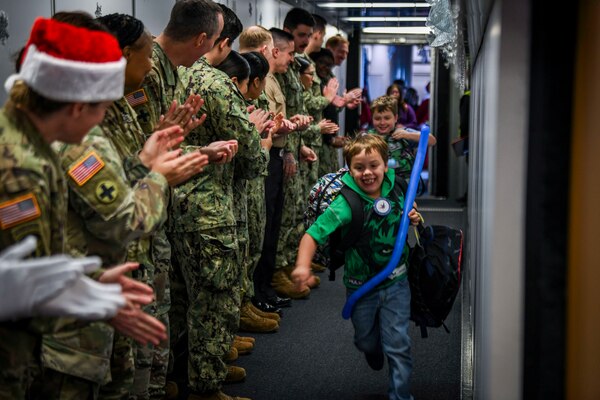
Snowball Smiles
Children run down a breezeway during a Snowball Express event at Chicago's O'Hare International Airp... Photo Details >
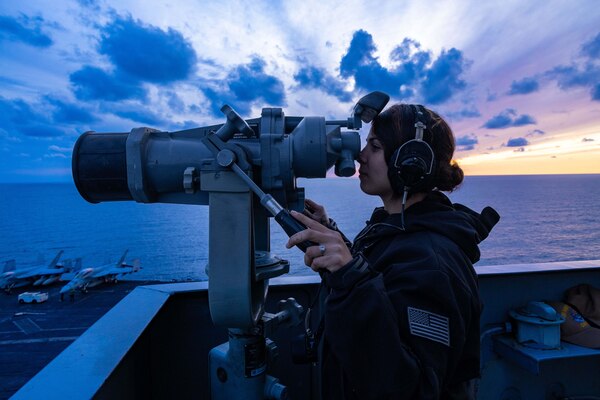
Twilight Watch
Navy Petty Officer 3rd Class Sierra Rodriquez stands lookout watch aboard the aircraft carrier USS H... Photo Details >


Right


ABOUT   NEWS   HELP CENTER   PRESS PRODUCTS
Facebook   Twitter   Instagram   Youtube

Unsubscribe | Contact Us


This email was sent to sajanram1986.channel@blogger.com using GovDelivery Communications Cloud on behalf of: U.S. Department of Defense
1400 Defense Pentagon Washington, DC 20301-1400

FY 2027 Defense Budget

...